

In this article
- Who is Whisker?
- Before Litter-Robot: The litter box barely changed for 50 years
- A Ford engineer, two inherited cats, and a basement
- April 2000: The first one sells at a trade show
- Five generations of engineering
- From AutoPets to Whisker
- Designed and assembled in the USA
- What owners actually say
- Is Litter-Robot worth it?
- What Whisker is building next
Who is Whisker?
Whisker is the American pet-care technology company behind Litter-Robot, the self-cleaning litter box, as well as Feeder-Robot and the Whisker app. The company was founded by engineer and inventor Brad Baxter, who launched Automated Pet Care Products (AutoPets) in 2000 and introduced the first Litter-Robot later that year. Today, Whisker is headquartered in the greater Detroit area, designs products in Michigan, assembles Litter-Robots in Juneau, Wisconsin, and employs more than 600 people across the U.S.
Whisker now describes its connected-care strategy as the “trinity of cat care”: food, water, and waste. The idea is that each part of a cat's daily routine provides useful information, and connected products can bring those signals together in the Whisker app.
Before Litter-Robot: The litter box barely changed for 50 years
Before commercial cat litter, people commonly used whatever was available to give indoor cats a place to eliminate, including sand, ashes, soil, and paper. That changed in 1947, when Michigan entrepreneur Edward Lowe introduced clay cat litter after giving a neighbour absorbent clay to use in her litter box. The product eventually became the foundation of the modern cat-litter industry.
The litter itself evolved over the following decades, including the introduction of clumping litter. But the basic litter box remained remarkably simple: a container, litter, and a scoop.
The first patents for automatic litter boxes appeared in the early 1990s. Early designs commonly relied on motorized rakes that traveled through the litter to collect waste.
That approach solved part of the problem but created new ones. Rakes had to move through the litter without dragging clean litter along with the waste, and clumping litter could pile up or interfere with the mechanism. It was a difficult category to improve because the product had to automate a chore that was both unpleasant for people and highly dependent on a cat's willingness to use the machine.
That was the problem Brad Baxter encountered in the late 1990s.

A Ford engineer, two inherited cats, and a basement
Brad Baxter studied mechanical engineering at the University of Wisconsin-Madison before joining Ford in 1989. At Ford, he worked with plastic components and electronic enclosures before moving into consulting and other automotive work. That combination of mechanical engineering, plastics, and electronics experience later proved useful when he began experimenting with an automated litter box.
In 1999, Baxter inherited two cats and ran into a very ordinary problem: he wasn't scooping their litter box often enough. The cats started eliminating outside the box. Baxter told Forbes that he bought an existing automatic litter box to see whether it could solve the problem, but its rake struggled with clumping litter. The waste could be pushed into a pile rather than cleanly separated from the usable litter.
His alternative was to stop dragging a mechanism through the litter altogether.
Instead, Baxter envisioned a rotating chamber. When the globe turns, gravity allows clean litter to pass through a screen while the heavier waste clumps fall into a separate compartment. The result is a fresh bed of litter without a rake traveling through it.
That gravity-sifting principle became the defining idea behind Litter-Robot.
Baxter's concept wasn't created in isolation. He discovered that another inventor, Don Reitz, already held a related patent, so Baxter contacted him and ultimately licensed the technology. Baxter's father, Jim, provided early financing for the company. Forbes reported that Jim invested US$35,000 for a 35% stake in the business.
The first prototypes were built by Baxter, and early production later moved to a repurposed automotive facility in Pontiac, Michigan, where units were built by hand.
April 2000: The first one sells at a trade show
The first Litter-Robot was sold at a trade show in April 2000. Baxter personally built that first unit in metro Detroit, where Whisker is still headquartered.
That same year, Baxter officially launched Automated Pet Care Products, Inc., or AutoPets, and began selling Litter-Robot directly to consumers online. Selling a large physical product directly through the internet was still an unusual approach at the time.
The company wasn't an overnight success. Baxter kept his salary low while the business slowly grew, relying heavily on the product itself and word of mouth rather than a large marketing operation. The company reached profitability in 2005, the same year Litter-Robot 2 launched with a redesigned product built using injection-mold tooling.
That early stretch matters to the story because Litter-Robot didn't immediately transform the litter-box category. It took years of engineering, manufacturing, and customer feedback before the business had the resources to scale.
Five generations of engineering
Litter-Robot's product history is essentially a record of the problems Whisker kept trying to solve: manufacturing consistency, reliability, connectivity, sensing, cat identification, and eventually health and behaviour insights.
|
Model |
Year introduced |
Main advance |
|
Litter-Robot |
2000 |
Introduced the rotating, gravity-sifting approach to automatic litter-box cleaning |
|
Litter-Robot 2 |
2005 |
Introduced an improved design and performance using injection-mold tooling |
|
Litter-Robot 3 |
2015 |
A major redesign that helped accelerate the company's growth; a connected Litter-Robot 3 Connect followed in 2017 |
|
Litter-Robot 4 |
2022 |
Added a more advanced sensor system, real-time monitoring, weight tracking, improved safety, and a new connected app experience |
|
Litter-Robot 5 |
2025 |
Added WasteID technology to distinguish urine from feces, along with enhanced monitoring and a new waste-distribution system |
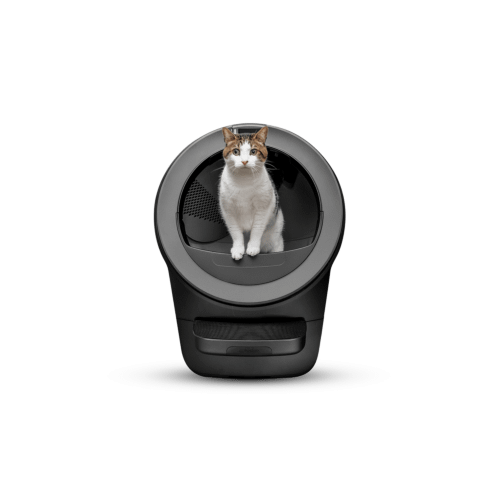
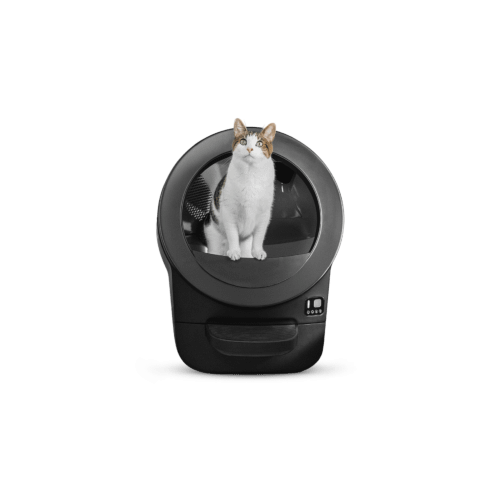
The Litter-Robot 5 Pro launched alongside Litter-Robot 5 in 2025. It adds two built-in cameras, including AI-powered cat identification, to provide more detailed individual-cat insights. Whisker also introduced Litter-Robot EVO, a more streamlined model aimed at smaller spaces and households with fewer cats.
The current lineup is therefore broader than the numbered generations alone. As of this writing, Whisker sells Litter-Robot EVO, Litter-Robot 4, Litter-Robot 5, and Litter-Robot 5 Pro. Litter-Robot 5 and 5 Pro support up to five cats, while EVO is designed for up to two and Litter-Robot 4 for up to four.
The progression also shows how the product has changed. Early Litter-Robots were primarily mechanical solutions to scooping. Newer models still automate the same basic task, but sensors and software have become an increasingly important part of the product.
From AutoPets to Whisker
Jacob Zuppke joined the company in 2015, initially as a marketing consultant, around the launch of Litter-Robot 3. He later became VP of Marketing and Business Development, then COO and president, before succeeding Baxter as CEO in January 2022. Baxter moved into the roles of Chairman and Chief Inventor, continuing to work on product development.
Zuppke's arrival coincided with a major growth period. One of the company's early marketing experiments in late 2015 used influencers to give away Litter-Robots, helping drive a sharp increase in website traffic and sales.
In 2019, Pondera Holdings led a recapitalization that brought more than US$31 million in investment to AutoPets. The company said the capital would help accelerate growth and provide liquidity to the founders.
Two years later, AutoPets became Whisker.
The reasoning was strategic. Litter-Robot had become the product people knew, while the company wanted to build a broader pet-technology brand around multiple products. Zuppke later explained that the company needed a parent brand capable of supporting an ecosystem rather than having every future product live under the Litter-Robot name.
The rebrand also reflected what the company was becoming: not just a manufacturer of an automatic litter box, but a connected pet-care company developing products across food, water, and waste.
Designed and assembled in the USA
Whisker is headquartered in the greater Detroit area and operates a 250,000-square-foot manufacturing facility in Juneau, Wisconsin. The company has more than 600 employees across 25 states, including remote employees.
The company's manufacturing story goes back to the first Litter-Robot. The original unit was built in metro Detroit, but as production grew, Whisker moved manufacturing to Wisconsin to be closer to supply-chain partners. The company purchased its first building at the current Juneau campus in 2009.
Whisker later expanded the Juneau campus substantially. The company invested more than US$15 million to expand the facility from 30,000 square feet to 250,000 square feet, while bringing more manufacturing work in-house.
That doesn't mean every component is made in the United States. Whisker sources certain components globally while designing, assembling, and servicing its robots domestically. Its production team in Wisconsin assembles Litter-Robots by hand.
For customers, domestic assembly is also tied to support and service. Whisker provides parts and technical support beyond the standard warranty period.
What owners actually say
Whisker's current review page reports more than 70,000 five-star reviews and more than 2.5 million satisfied customers. The company also currently offers a 90-day in-home trial and a one-year warranty covering its robots.
Independent reviews provide a similar but more nuanced picture.
The New York Times Wirecutter currently identifies Litter-Robot 4 as its top pick for best automatic cat litter box, while Forbes Vetted named Litter-Robot 5 Pro a 2026 Best Product Award winner.
Retailer reviews also show strong customer reception. Best Buy currently lists Litter-Robot 4 at 4.7 out of 5 stars from more than 690 reviews, with ease of use, quiet operation, odour control, and the app among commonly mentioned positives. The same review set identifies price and the unit's size as recurring drawbacks.
Those themes show up in editorial testing, too. Reviewers commonly point to the convenience of not scooping, odour control, quiet operation, and connected features. The tradeoffs are less complicated: Litter-Robot costs substantially more than a traditional litter box, takes up more space, and its connected features can introduce another layer of technology to troubleshoot.
The newest model adds another consideration. Good Housekeeping's 2026 testing of Litter-Robot 5 Pro found the machine easy to use and notably quiet, but the reviewer also raised privacy concerns about the cameras capturing people who happen to walk near the litter box.
For buyers who aren't sure whether their cat will accept an automatic box, Whisker currently backs Litter-Robot with a 90-day in-home trial. The company estimates that more than 95% of cats acclimate to Litter-Robot, based on stated reasons for returns of Litter-Robot 3 and 4 over a one-year period.
Is Litter-Robot worth it?
For most people, the value proposition is simple: you're paying to stop doing a repetitive chore yourself.
A traditional litter box requires regular scooping. A self-cleaning box automates that step, although it doesn't eliminate litter-box maintenance entirely. With Litter-Robot, the globe rotates after the cat leaves, separates waste from clean litter, and deposits the waste into a drawer below. The person still has to empty the drawer, add litter, clean the machine, and monitor the cat.
That makes the time savings relatively easy to understand. If you're already scooping every day, eliminating that daily task can add up to a meaningful amount of time over months and years. The exact savings depend on how many cats you have, how often you scoop, and how much other litter maintenance you do, so there's no single number that applies to every household.
The second argument is visibility.
Connected Litter-Robot models can track information such as litter-box visits and weight through the Whisker app. Whisker positions these measurements as a way to help pet parents notice changes in a cat's routine.
That information isn't a diagnosis, and an app can't replace veterinary care. But having a record of your cat's normal bathroom habits can make a change easier to notice than relying on memory.
Multi-cat households can also benefit from automation. Current Litter-Robot models are designed for multiple cats, with capacity varying by model, and the newer models can create individual cat profiles and track individual activity.
That doesn't mean one box should automatically replace every traditional litter box in a multi-cat home. Cats have individual preferences, and vet litter-box guidance often recommends providing multiple options. The useful distinction is that a Litter-Robot can substantially reduce the amount of scooping required when multiple cats share an automated box.
There are also legitimate reasons not to buy one.
A Litter-Robot requires more upfront spending and more floor space than a basic litter box. Some cats need time to adjust to a new machine. And if your budget is tight, a traditional litter box does the essential job without electronics, an app, or a motor.
The category itself is still far from replacing the standard litter box. Market research has found that most cat owners continue to use regular litter boxes, while automatic litter boxes remain a smaller, growing segment of the market.
In other words, a self-cleaning litter box isn't a requirement for responsible cat care. It's an automation choice: pay more upfront to spend less time on one of the least enjoyable recurring parts of living with a cat.
What Whisker is building next
Whisker's current strategy goes beyond making the litter box clean itself. The company’s long-term focus is connected products and insights across food, water, and waste, with the Whisker app serving as the layer that brings those signals together.
The company's engineering organization has grown alongside that ambition. Whisker currently employs more than 75 engineers and technologists, with an organization of more than 600 people across the United States.
That in-house engineering capability matters because the product is no longer just a mechanical appliance. Modern Litter-Robots combine motors, sensors, firmware, wireless connectivity, software, and, in the Litter-Robot 5 Pro, cameras and AI-powered identification. The app can turn those hardware signals into information about weight, bathroom activity, and other aspects of a cat's routine.
Whisker is also investing heavily in engineering and research and development. In its 2025 launch announcement for the new Litter-Robot lineup, the company said it planned more than US$50 million in engineering and R&D investment across 2025 and 2026, alongside additional hiring.
The interesting part of that strategy is that it still traces back to Baxter's original problem.
In the late 1990s, the challenge was simple: a cat needed a clean litter box, and a person didn't want to keep scooping it. Baxter's answer was to rotate the litter instead of raking through it. More than two decades later, that same basic mechanism remains at the centre of Litter-Robot, while sensors and software are increasingly turning the litter box into a source of information.
What started as an engineer trying to solve a basement chore became a company building connected products around some of the most routine and useful signals in a cat's daily life.