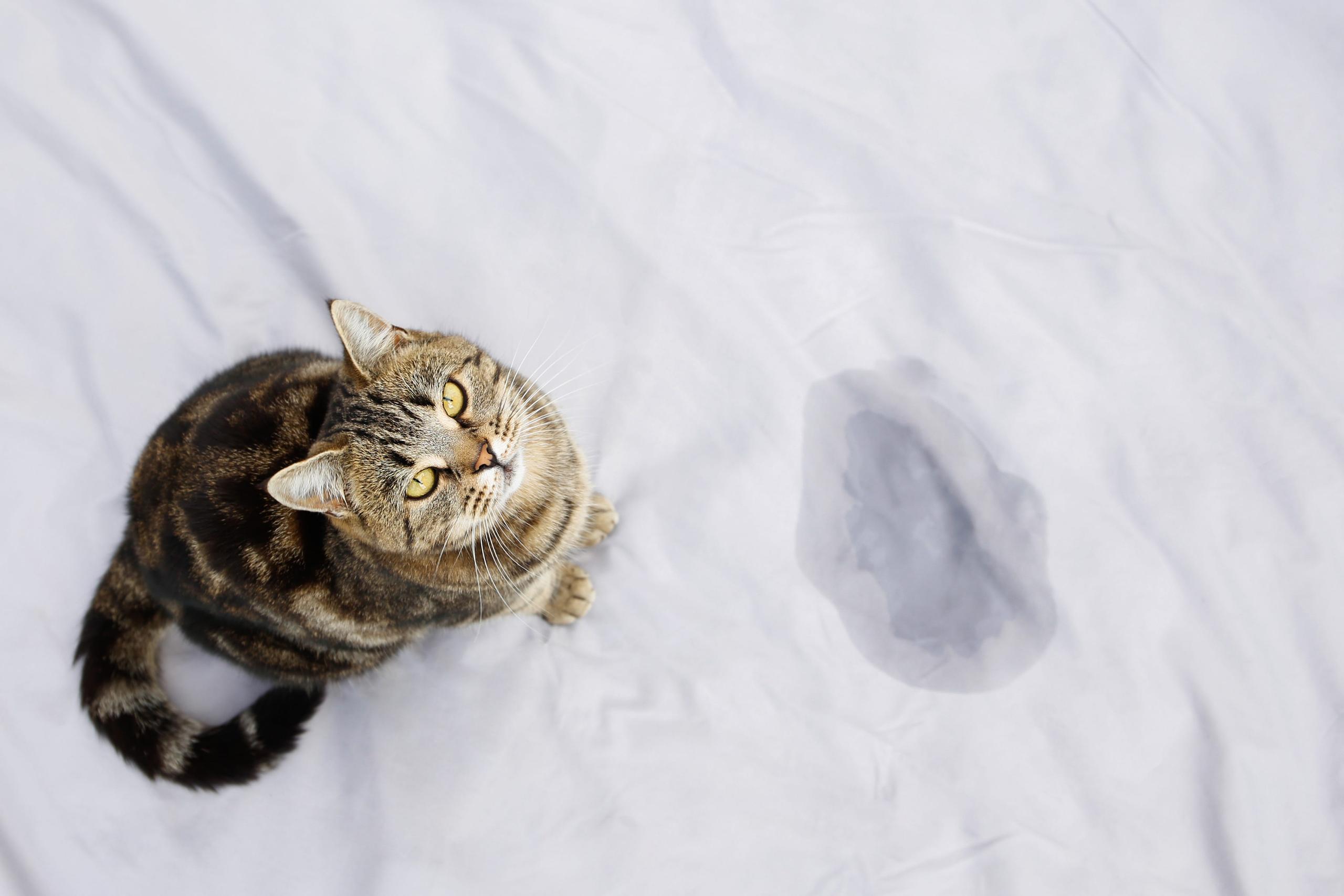

There's no worse way to discover your cat had an accident than climbing into bed and finding a cold, damp spot. (We're so sorry.) Before you drag the mattress to the curb, take a breath. In most cases, you can get cat pee out of a mattress with a few supplies and some patience.
Here's how to clean fresh and old stains, get rid of the smell, and keep it from happening again.
In this article
- Can you get cat pee out of a mattress?
- What you'll need
- How to get fresh cat pee out of a mattress, step by step
- How to get old or dried cat pee out of a mattress
- Cleaning methods by mattress type
- Enzyme cleaner vs. vinegar vs. baking soda vs. hydrogen peroxide
- Cleaning the sheets, comforter and pillows
- When to replace the mattress
- Why your cat peed on your bed
- How to keep your cat from peeing on the bed again
- Frequently asked questions
Can you get cat pee out of a mattress?
Yes, in most cases. The key is using an enzyme cleaner and letting the mattress dry completely. Fresh accidents are much easier to clean than old, dried ones, so act fast if you can.
Blot up as much urine as you can, saturate the spot with an enzyme cleaner, let it sit for the time on the label, cover it with baking soda overnight, vacuum, and let the mattress dry all the way through.
Keep in mind that removing the stain and removing the smell are two different jobs. A mattress can look perfectly clean and still smell like urine to your cat. And if your cat can still smell it, there's a good chance they'll go back to the same spot. That's why this guide leans on enzyme cleaners over regular soap. Part of why cat pee smells so bad is that the compounds behind the odour don't wash away easily.
What you'll need
The must-haves:
- Paper towels or old towels
- An enzyme cleaner made for pet urine
- Baking soda
- Gloves
Nice to have:
- White vinegar and a spray bottle
- A vacuum with an upholstery attachment
- A UV black light, for finding old stains
- A wet/dry vacuum
- A fan
Just as important is what not to use. Skip ammonia-based cleaners. Urine contains ammonia, so these can make the spot smell even more like a bathroom to your cat. Hold off on steam cleaners, hair dryers, or any other heat until the urine has been broken down, since heat can set the odour.
Never mix bleach with vinegar or ammonia-based products. The combination can release toxic fumes. Bleach doesn't belong on your mattress anyway, and there are plenty of cat urine cleaners, including DIY options, that do the job without the risk.
How to get fresh cat pee out of a mattress, step by step
- Strip the bedding and get it into the wash right away.
- Blot, don't rub. Press folded towels into the spot to pull urine up from the mattress. Standing on the towels helps. Keep going with fresh towels until they come up mostly dry.
- Saturate the area with an enzyme cleaner to break down the source of the smell. Use enough to reach as deep as the urine did.
- Let the cleaner sit for the full time listed on the label.
- Blot up the excess cleaner.
- Cover the spot with a thick layer of baking soda and leave it for several hours or overnight. Because baking soda absorbs odour, it makes it an excellent overnight deodorizer.
- Vacuum up the baking soda.
- Let the mattress dry completely before you put the sheets back on. Use a fan, open a window, or move the mattress into the sun if you can.
Keep your cat out of the bedroom while you clean. Many cats get curious when they see their favourite spot undergoing a change.
The same steps work on carpets and couches, too, and our guide to getting rid of cat urine smell in your house walks through those.
How to get old or dried cat pee out of a mattress
Found an old stain, or one you didn't know about? Dried cat pee takes more work, but it's not a lost cause.
Find the whole stain first. Old urine stains often glow under a UV black light. Turn off the lights and scan the whole mattress, since you may find spots you didn't know were there. Mark the edges so you know how far to treat.
Rehydrate the spot. Lightly dampen the dried area with water or enzyme cleaner. This loosens the dried urine so the cleaner can reach it.
Pre-treat with vinegar, then use enzyme cleaner. Mix equal parts white vinegar and water, spray the area, and blot it up. The vinegar helps cut the sharp ammonia smell at the surface. Then saturate the spot with enzyme cleaner and leave it alone for the full dwell time, so the enzymes can break down what's left deeper in the mattress. Finish with the baking soda and drying steps above.
Plan on more than one round. Dried urine often needs two or three treatments, with full drying in between.
If repeated rounds aren't working, a wet/dry vacuum can pull more liquid (and urine) out of the mattress after each treatment. You can also call a professional upholstery or mattress cleaner.
Air fresheners and scented sprays cover the smell for people, not for cats. Your cat's nose will find the urine underneath. Once the spot is truly clean, some cat parents use scents cats tend to avoid, like citrus, to discourage a return visit. (Skip concentrated essential oils, which can be toxic to cats.)
Cleaning methods by mattress type
Not every mattress handles liquid the same way. Before you start, check the manufacturer's care instructions.
Memory foam soaks up liquid and is slow to dry. Use less liquid and more blotting, and don't soak it. Expect it to take the longest to dry.
Innerspring and hybrid mattresses can handle a bit more liquid, but the padding and pillow tops on top of the springs tend to hold onto odour.
Pillow tops and mattress toppers are often easier to clean, or to replace on their own, than the whole mattress.
Removable covers can go in the wash according to the label, but the foam under the cover still needs treating. If urine went through the cover, it reached the core of the mattress, and washing the cover alone won't fix the smell.
|
Mattress type |
How much liquid it tolerates |
Recommended method |
Drying time to expect |
When to call a pro |
|
Memory foam |
Low |
Light enzyme treatment, lots of blotting, no soaking |
Longest |
Large or repeated accidents; smell returns after treatment |
|
Innerspring or hybrid |
Moderate |
Full enzyme treatment, baking soda, fan drying |
Moderate |
Odour trapped in the pillow top or padding |
|
Pillow top or topper |
Varies |
Treat like the mattress below it, or remove and clean separately |
Shortest if removable |
Topper is soaked through; consider replacing it |
Enzyme cleaner vs. vinegar vs. baking soda vs. hydrogen peroxide
Each of these does something different, so it helps to know which to reach for.
Enzyme cleaners break down the compounds in urine that cause the smell. They work on both fresh and old accidents. Vinegar is acidic and helps cut ammonia odour, which makes it a good pre-treatment for older stains. Does vinegar get rid of cat urine smell on its own? It helps, but it doesn't break down uric acid the way an enzyme cleaner does. Baking soda absorbs moisture and odour. Hydrogen peroxide is mostly a stain lifter for yellowed fabric.
|
Cleaner |
What it does |
Best for |
How to use it on a mattress |
Cautions |
|
Enzyme cleaner |
Breaks down the urine compounds behind the smell |
Fresh and old accidents; smell |
Saturate to the depth of the urine, wait the label time, blot, dry |
Don't use heat or steam afterward |
|
White vinegar |
Neutralizes ammonia odour |
Pre-treating old stains |
Mix 1:1 with water, spray, and blot |
Strong smell until dry; never mix with bleach |
|
Baking soda |
Absorbs moisture and odour |
Final deodorizing step |
Sprinkle a thick layer, leave for hours or overnight, vacuum |
Doesn't break down urine on its own |
|
Hydrogen peroxide |
Lifts stains |
Yellow stains on light fabric |
Use a small amount after spot-testing |
Can lighten fabric; never mix with vinegar in the same container |
When is DIY enough? A small, fresh accident caught right away will often come clean with blotting, vinegar, and baking soda. For old stains, large accidents, or a spot your cat keeps returning to, a commercial enzyme cleaner is worth the money.
Cleaning the sheets, comforter and pillows
Get your bedding into the washer right away. Wash it in cold or warm water, following the label, and skip hot water until the urine has been treated, since heat can set the odour. Add an enzyme laundry booster or a cup of white vinegar to the wash.
Air dry everything and give it a sniff before it goes in the dryer. If you can still smell urine, wash it again. Comforters and pillows that don't fit in your machine can go to a laundromat with large-capacity washers or to a professional cleaner.
When to replace the mattress
Is a mattress ruined if it gets pee on it? Usually not, especially after a single accident that you clean up quickly. But some mattresses can't be saved. It may be time to replace yours if:
- The odour keeps coming back after several rounds of enzyme cleaner
- You see or smell mould or mildew from repeated soaking
- Your cat keeps going back to the same spot no matter what you try
An older mattress that's had repeated accidents is a much harder case than a newer one with a single fresh spot.
Why your cat peed on your bed
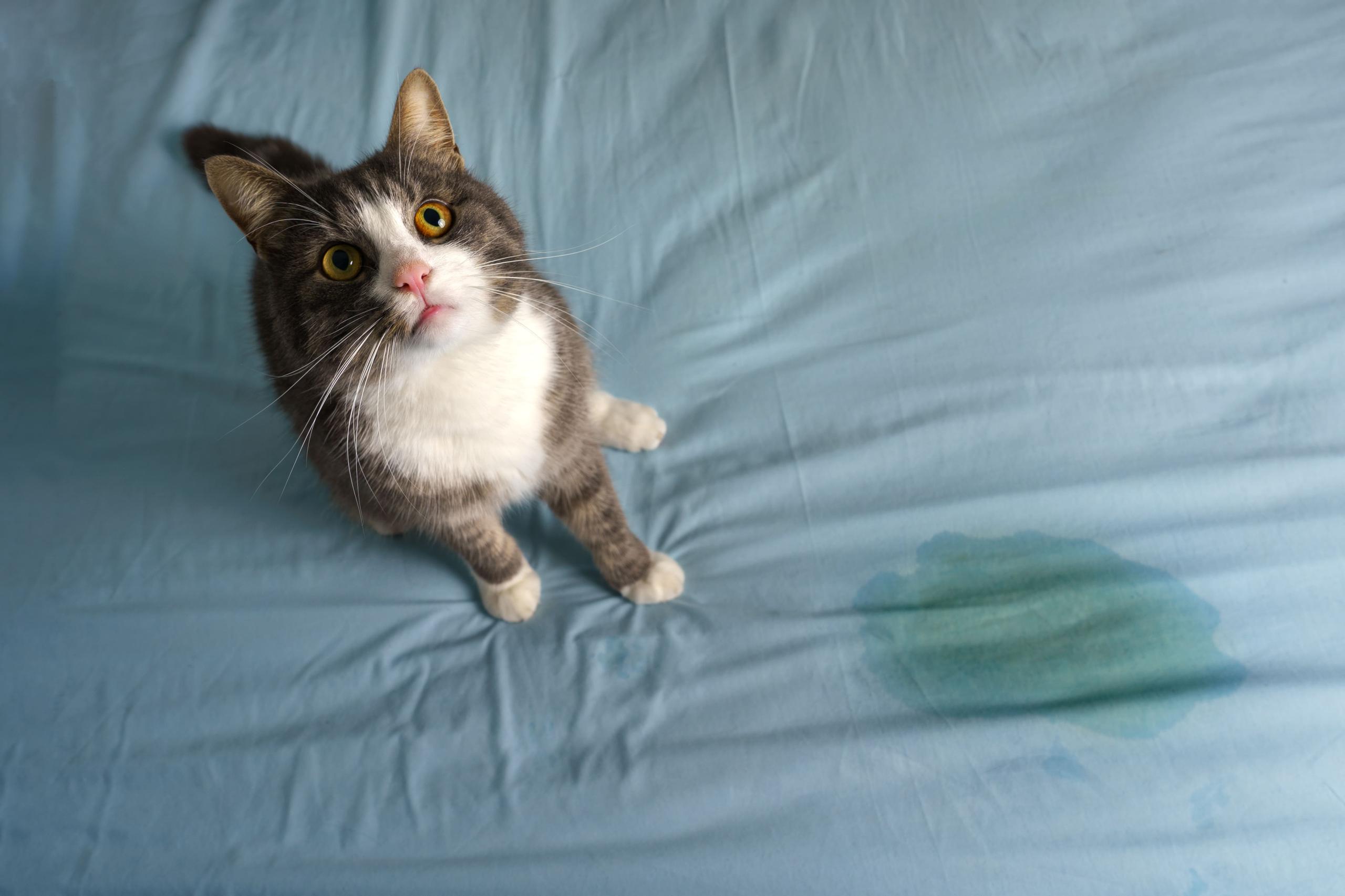
If your cat peed on your bed, see your vet first. Peeing on the bed can be a sign of a medical issue, like a urinary tract infection, kidney disease, urinary crystals or stones, or a urinary blockage. A cat in pain may start to associate the litter box with that pain, and they start avoiding it.
Once your vet has ruled out a medical cause, look at the rest of the picture:
- Litter box problems, like a dirty box, too few boxes, a bad location, or a litter your cat doesn't like
- Stress from changes at home, like a move, a new pet, or a new person
- Marking, especially in multi-cat homes
Your bed is soft, absorbent, and smells like you, which can make it feel like a safe place to go. These are the same reasons cats end up peeing outside the litter box on rugs, couches, and laundry.
How to keep your cat from peeing on the bed again
See your vet first, especially if this is new behaviour, or if your cat is peeing frequently, in small amounts, straining, or you see blood.
If your cat is straining to pee and little or nothing comes out, this is an emergency, especially in male cats. A urinary blockage can be life-threatening. Go to your vet or an emergency clinic right away.
Once your cat has a clean bill of health:
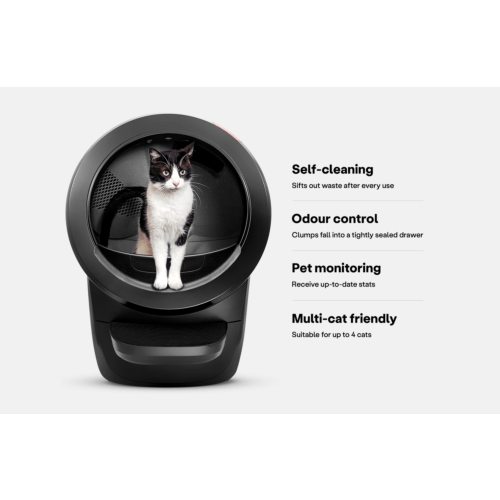
- Fix the litter box setup. Keep it clean, offer one box per cat plus one, put boxes in quiet spots, and use a litter your cat accepts. A self-cleaning litter box like Litter-Robot automatically cycles waste, leaving your cat with a fresh place to go every time.
- Block access to the bedroom while you clean and retrain, and add a waterproof mattress protector once your cat is allowed back in.
- Reduce stress after big changes like a move, a new pet, or a new schedule. Extra play, a predictable routine, and quiet hiding spots can help.
Most importantly, don't punish your cat. That only adds stress, and stress is a common reason cats pee in the house to begin with.
Frequently asked questions
Will cat pee come out of a mattress?
Yes, in most cases. Blot up as much urine as possible, saturate the spot with an enzyme cleaner, let it sit, cover it with baking soda, vacuum, and let the mattress dry completely. Old stains may need two or three rounds.
Does vinegar get rid of cat urine smell?
Vinegar helps cut the ammonia smell, which makes it a good pre-treatment. It doesn't break down uric acid, though, so follow it with an enzyme cleaner to remove the smell for good.
Is a mattress ruined if a cat pees on it?
Usually not. A single accident that's cleaned quickly can almost always be removed. It may be time to replace the mattress if the smell keeps coming back after several enzyme treatments or you notice mould or mildew.
Sources: