
What you’ll pay to neuter or spay a cat depends mostly on where you go. Private practices set their own prices: one in Stourbridge lists £79.52 to neuter a male and £111.10 to spay a female, and one in Canterbury lists £95 and £135. Charity schemes cost far less for owners who qualify. In London, Cats Protection’s C4 scheme will neuter and microchip a cat for £10. That gap reflects the difference between a subsidised charity scheme and a private practice. Where you go matters and we’ll break down why.
Neutering costs less than spaying, and there’s a clinical reason for that, covered below. Quoted prices and final bills also don’t always match, because several commonly needed add-ons are billed separately. This article walks through both.
In this article
- Cost by Where You Go
- Why Spaying Costs More Than Neutering
- What’s Included in the Price, and What Isn’t
- What Makes the Cost Go Up
- How to Find Low-Cost Spay and Neuter Options
- Does Pet Insurance Cover Spaying or Neutering?
- Is It Worth the Cost?
- When Should You Schedule It?
- What to Expect on Surgery Day and During Recovery
- How to Budget for It and What to Do Next
Cost by Where You Go
|
Provider Type |
Price |
What’s Usually Included |
Wait Time / Availability |
Best Fit For |
|
Full-service private practice |
Highest. Two practices we checked list £79.52 and £95 to neuter, and £111.10 and £135 to spay |
Exam, bloodwork, anaesthesia, surgery, monitoring, pain meds, laser |
Often within 1-3 weeks |
Owners who want continuity of care with their regular vet, bloodwork, and thorough anaesthesia monitoring |
|
Charity low-cost clinic |
Lowest for owners who qualify. RSPCA Bristol charges eligible clients £30 to neuter and £45 to spay. Cats Protection’s London C4 scheme charges £10, microchip included |
Surgery and basic anaesthesia; exam may be extra |
Varies; often waitlists |
Budget-conscious owners; income-qualified in some programmes |
|
Animal shelter or rescue |
Usually included in the adoption fee. Cats Protection St Albans charges £150 for an adult cat and £200 for a kitten, neutering included |
Often bundled into adoption fee; vouchers available |
Depends on organisation |
New adopters; cats from rescues |
|
Mobile clinic or TNR programme |
Usually covered by charity vouchers for feral cats. Cats Protection’s Wrexham team, for example, gives local vets vouchers to cover neutering the feral cats it traps |
Minimal; surgery and basic anaesthesia only |
Scheduled events; limited slots |
Community cats; owners in low-income areas |
|
Veterinary teaching hospital |
Can be lower than private practice. The University of Liverpool’s vet practice lists £75 to neuter and £100 to spay |
Usually comprehensive; supervised by licensed vets |
May be longer; appointment-based |
Owners comfortable with student involvement |
If you’re adopting, check what’s included in the adoption package before booking separately. Many shelters bundle the surgery or provide a voucher.
Why Spaying Costs More Than Neutering
This question comes up a lot, and the answer isn’t arbitrary.
Neutering a male cat is an external procedure. The testicles are accessed through small incisions in the scrotum, the procedure takes minutes, and recovery is fast. Spaying a female is major abdominal surgery. The vet enters the body cavity, locates and removes the ovaries and uterus, and closes in layers. It takes longer, requires more anaesthesia, involves more monitoring, and carries a higher risk profile for complications.
More surgical time means more anaesthetic drugs, more vet and nurse hours, more equipment, and a more involved recovery. That’s the price difference. For a household with multiple cats of both sexes, budget for those two numbers separately.
What’s Included in the Price, and What Isn’t
This is the section that matters most when you’re comparing quotes.
Typically bundled:
- Pre-surgical physical exam
- Anaesthesia
- The surgery itself
- Basic monitoring during the procedure
- Initial pain medication given in clinic
Frequently billed separately:
- Pre-anaesthetic bloodwork
- IV catheter and fluids during surgery
- Take-home pain medication
- E-collar or recovery suit
- Follow-up visit
Common same-day add-ons owners choose:
- Microchipping
- Vaccines due at that age
- Nail trim
- Laser therapy
- Dental assessment
Surcharges that catch people off guard:
A cat in heat, a pregnant cat, an overweight cat, an older cat, or a cryptorchid male (one or both testicles haven’t descended) will usually cost more. Cryptorchid neuters become abdominal procedures and are priced closer to a spay. A cat in heat has increased blood supply to the reproductive tract, which makes surgery more technically demanding and increases bleeding risk.
When you call for a quote, ask specifically: what’s included, what’s billed separately, and are there any surcharges that might apply to my cat? Those three questions will get you to an accurate number.
What Makes the Cost Go Up
Geography. Metro versus rural pricing can swing the final number more than any single factor. A procedure in a major city often costs twice what the same procedure costs in a small town.
Age and weight. Older and heavier cats carry more anaesthetic risk. Additional monitoring or a longer workup before surgery can add to the bill.
In heat or pregnant. Both add surgical complexity and typically add a surcharge. Scheduling before the first heat avoids this and keeps cost down.
Cryptorchid neuter. If one or both testicles are retained in the abdomen, the procedure becomes abdominal surgery. Budget accordingly.
Pre-existing health conditions. A cat who needs extra bloodwork, additional monitoring, or a specialist consult before anaesthesia is cleared will cost more upfront. It’s worth it though, because anaesthesia in a compromised cat without the right prep is the riskier and ultimately more expensive path.
How to Find Low-Cost Spay and Neuter Options
Cats Protection can help with the cost of neutering if you receive a means-tested benefit such as Universal Credit, or your household income is under £25,000 a year before tax. Enter your postcode on its website to find your local team. PDSA PetAid hospitals are another option, and the PDSA website lists them.
Local rescues and animal charities often run subsidised neutering days or voucher schemes. These change frequently, so call rather than relying on what you find online.
TNR (trap-neuter-return) programmes for community cats often extend services to owned cats in the same neighbourhood. It’s worth asking even if you have an indoor cat.
Veterinary schools are another option. Procedures are supervised by licensed veterinarians, appointments tend to be longer, and pricing is usually mid-range.
Does Pet Insurance Cover Spaying or Neutering?
Standard accident-and-illness policies almost never cover it. Spaying and neutering are elective preventive procedures, and most base policies exclude them by definition.
Where it sometimes is covered: optional wellness or routine-care riders added on top of a base policy. These typically reimburse a set amount per year for preventive care, which can include spay/neuter. Read the fine print on what’s actually reimbursed and what the rider costs annually before assuming it’s a good deal for this specific expense.
Waiting periods and enrolment age matter too. If someone is considering a policy specifically to offset the surgery cost, it’s usually not the right financial move. By the time waiting periods clear, you may have already scheduled the procedure.
The more honest framing: insurance is rarely the best way to pay for a spay or neuter. It matters more for what comes after, when unexpected illness or injury is the question.
Is It Worth the Cost?
Yes, and the maths is straightforward.
On the health side: spaying eliminates the risk of pyometra (a serious uterine infection that often requires emergency surgery costing far more than a routine spay) and sharply reduces mammary cancer risk, particularly when done before the first heat. Neutering eliminates testicular cancer and reduces the risk of prostate problems.
On the behavioural side: reduced spraying and urine marking, less roaming, less fighting, and no heat cycles.
Additional financial comparisons: one-time surgery cost versus an unplanned litter, an abscess from a fight wound due to intact male aggression, or years of replacing furniture your intact male has marked. The surgery is usually the cheaper outcome.

When Should You Schedule It?
Scheduling before the first heat avoids the in-heat surcharge and is generally less expensive.
If you’re adopting a kitten, ask whether the surgery is included or whether a voucher is provided before you pay separately. A quick call saves the cost of a procedure you’ve already paid for.
What to Expect on Surgery Day and During Recovery
Before: Most clinics ask that you withhold food after midnight the night before. Drop-off is usually early morning, and your vet will do a pre-op exam before proceeding.
The day itself: Neuters are often done and discharged same-day within a few hours. Spays take longer and may mean a mid-afternoon pickup. The clinic will call when your cat is in recovery.
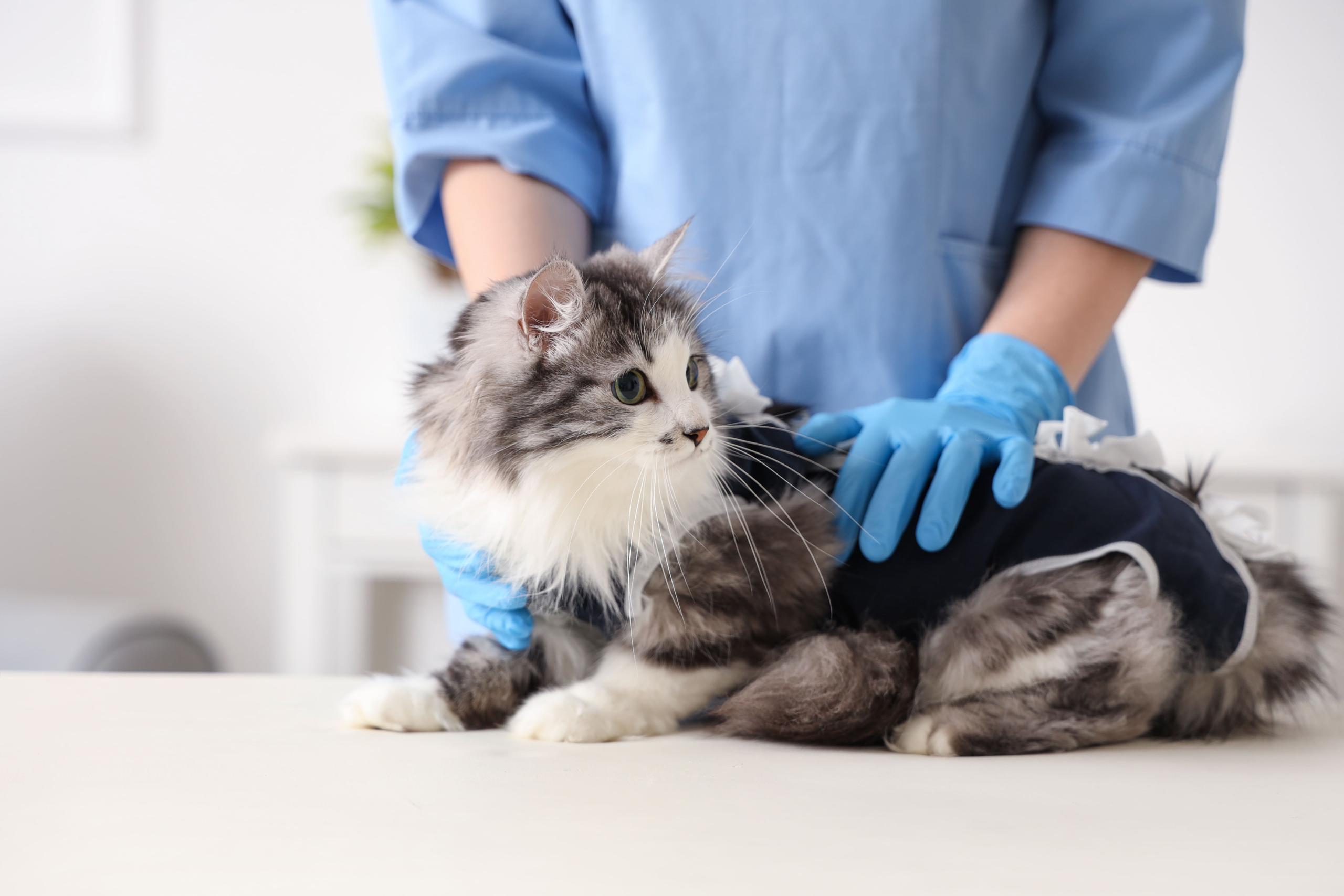
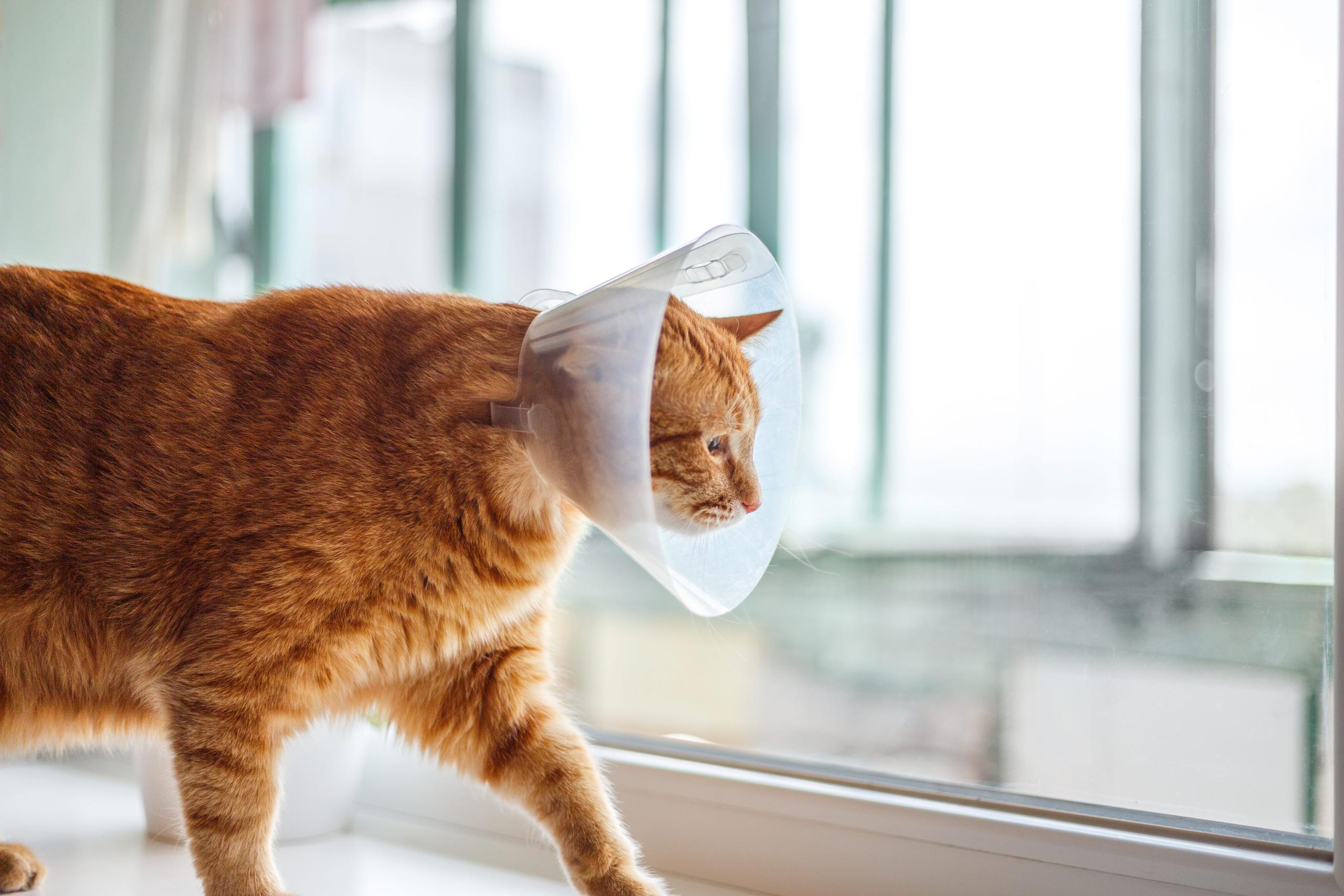
Going home: Your cat will be groggy. That’s normal and expected — it’s the anaesthesia wearing off, not a sign something went wrong. An e-collar or recovery suit keeps them from licking the incision. Activity restriction for 10 to 14 days for a spay, 5 to 7 for a neuter. Check the incision daily for swelling, discharge, or separation.
Litter box during recovery: Many vets recommend switching to a paper or pellet litter for the first week or two to keep granules out of the incision site. A low-sided box is also easier to step into when a cat is sore. Once healed, you can go back to whatever you normally use.
Normal versus call-worthy: Some grogginess, mild appetite decrease, and sleeping more than usual are all expected the first day or two. Reasons to call: not eating 24 hours post-op, vomiting that doesn’t stop, incision that’s open, red, or draining, or a cat who seems to be in significant pain despite pain medication.
How to Budget for It and What to Do Next
Three steps:
- Call two or three providers and ask what’s included in the quoted price, what’s billed separately, and whether any surcharges might apply to your cat.
- Check Cats Protection’s website for help with neutering costs in your area.
- If cost is a real barrier, call your local shelter and ask about voucher schemes before assuming you’re out of options.
The specific questions to ask when you call: Is pre-anaesthetic bloodwork included or separate? Are take-home pain meds included? Is there a surcharge if my cat is in heat or overweight? What’s the follow-up policy if there’s a complication?
Cost should not be the reason a cat doesn’t get spayed or neutered. Subsidised options exist in most areas, and the resources to find them are free.
Sources
https://powisvets.co.uk/prices/
https://canterburyvets.co.uk/our-prices/
https://www.cats.org.uk/what-we-do/neutering/financial-assistance
https://www.bristolarc.org.uk/help-and-advice/cat-neuter-clinics/
https://www.cats.org.uk/stalbans/adopt-a-cat/adopting-a-cat/
https://www.cats.org.uk/wrexham/feature-pages/trap-neuter-release-scheme
https://www.liverpool.ac.uk/university-veterinary-practice/client-information/price-list