
If your cat has been shaking their head, scratching at their ears, and leaving dark debris on the pillow they've claimed as their own, ear mites are high on the list of suspects. They're one of the most common ear problems in cats, they're treatable, and they're worth catching early.
This article covers what ear mites are, how to recognise them, how to tell them apart from a wax buildup or infection, and when to call your vet.
In this article
- What Are Ear Mites in Cats?
- Signs and Symptoms of Ear Mites in Cats
- What Do Ear Mites Look Like in Cats?
- Ear Wax vs. Ear Mites vs. Ear Infection
- How to Check Your Cat's Ears at Home
- How Do Cats Get Ear Mites?
- Are Ear Mites Contagious to Humans and Other Pets?
- How Ear Mites Are Diagnosed and Treated
- What Happens If Ear Mites Go Untreated?
- How to Prevent Ear Mites
- When to Call Your Vet
What Are Ear Mites in Cats?
Ear mites are tiny parasites called Otodectes cynotis that live in the ear canal and feed on wax and skin oils. What matters practically is that they're extremely common, highly contagious between animals, and very treatable when caught.
The mites themselves are roughly the size of a pinhead. Owners never see the mites directly. What they see is the debris: dark, crumbly material that accumulates in the ear canal as a result of the infestation.
Ear mites show up most often in kittens, outdoor cats, shelter and foster cats, and any cat in a multi-pet household where one animal is infested. If you've recently adopted a kitten or taken in a foster, ear mites are routine enough that checking is recommended.
Signs and Symptoms of Ear Mites in Cats
The signs are usually hard to miss once you know what you're looking for.
The most recognisable is dark, dry, crumbly discharge in the ear canal, often described as looking like coffee grounds. It's usually present in both ears and tends to accumulate in volume.
Beyond the visible debris, you may notice:
- Intense, persistent scratching at the ears and around the head and neck
- Frequent head shaking, often the first thing owners notice from across the room
- A strong or yeasty odour coming from the ears
- Scabs, scratches, hair loss, or crusting on the ear flaps and the skin behind the ears
In advanced or untreated cases, you may see ears held flat or at an odd angle, a head tilt, loss of balance, or a swollen ear. These signs mean things have progressed and a vet visit is urgent.
What Do Ear Mites Look Like in Cats?
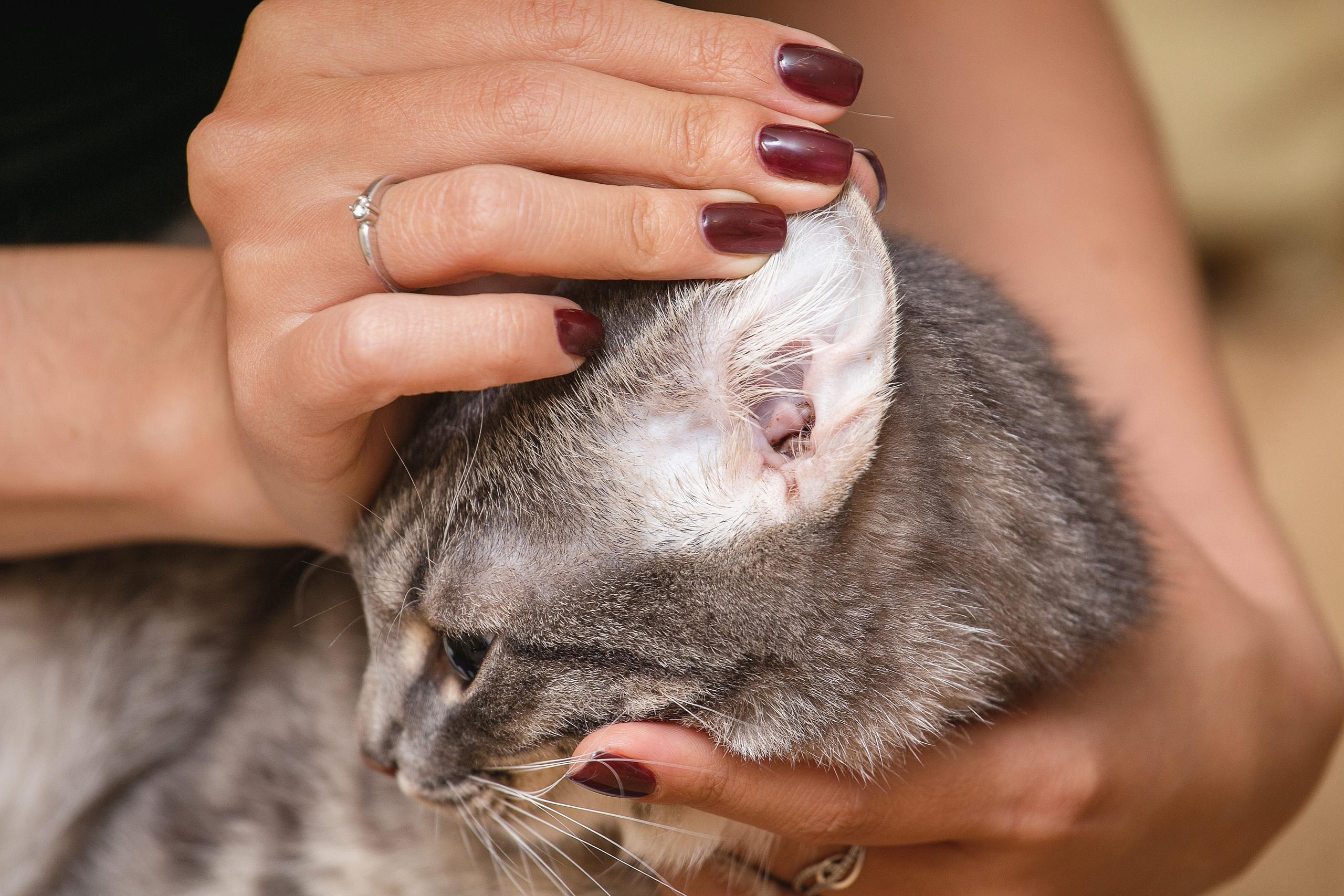
The debris is the thing to look for. It's dry, dark brown to black, crumbly in texture, and distributed through the canal rather than sitting only at the opening. In a mild case, you might see a small amount. In a heavy infestation, the canal can be packed with it.
If you want to try to spot the mites themselves, put some of the debris on a dark piece of paper in bright light and look closely. You may be able to see tiny white specks moving. Most people can't see them with the naked eye, which is why the debris is more useful for home assessment.
One important caveat: appearance is suggestive, not diagnostic. Dark debris in the ear canal is characteristic of ear mites, but it can also appear with yeast or bacterial infections and other conditions. A vet looking at a swab under a microscope is what actually confirms it. Don't treat based on appearance alone.
Ear Wax vs. Ear Mites vs. Ear Infection
These are the three most common causes for debris in the ears.
|
Normal Ear Wax |
Ear Mites |
Ear Infection |
|
|
Appearance |
Clear to light brown, slightly oily |
Dark brown to black, crumbly |
Variable, often moist or greasy, brown, red ears |
|
Texture |
Waxy, smooth |
Dry, granular |
Wet or pasty |
|
Colour |
Tan to light brown |
Dark brown or black |
Yellow, brown, or bloody |
|
Odour |
Minimal |
Mild to moderate |
Often strong or foul |
|
One ear or both |
Usually minimal in both |
Typically both |
Often one ear, can be both |
|
Next step |
Monitor |
See your vet |
See your vet |
Normal cat ear wax is light in colour, waxy in texture, present in small amounts, and not causing any itching. If your cat's ears look like that and they're not scratching, you're probably looking at normal.
Mite debris is dark, dry, crumbly, heavy in volume, almost always in both ears, and paired with significant itching and head shaking.
A yeast or bacterial infection tends to produce moist or greasy discharge, often has a stronger smell, and frequently shows up in one ear rather than both. Infections are also often secondary to something else, like allergies.
What diagnoses it is a vet swabbing the ear and looking at it under a microscope. That's not something you can replicate at home, which is why guessing and treating without a diagnosis wastes time and can make things worse.
How to Check Your Cat's Ears at Home
The best time to do this is when your cat is calm, ideally after a nap rather than after a play session. Good lighting helps a lot.
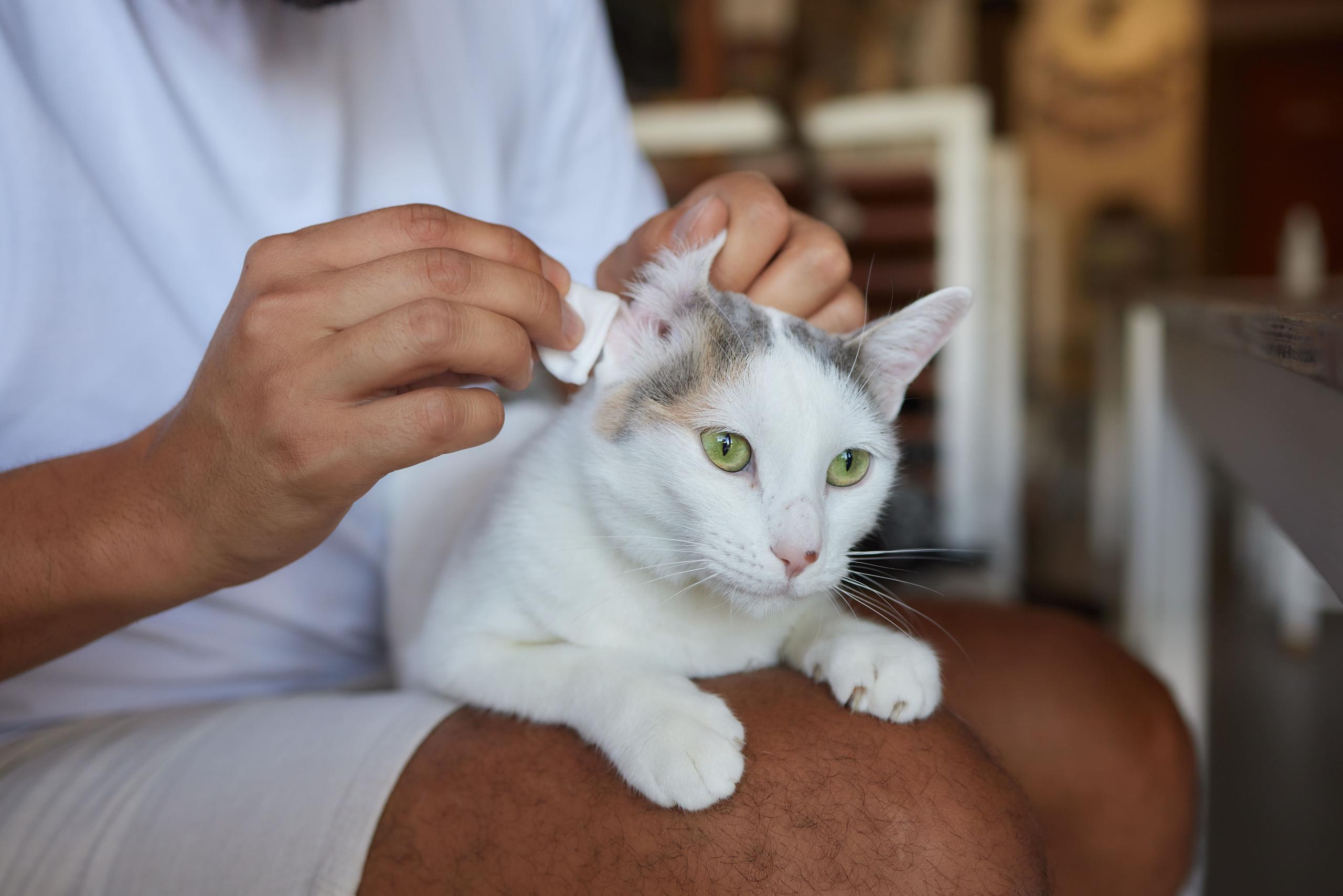
Hold your cat gently and fold back the ear flap to get a clear view of the opening of the canal. Look at both ears and compare them. You're looking for debris, redness, odour, or anything that seems asymmetrical.
If you see dark material and want to get a better look, you can wipe a small amount onto a piece of paper and look for movement in bright light, as mentioned above.
One hard rule: don't insert a cotton bud, dropper, or anything else into the ear canal. It feels like the obvious thing to do, but it packs debris further in, can damage the delicate structures inside the canal, and if the eardrum is already compromised, it can cause serious neurological harm.
How Do Cats Get Ear Mites?
Direct contact with an infested animal is by far the most common route. Kittens often pick up ear mites from their mother or littermates, which is why kittens from shelters and fosters show up so often with them. Multi-cat homes, catteries, boarding facilities, and shelters create conditions where close contact is constant and transmission is easy.
Indoor-only cats can absolutely get ear mites. A new pet entering the home, a foster kitten, a dog that goes outside, or even contact at a vet practice or groomer can all introduce mites to an otherwise unexposed cat. Being indoors doesn't fully eliminate the risk.
Mites can survive off a host for a short period, which is why bedding, blankets, and soft surfaces in a home with an infested cat need to be washed. It's not a long-lived environmental contamination, but it's enough to allow reinfection if you skip washing.
Are Ear Mites Contagious to Humans and Other Pets?
Other pets: Yes, readily. Cats, dogs, ferrets, and rabbits can all get ear mites, and they pass them to each other through direct contact. This is why every animal in the household gets treated, not just the one showing symptoms. Treating only the symptomatic pet and leaving the others untreated almost guarantees reinfection.
Humans: Rare, and usually not what people fear. Ear mites don't establish themselves in human ear canals the way they do in cats. What can happen is a transient skin irritation if you've had prolonged close contact with a heavily infested pet. It's typically self-limiting and resolves once the pet is treated.
If someone in your household develops itching or a rash that doesn't resolve, see a doctor rather than treating yourself based on a pet care article. But don't panic: human ear mite infestation is genuinely uncommon.
How Ear Mites Are Diagnosed and Treated
A vet visit for suspected ear mites involves an otoscope exam, a swab reviewed under a microscope, and a check for secondary infection or a damaged eardrum. The microscope step is key to making a diagnosis. Treating an infection as mites, or mites as an infection, wastes weeks and lets damage accumulate in the meantime. Veterinarians will look at both an ear cytology and a mineral oil slide with samples of the debris.
Treatment today is much easier than it used to be. Modern single-dose or short-course topical parasiticides work well and are far simpler than the older multi-week protocols. Your vet will also clean the ears professionally and recommend treatment for every pet in the home at the same time.
Wash bedding, blankets, and any soft surfaces the cat frequents during and after treatment. Skipping this step is one of the most common reasons mites come back.
On home remedies: olive oil, mineral oil, hydrogen peroxide, vinegar, and tea tree oil are all commonly suggested online. Don't use them. Beyond the fact that they don't reliably work, if the eardrum is already ruptured from the infestation or the scratching, putting any liquid in the canal can cause serious damage. The risk isn't worth it when a vet visit and an effective treatment are readily available.
What Happens If Ear Mites Go Untreated?
The short answer on "can ear mites kill a cat": not on their own in an otherwise healthy adult cat, but the complications can be serious at any age, and in young kittens a heavy infestation can contribute to significant illness.
What untreated ear mites lead to:
|
Complication |
What Causes It |
Warning Signs |
Reversible? |
|
Aural haematoma |
Violent head shaking ruptures blood vessels in the ear flap |
Swollen, fluid-filled ear flap |
Yes, but often needs drainage and surgical repair |
|
Secondary infection |
Inflamed canal becomes a breeding ground for bacteria or yeast |
Foul smell, worsening discharge, pain |
Yes, with treatment |
|
Canal damage |
Chronic inflammation causes thickening and narrowing |
Progressive hearing changes, chronic infections or head tilt |
Sometimes permanent |
|
Hearing loss |
Eardrum rupture or severe canal damage |
Head tilt, loss of balance, behaviour changes |
Partial or full loss, depending on severity |
Relentless scratching also leads to self-trauma, like open sores and infected wounds on the ear flaps and the skin around the neck. Those secondary wounds need their own treatment and add to recovery time.
The cost of catching this early is low. The cost of letting it go is much higher.
How to Prevent Ear Mites
Build a quick ear check into something you're already doing. Nail trims, brushing sessions, or a weekly once-over are all natural opportunities to take a look.
Year-round parasite preventives are worth mentioning here because most owners don't realize it: many of the monthly topicals that cover fleas also cover ear mites. If your cat is already on a broad-spectrum preventive, they may have protection. Ask your vet what the current product covers.
Any new cat, foster, or kitten entering the home should be checked and ideally treated before mixing with resident pets. Quarantining for even a few days while you sort that out is good practice.
When treating, every pet in the household gets treated simultaneously, even the ones with clean ears. Untreated animals can reinfect the treated ones, and you end up going in circles.
Wash all bedding, blankets, and soft surfaces on hot during and after treatment.
When to Call Your Vet
Any dark discharge, persistent scratching, or head shaking that lasts more than a day or two is worth a call.
Go in sooner for:
- A swollen ear flap
- Head tilt or loss of balance
- Bleeding or open sores
- A foul smell
- A cat that cries or pulls away when the ear is touched
When you go in, bring a description of how long it's been going on, whether it's one ear or both, what other pets are in the home and whether they're showing signs, and anything you've already tried.
And a note on prep: if you've been putting anything in the ear at home, stop before the appointment. The vet needs to be able to sample the discharge as it is. Cleaning the ear before the visit removes the very material that confirms the diagnosis.
The Bottom Line
Ear mites are common, recognisable, and very treatable. Catch them early, treat every pet in the home, and don't try to manage it yourself with home remedies. A vet visit now is a lot easier than dealing with an aural haematoma later.
Sources
https://hospital.vetmed.wsu.edu/2022/01/03/examining-and-medicating-a-cats-ears/
https://veterinarypartner.vin.com/default.aspx?pid=19239&id=4951535