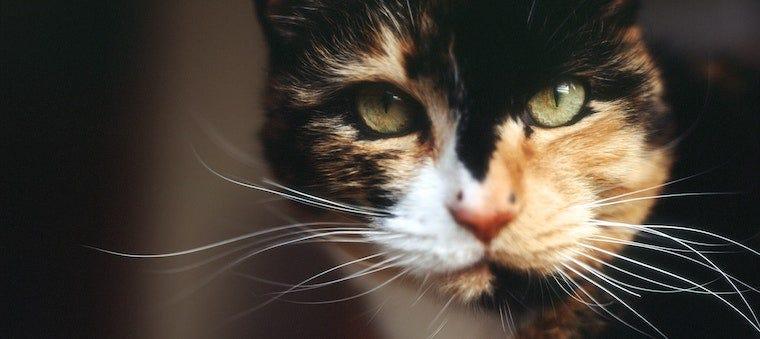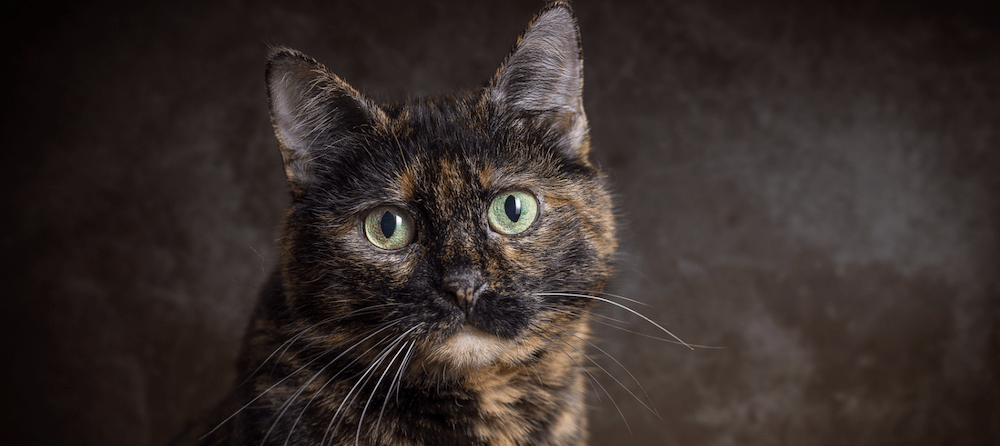

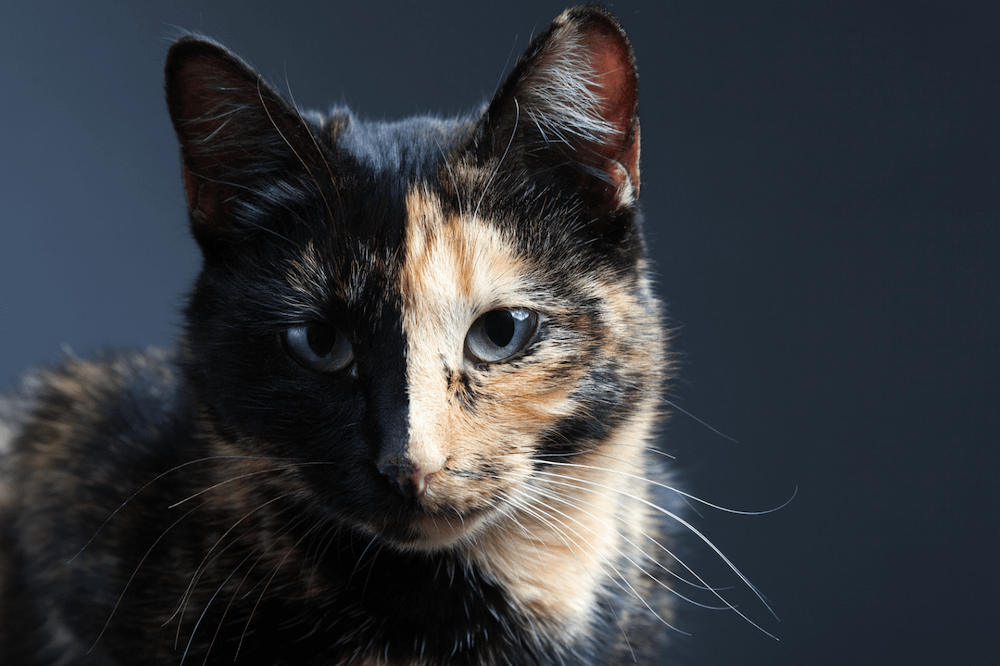
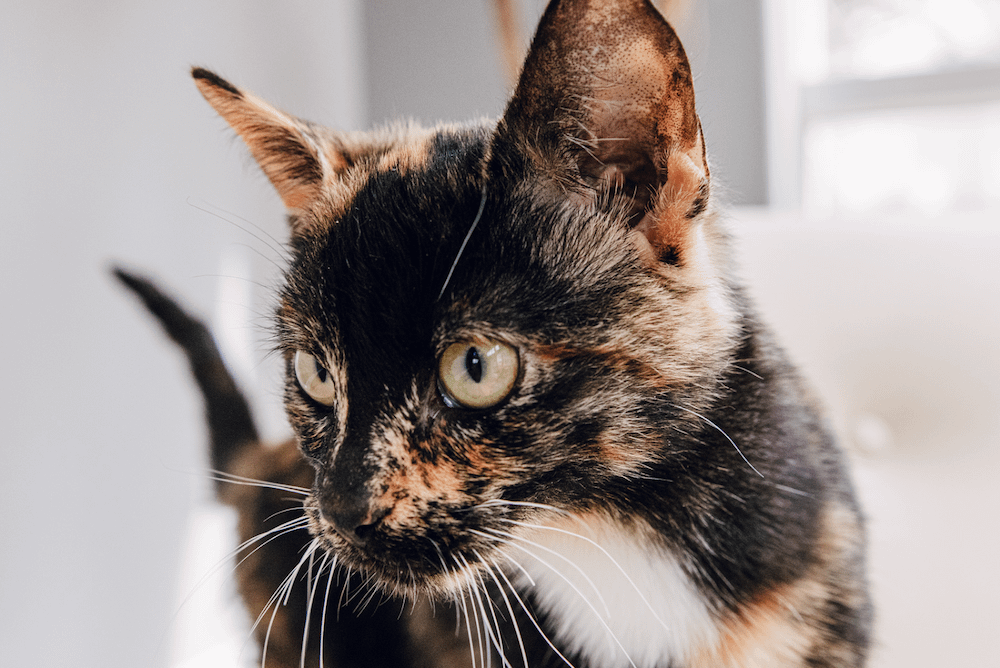
The tortoiseshell cat, aka the tortie cat, is the mottled beauty of the feline world. These cats are both eye-catching and exquisite, with a pattern that truly looks like no other (to cat lovers, at least!). Torties are infamous for their vocal, exuberant attitudes and continuous energy. This female-dominated group takes no sass from anyone but sure knows how to hand some out!
Let’s take a look at some of the fascinating facts and common questions about the multi-coloured tortie. For example, what is a tortoiseshell vs. a calico cat? And is tortitude a real thing? Keep reading to find out.
1. Tortie is not a breed
Like tabby and calico, “tortoiseshell” is not a specific breed of cat. In reality, there are many types of tortoiseshell cats though they have many specific attributes that make them seem like their own breed. Tortie cats are named because their fur pattern has a similar look to the now-banned tortoiseshell material produced from the shells of larger species of tortoise and turtle (synthetic tortoiseshell remains popular, though). This pattern can present in both pedigree and mixed-breed cats.
This coat pattern is distinctive enough to suit a particular type of cat: sociable and a wonderful companion.
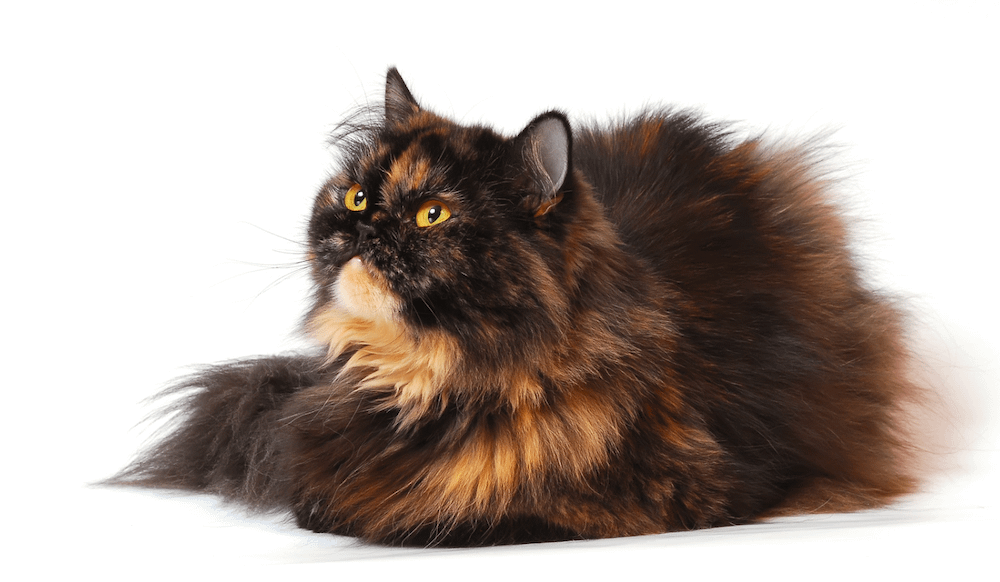
Tortoiseshell cat breeds
While not a breed itself, the tortoiseshell pattern appears more frequently in certain cat breeds, including:
- American Shorthair
- British Shorthair
- Burmese
- Cornish Rex
- Japanese Bobtail
- Maine Coon
- Persian
- Ragamuffin
- Scottish Fold
- Siamese
2. Tortie vs calico
Tortoiseshell cats are often confused with calico cats, and vice versa. However, there is indeed a difference between the two.
Although these coat patterns look similar, one particular colour makes all the difference between tortoiseshell and calico: white. Calico cats typically sport a tri-coloured coat of white, black, and red/orange, while tortoiseshell cats combine two colours, with no white. In short, the difference between tortoiseshell cats and calico cats lies in the fact that torties have no white in their coat.
Generally, tortie colours are described as red and black — but “red” can also be orange, yellow, or cream, and “black” can be chocolate, grey, or blue. The general rule of thumb, then, is this: if you see a multicoloured cat with white in their coat, they are more likely calico than tortie.
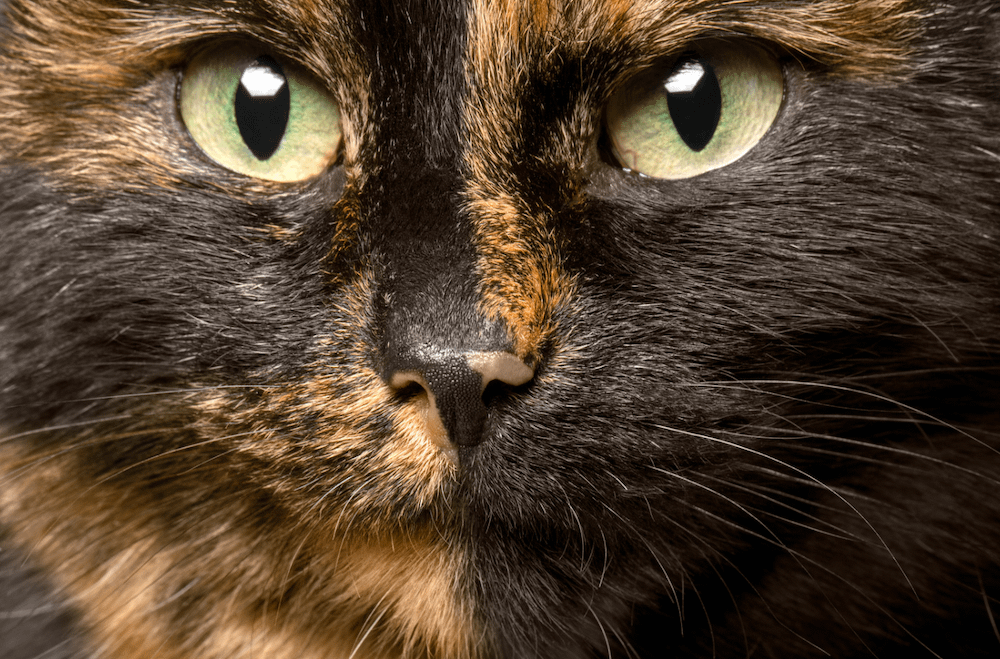
3. The different types of tortoiseshell cats
As if tortoiseshell cats weren’t mysterious enough already, their coat patterns come in a whole range of sub-categories! These come in addition to the traditional colour combination, sometimes called “mosaic tortie.”
Bridled
When the colours in a tortie’s coat appear to be woven together, it’s considered bridled. The more you become obsessed with tortoiseshell cats, the easier it will be to spot these specific distinctions.
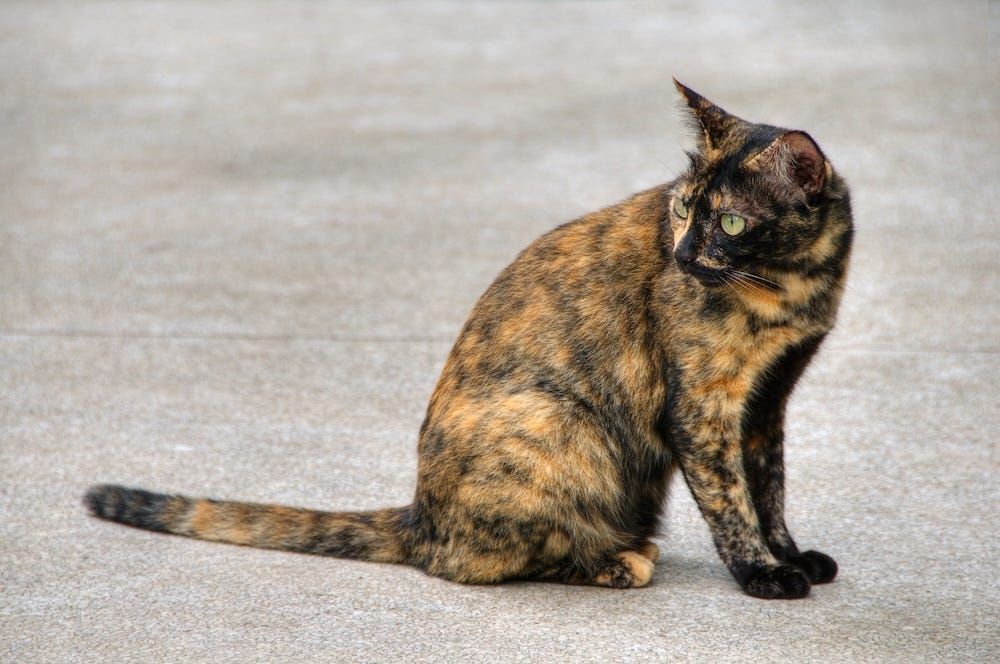
Dilute tortoiseshell
Then there’s the dilute tortoiseshell coat, resulting from recessive genes that “soften” the coat colours. If you’ve seen a tortie cat with lighter, pastel-like colours such as cream, lilac, or cinnamon, then you’ve seen a dilute tortoiseshell cat — and wow, are they something!
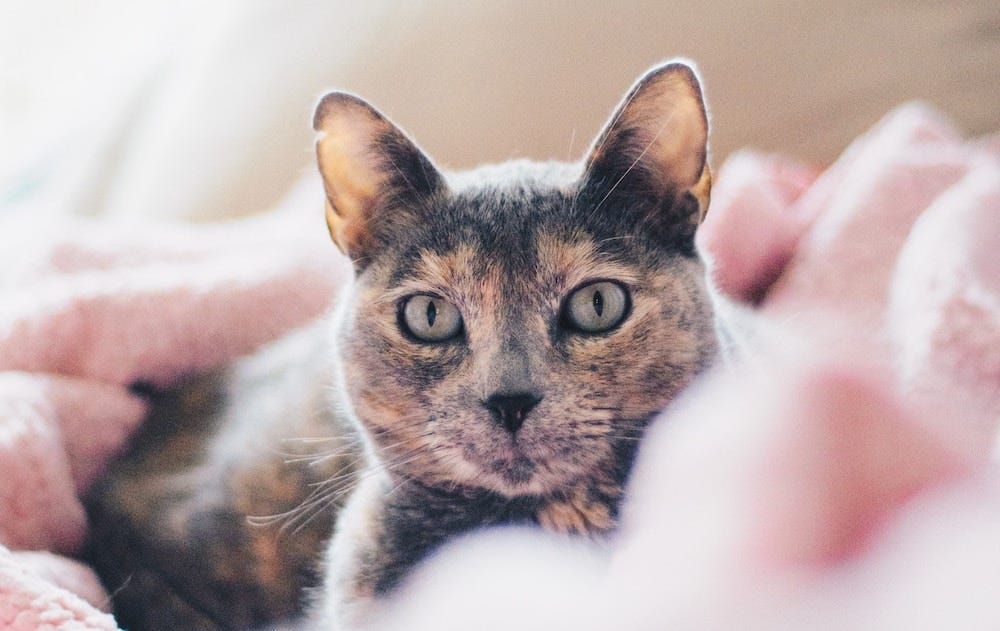
Tortie tabby (torbie)
Looking for more? Look no further than the patched “torbie”, when tortie meets tabby. The torbie typically features patches of brown and orange tabby stripe patterns, with markings often more apparent on the legs and head.
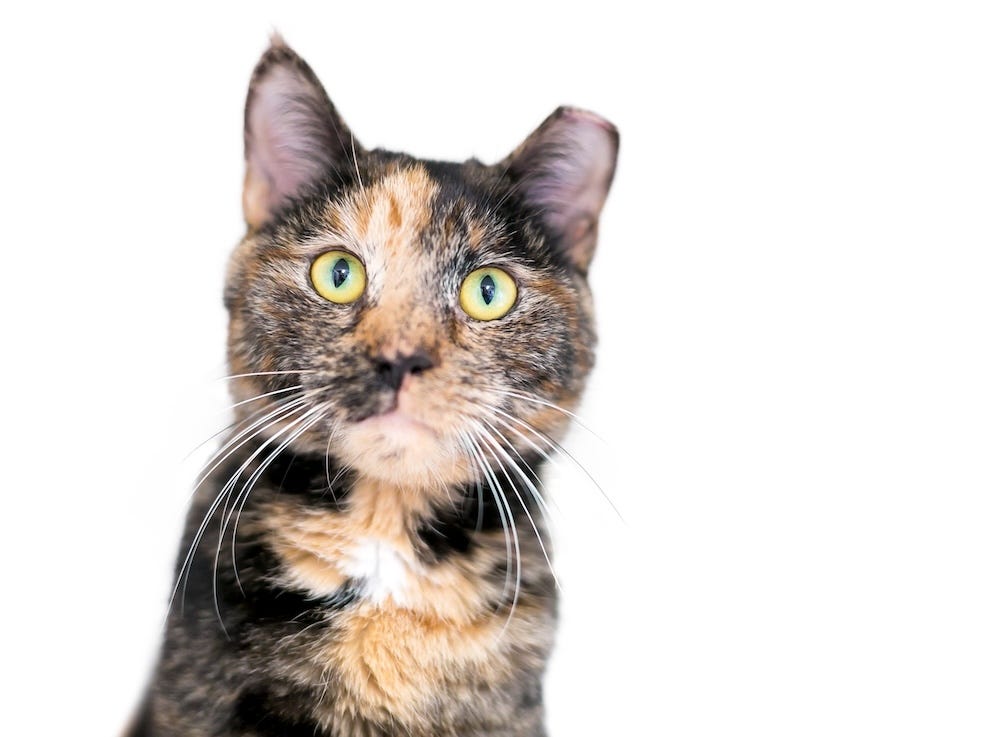
Chimera tortoiseshell
Rarest of all is the chimera tortoiseshell, formed when two embryos merge in utero to form one animal. A chimera tortoiseshell cat features one colour on one side of her body and a different colour on the other side. A famous extreme example is “Venus the Two-Faced Cat.”
4. Almost all tortie cats are female
Just like calico cats, 99.9% of tortie cats are female. The chromosome linked to coat colour in cats is the X chromosome; female cats (XX) therefore have two sets of genetic information that can determine coat colour. If a cat inherits one orange-coded X and one black-coded X, she will be tortoiseshell.
This coat colour is very rare in male cats — occurring in only 1 in 3,000 male cats. The reason: toms carry an X and a Y chromosome, so they typically only display one colour. In very rare cases — usually the result of an extra X chromosome, known as XXY syndrome or Klinefelter's syndrome — a male cat can be tortoiseshell, but these males are almost always sterile.
5. Tortie cats and “tortitude”
Ask any tortie cat parent, and they’ll likely tell you their cat has “tortitude” — a distinct, sassy personality supposedly unique to tortoiseshell cats. While there’s no scientific evidence linking coat colour to personality, torties have a reputation for being feisty, independent, and full of opinions. Some studies have suggested a possible link between certain coat colours and temperament, but more research is needed before “tortitude” can be considered more than feline folklore.
6. Tortoiseshell cats are considered lucky in many cultures
Tortoiseshell cats are seen as good luck charms in various cultures around the world. In the United States and Britain, they’re sometimes called “money cats,” as folklore suggests they bring good fortune to their owners. In Japan, tortoiseshell cats — particularly the Japanese Bobtail — are considered especially lucky, and sailors historically brought them aboard ships to protect against storms and evil spirits.
In Celtic folklore, meanwhile, a tortoiseshell cat appearing on your doorstep was said to bring good fortune to the household.
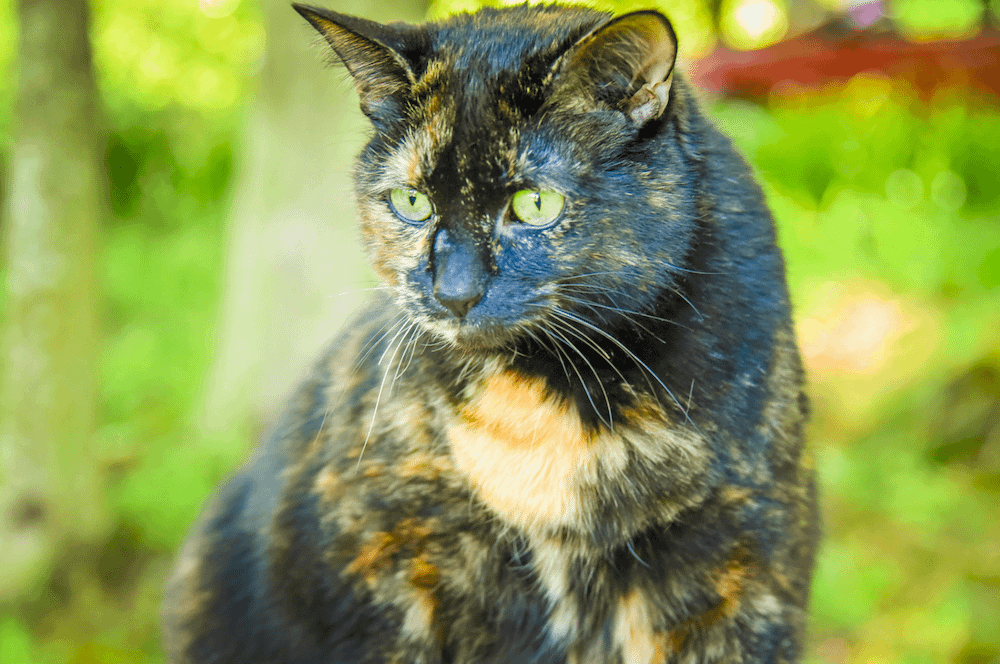
We hope you’ve enjoyed learning these fascinating facts about tortoiseshell cats! And if you’re lucky enough to share your home with a tortie, we hope she brings you nothing but good fortune.
Sources:
- A Domestic Cat X Chromosome Linkage Map And The Sex-Linked Orange Locus: Mapping Of Orange, Multiple Origins And Epistasis Over Nonagouti | NCBI
- Fertile Male Tortoiseshell Cat With True Chimerism 38,XY/38,XY | NCBI
- The Feline Genome and Clinical Implications | NCBi
- A Tortoiseshell Male Cat: Chromosome Analysis And Histologic Examination Of The Testis | NCBI
Photo credits: Justin Sinclair via Unsplash; José Alejandro Cuffia via Unsplash