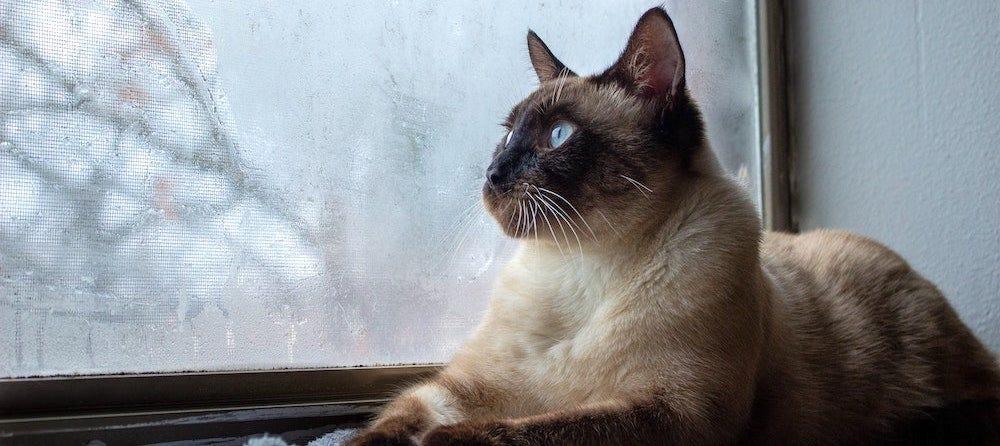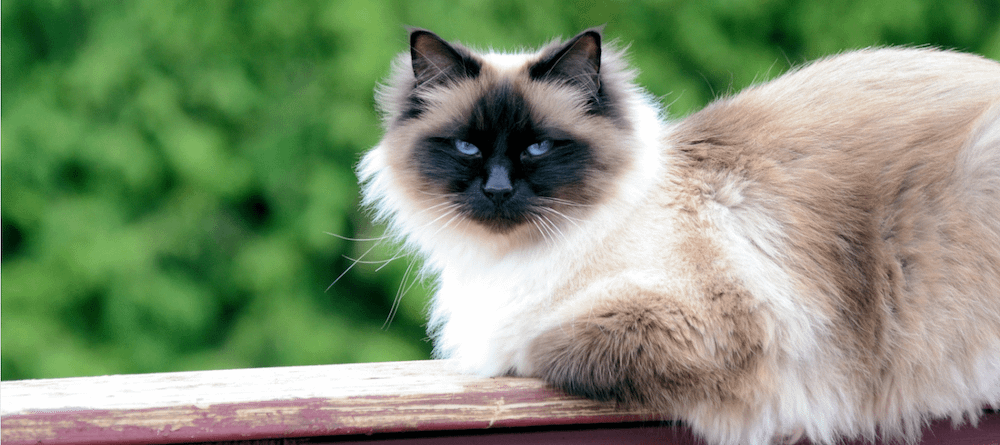
The Birman is a distinctive breed with a long, silky colourpoint coat, white feet and blue eyes. Compared with its relative the Siamese, it looks elegant and regal without being intimidating.
Birmans are affectionate, curious and easy to live with.
They need less grooming and play than some breeds, but they still want an owner who gets involved.
| Birman cat | ...at a glance |
|---|---|
|
Personality |
Loving, docile, curious |
|
Lifespan |
12 to 16 years |
|
Weight |
3.2 to 6.8 kg (7 to 15 lb) |
|
Coat & colours |
Semi-long, silky, colourpoint |
|
Energy |
Medium |
|
Affection |
High |
|
Friendliness |
High |
|
Shedding |
Low to medium |
|
Grooming needs |
Low |
An overview of the Birman
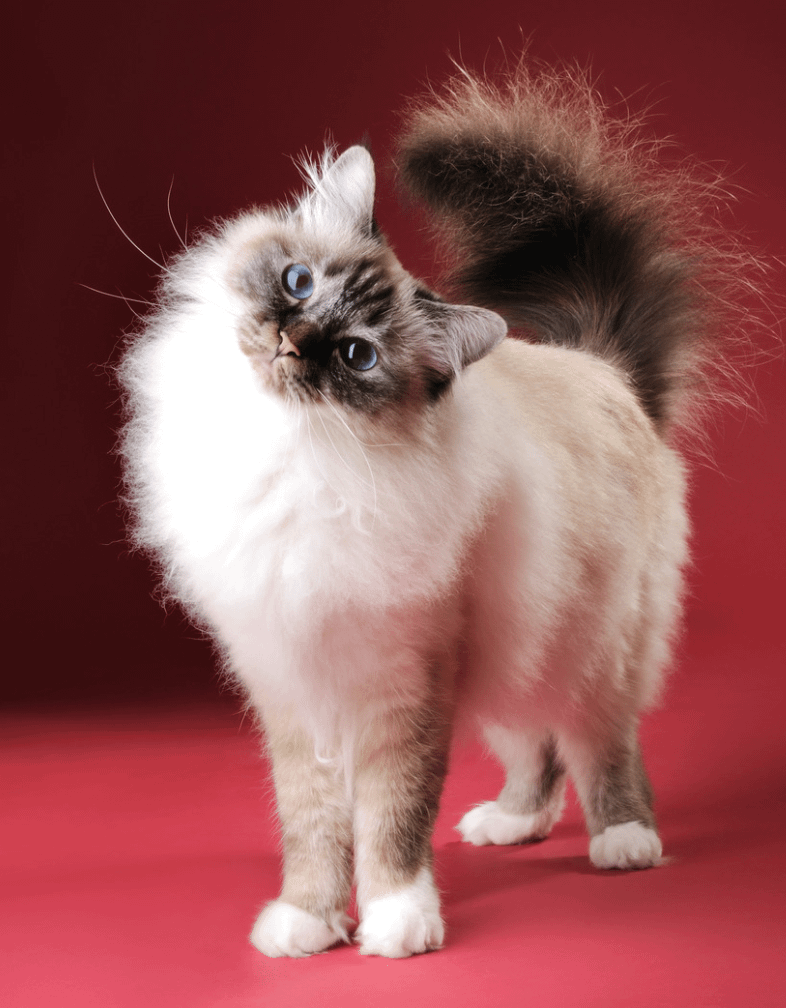
The Birman is a medium-to-large cat and takes about three years to reach full maturity.
Weight
Adults weigh 3.2 to 6.8 kg (7 to 15 lb), with males a little heavier. They are well-proportioned.
Length
From nose to tail tip, a Birman measures 38.1 to 45.7 cm (15 to 18 in). The body is long but fairly compact, with a proportionate tail.
Coat
The coat is medium to long and very silky, with coarser fur around the neck. It resists matting and doesn't need daily brushing, as there's no undercoat.
Kittens are born pure white and develop their colours as they grow.
The recognised colourpoint patterns are seal, blue, chocolate and lilac, and some cat councils also accept tabby, cream and tortie. The breed is famous for its white “gloves and laces”.
Lifespan
With good care, Birmans typically live for 12 to 16 years.
They need regular exercise and affection.
It's worth watching portion sizes because the breed is prone to putting on weight.
History of the Birman
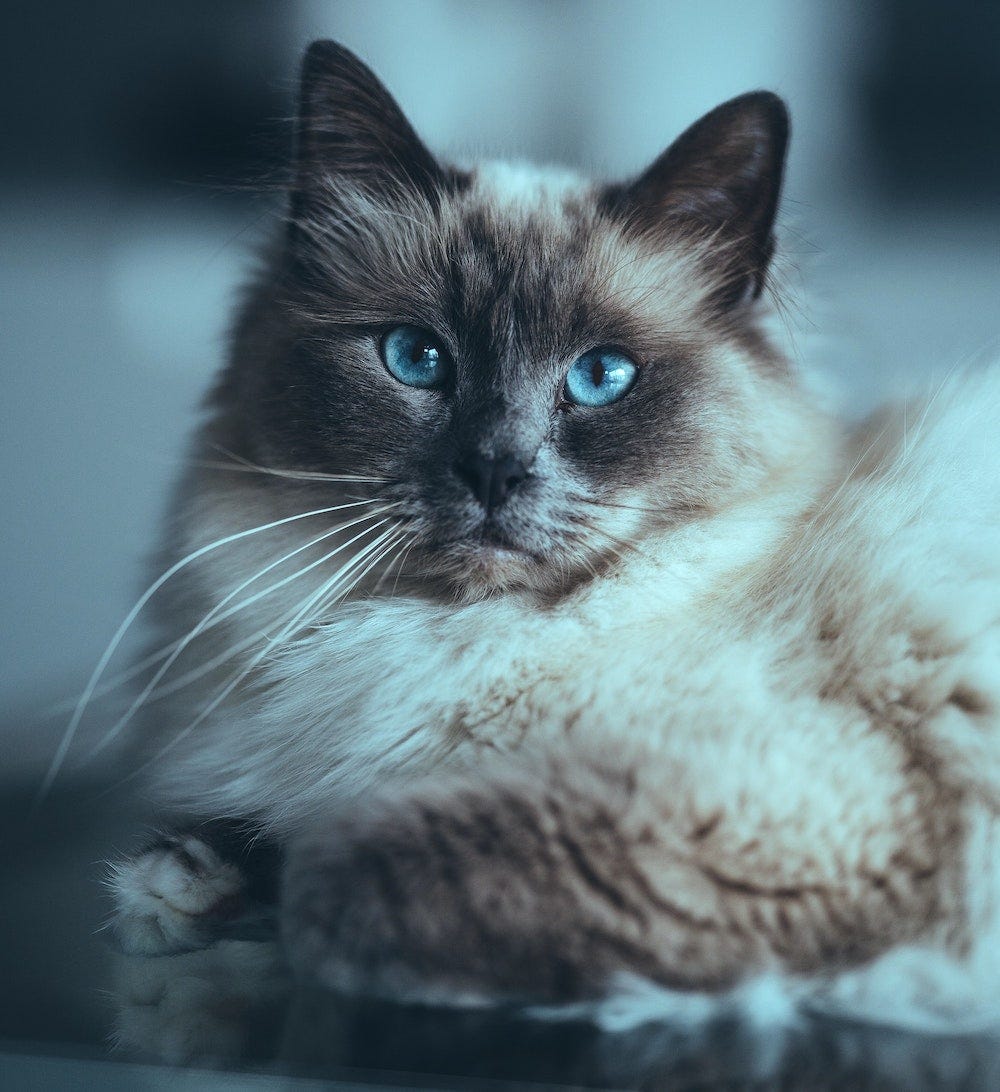
The breed has a certain mystique and is nicknamed the “Sacred Cat of Burma”, a nod to the temple priests of northern Burma (now Myanmar).
Legend has it…
A folk tale tells of a sapphire-eyed goddess, a temple priest and a white temple cat called Sinh. When the priest was killed, the cat's touch and devotion supposedly transformed the colouring of Sinh and the other temple cats, and Sinh stayed beside the priest for seven days before dying. Temple cats are said to carry a priest's soul to paradise.
The more down-to-earth story
The breed most likely came from crossing Siamese cats with longhaired white cats.
Some were taken from Burma to France, where breeders developed the modern Birman. The breed nearly died out after the Second World War, with some accounts saying only one pair survived, and it was rebuilt through dedicated breeding.
Birmans reached the United States in the 1950s and are now popular there.
Characteristics
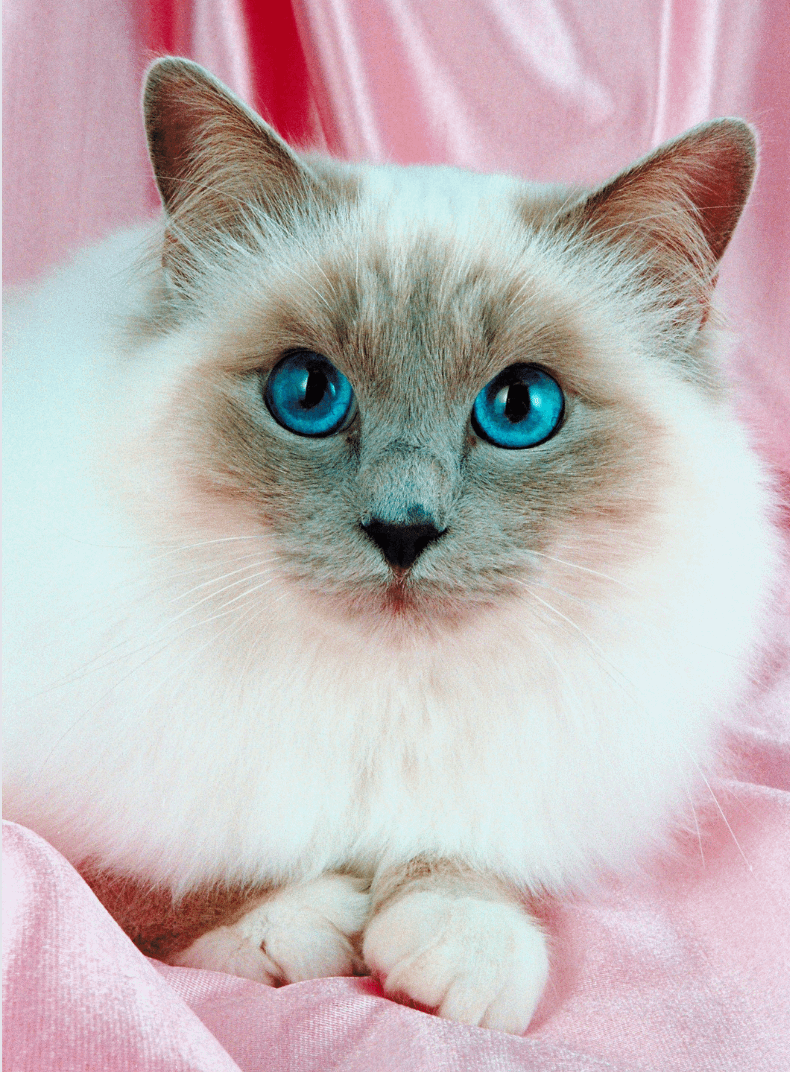
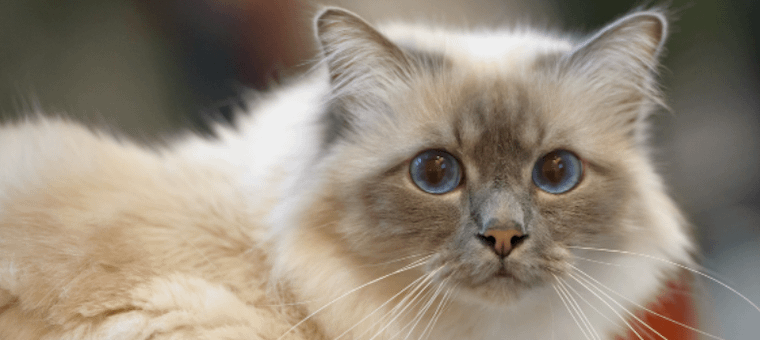
The breed's most recognisable features are its deep sapphire-blue eyes and pure white paws.
The colourpoint coat gives it the look of a longhaired Siamese. The fur is soft and needs little grooming, especially compared with a Persian.
Birmans have strong, thick bones and are sturdy cats with good balance.
Birman personality
Owners tend to become very attached very quickly. Birmans love attention and expect to be admired.
They are intelligent and fearless, greeting new people with interest, though they do size up newcomers before warming to them.
They're easy-going, put up with being held and are generally quiet, unlike the chattier Siamese. They suit calm households and often prefer lounging about to entertaining themselves.
Caring for a Birman
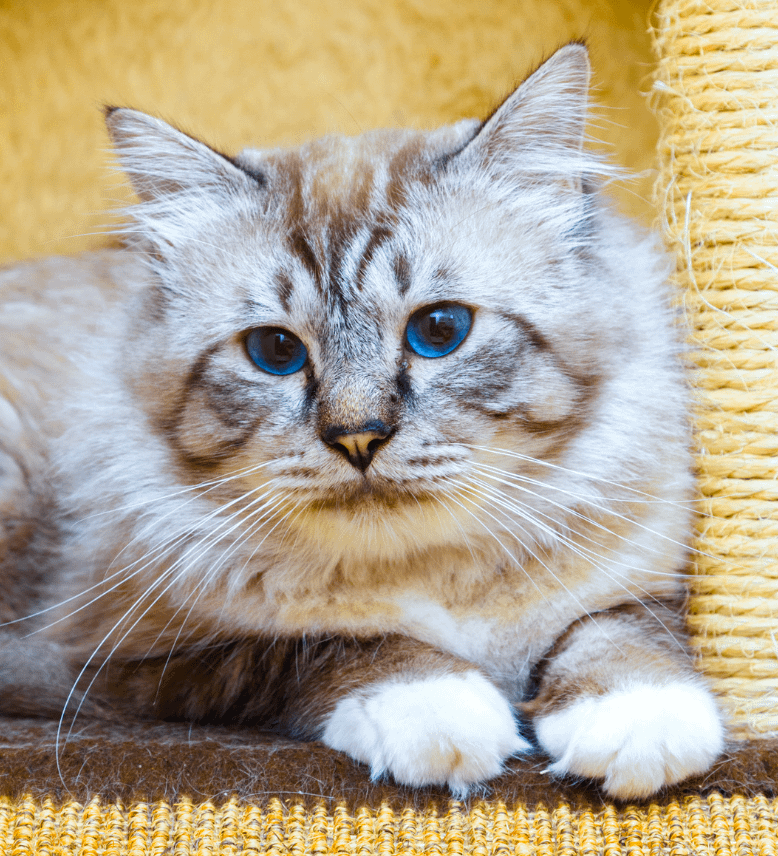
Brushing once or twice a week removes loose hair and debris.
Because Birmans are so laid-back, keep an eye on their weight and activity, and schedule daily play. They'd rather interact with people than play alone.
Birmans like a clean litter tray. A self-cleaning litter tray is recommended, such as the Litter-Robot 4, and automatic trays keep litter fresh throughout the day.
Possible health problems
Birmans are generally healthy, but watch for the following.
Hip dysplasia is a misalignment of the hip joint that causes pain and mobility problems and gets worse over time. Larger cats are more prone to it.
Hypertrophic cardiomyopathy is a thickening of the heart walls that makes it harder for blood and oxygen to circulate.
Adopting a Birman
The Birman is a loving, gentle, curious companion that's friendly and affectionate.
Birmans cope well with busy households and flat living and enjoy visitors. They're the life of the party!
Sources:
- Hip Dysplasia | Cornell University College of Veterinary Medicine
- Hypertrophic Cardiomyopathy | Cornell University College of Veterinary Medicine
- Siamese | breed of cat | Britannica
- Sacred cat of Birma | Wild Cats Magazine
- Historical Facts | The Birman Council
Photo credit:
- Omar Ram via Unsplash