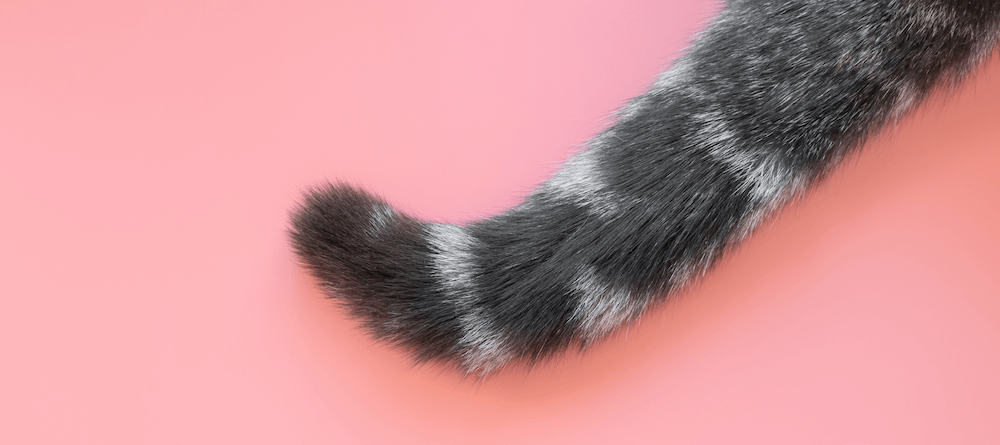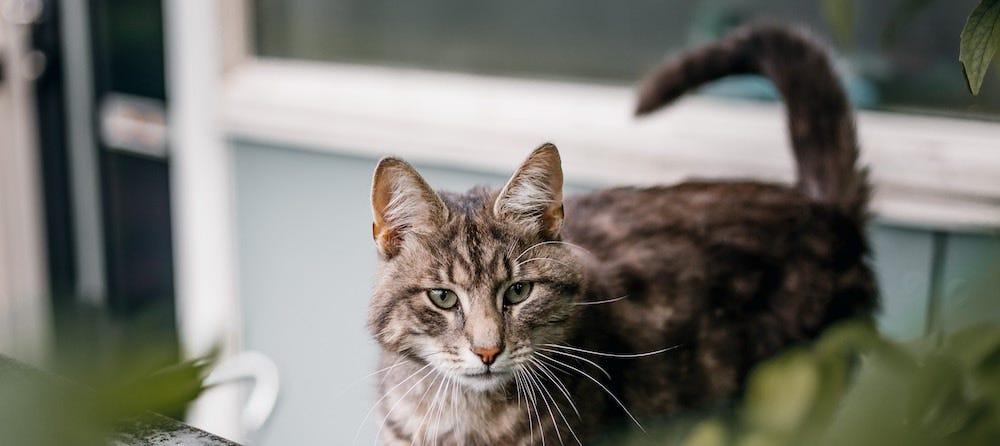


Did you know you can read your cat’s mood just by his tail? Indeed, the feline tail is more expressive than you might have guessed. Get an overview of cat tail language, along with the answers to some common questions: Why do cats wag their tails? And can cats control their tails? Oh, the tales these tails can tell! And since a tail rarely tells the whole story, we’ll also cover the other body language cats use with each other.
In this article
Why do cats have tails?
There’s no denying that felines are some of the most poised creatures in the animal kingdom. And a tail is essential to your cat’s incredible ability to balance! So how does a tail help your cat balance? The same way tightrope walkers spread their arms to balance their body weight, your cat’s tail is held aloft to maintain composure.
Tails also aid in your cat’s righting reflex, which allows cats to land on their feet the majority of the time.
Similar to their whiskers, cats’ tails are filled with nerves and serve as another form of sensory touch. (The tail also contains 10 percent of your cat’s bones.)
Cat tail meanings
Cats also use their tails to communicate with humans and other animals. Here’s a brief overview of cat tail language.
Friendly
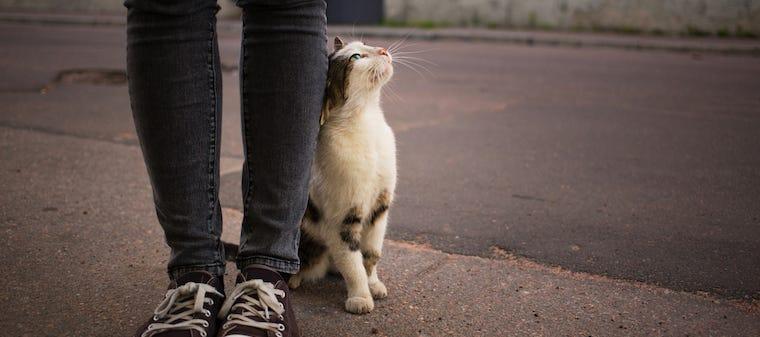
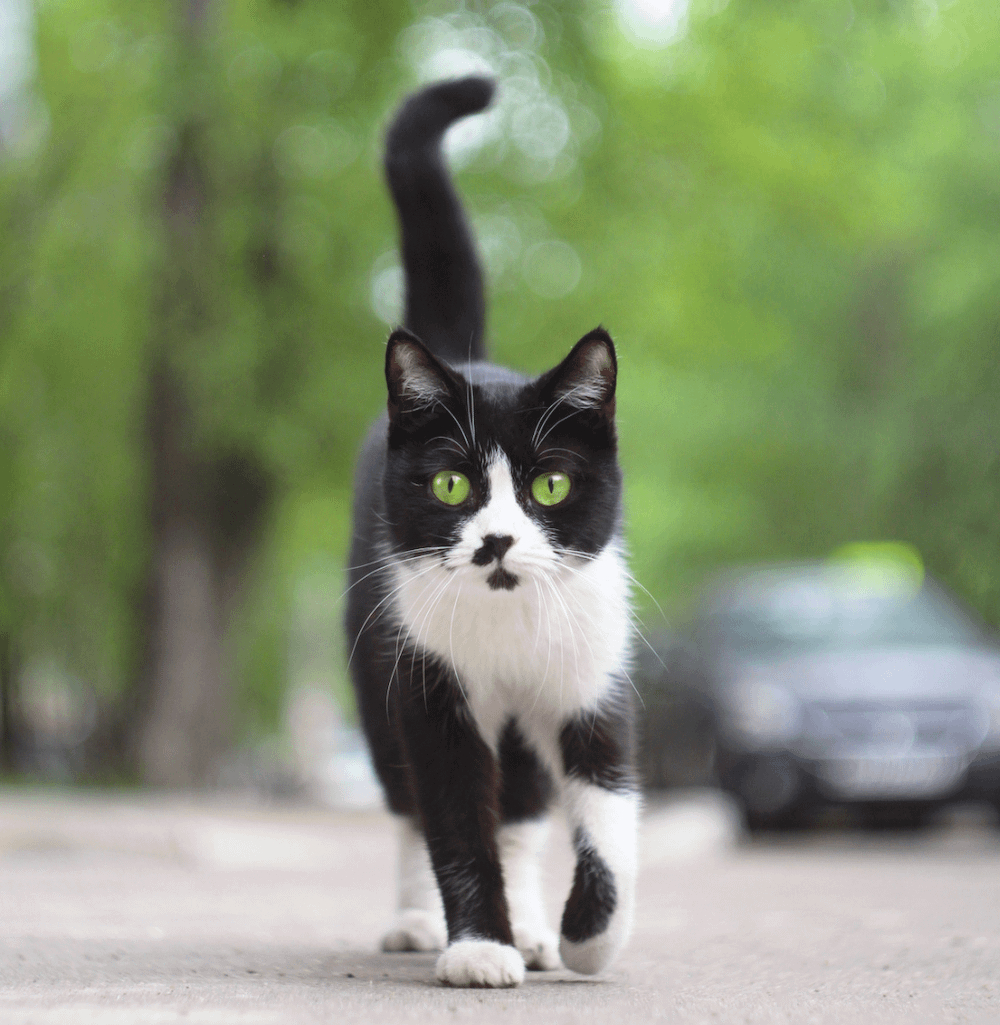
A friendly cat will hold his tail high in the air with a tall, confident posture. The tip of his tail may crook forward or quiver when feeling particularly happy. He may even wrap his tail around your leg in a friendly greeting.
Playful
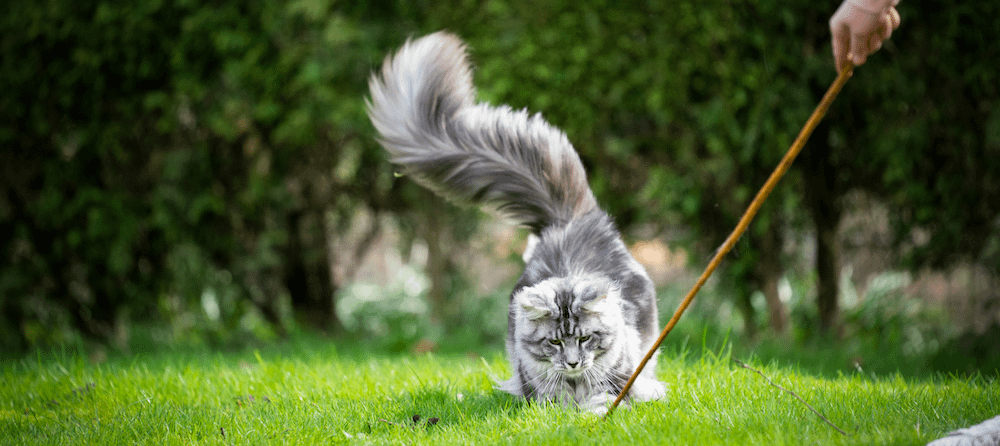
A playful cat will curve his tail like a question mark. If your cat is focused on an object, his tail may twitch at the end or swish from side to side right before he pounces.
Irritated
A mildly irritated cat will thump his tail or twitch the end of his tail.
Aggressive
An aggressive cat will display a fluffed up tail or a tail that is lashing from side to side (accompanied by ears pinned backward on the head, dilated pupils, an arched back, or whiskers held out to the side).
Fearful or in pain
A fearful or pained cat will tuck his tail underneath or close to his prone body or hold his tail low to the ground (accompanied by ears pinned back and held outward, dilated pupils, or whiskers flattened against the face).
Wondering how to spot a broken or injured tail? It could be as simple as your cat’s tail drooping down.
Why do cats wag their tails?
That depends on your definition of wag. Like dogs, cats don’t only wag their tails when they’re in a happy mood—there’s a plethora of wagging behavior when it comes to cat tail language. You can tell a lot by the position of your cat’s tail and the speed of the “wagging.”
- Fast lashing: Your cat is feeling aggressive, angry, or threatened.
- Gentle swishing: Your cat is feeling playful and may be about to pounce.
- High quivering: Your cat is feeling excited and happy to see you or another cat.
- Low twitching or flicking: Why do cats flick their tails? Your cat may be feeling annoyed or mildly angry.
- Wagging while sleeping: Your cat is probably dreaming.
Can cats control their tails?
For the most part, cats can and do control their tails. As we’ve explained, much of your cat’s emotions are made evident through his tail.
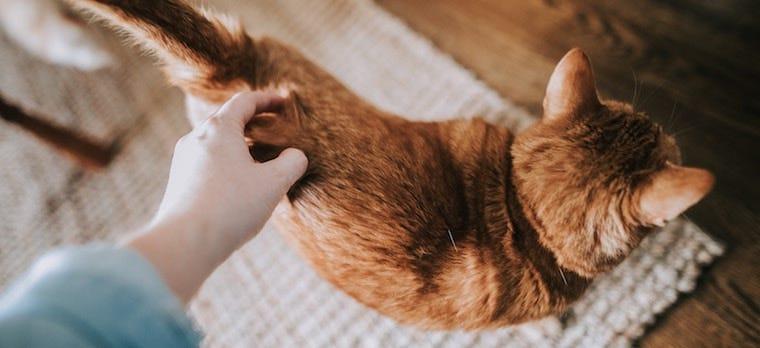
You might be wondering then, why does my cat’s tail twitch? Some tail movements are involuntary, such as a tail twitch. While this is usually nothing to be concerned about, in rare instances your cat’s tail twitching could be a sign of feline hyperesthesia syndrome, also called twitch-skin syndrome. If you notice severe tail twitching and “brief bursts of odd behavior” after you touch or scratch your cat’s lower back region, you should consult with your veterinarian.
Why do cats chase their tails?
Cats can have silly moments just like dogs—including chasing their own tails. However, tail chasing usually means that your cat is bored and not getting the stimulation he needs. Make sure to carve out a little playtime with your cat every day, especially if he’s a single kitty. Catnip toys, wand toys, feather toys, and laser pointers for cats are just a few of the fun, easy ways to exercise your kitty.
If you notice your cat frequently chasing or attacking his own tail, it could be a sign of anxiety, feline hyperesthesia syndrome, or another compulsive disorder. Check with your veterinarian if you have any concerns.
Why does my cat slap me with his tail?
Cats sometimes have a funny way of showing affection. But a lot of your cat’s weird behavior is actually a compliment to you! For instance, when your cat rubs against you or even wraps his tail around your leg, he’s using scent marking to “claim” you as his own. Likewise, when your cat puts his butt in your face (likely slapping you with his tail in the process), he’s “presenting” his vulnerable backside as a sign of trust and contentment.
Cat body language with other cats
A tail rarely tells the whole story. Cats also talk to each other with their posture, eyes, ears, touch, and scent. And your cat’s body language toward another cat is often quite different from how he acts toward you.
Body posture
A cat who feels comfortable around another may roll over and show his belly—the most vulnerable part of his body. An uncertain cat may crouch down, tuck his tail along his body, and pause to watch the other cat. A threatened cat may arch his back with his fur standing on end, or crouch with his front legs close to his hind legs, which may mean he’s about to attack. (Sometimes, though, it just means he’s feeling especially playful.)
Eyes and ears
A cat who welcomes another cat’s attention will look at him and blink. In fact, some animal behaviorists say the slow blink is a gesture of trust. His ears will turn forward when he approaches a cat he trusts. If he pulls his ears to the side or flattens them against his head, he’s often feeling threatened or fearful—or just plain annoyed.
Physical contact
Cats may touch noses or gently head-butt each other when feeling social. They often show affection by rubbing their heads against each other and along the sides of each other’s bodies, though not usually along the back. Adorably, some even hook their tails together.
Sounds
Cats rarely meow at each other in greeting—that sound is mostly reserved for their humans. Purring between cats doesn’t always mean happiness, either; cats also purr when they’re not feeling well or are in pain. A fearful cat may growl or hiss to tell another cat to back off. If the other cat keeps coming, he may escalate to other cat sounds like a snarl, spit, or yowl before an attack.
Scent
When cats rub or knead on each other, they exchange scents and leave pheromones and oils from the scent glands on their foreheads, cheeks, chins, and paws. Your cat may also leave a scent trail on prominent objects around the house to let other resident cats know he’s marked his territory. If he starts spraying urine indoors, it may be a response to an outside cat on the property or another stressor, including litter box problems.
Congratulations, you’ve officially passed cat tail language 101!
Source: