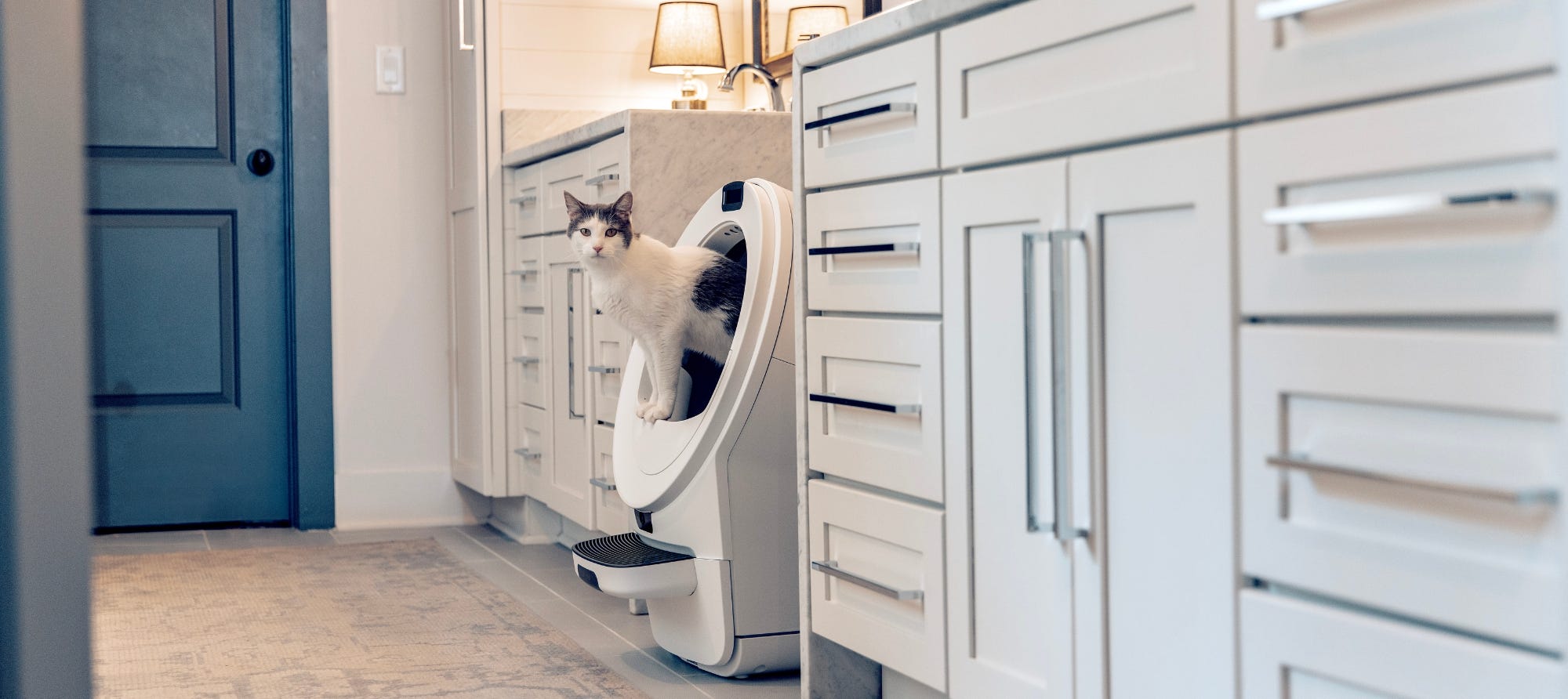


A bathroom remodel is usually about upgrading finishes, improving storage, and maybe adding a little luxury. But if you share your home with pets, it’s also an opportunity to make daily care easier, cleaner, and safer for both of you. From washing muddy paws to managing litter box odors, a pet-friendly bathroom remodel can solve problems you’ve probably just been living with.
The added bonus? You don’t have to sacrifice style to make it work.
Pet-friendly bathroom remodels: why it matters
Pets use our bathrooms more than we realize — whether it’s for baths, brushing, or housing a little box in a small space. A thoughtful remodel can support human comfort and pet functionality at the same time, reducing messes, minimizing odors, and making routine care less of a chore.
Designing with pets in mind can be:
- Easier cleanup
- Better airflow and odor control
- Safer flooring and layouts
- Smarter solutions for pet essentials
How to design a pet-friendly bathroom remodel
Pet washing stations: the ultimate luxury
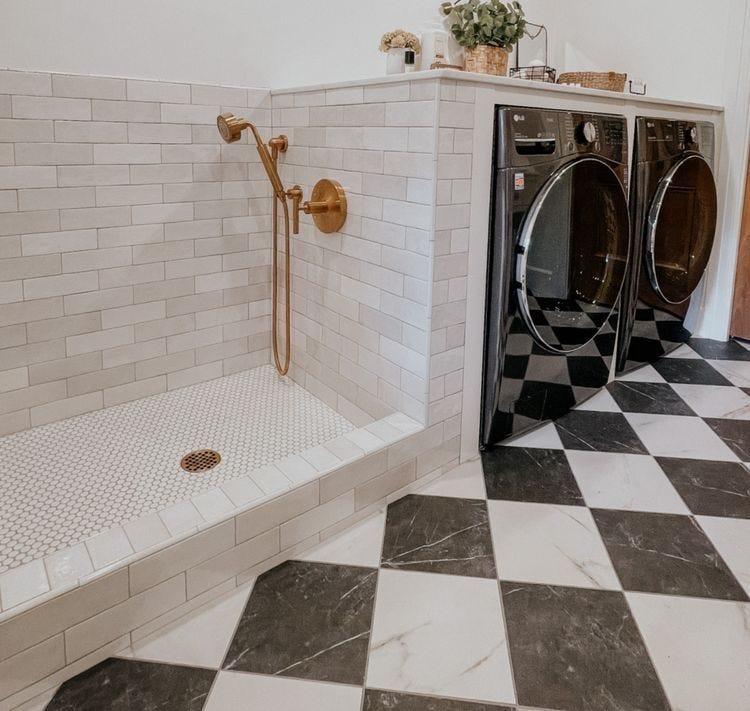
If you’ve ever tried washing a dog in a bathroom (or worse, a shower with fixed plumbing), you already know why this upgrade is so popular.
Pet-friendly washing features include:
- Handheld showerheads that make rinsing easier and faster
- Walk-in curb or low-entry showers to reduce lifting and straining
- Lowered faucet heights or flexible hoses for small and medium dogs
Even if you don’t have space for a full dog-washing station, a handheld sprayer alone can be a game-changer for baths, paw cleanups, and even rinsing litter mats.
Concealed storage for pet essentials
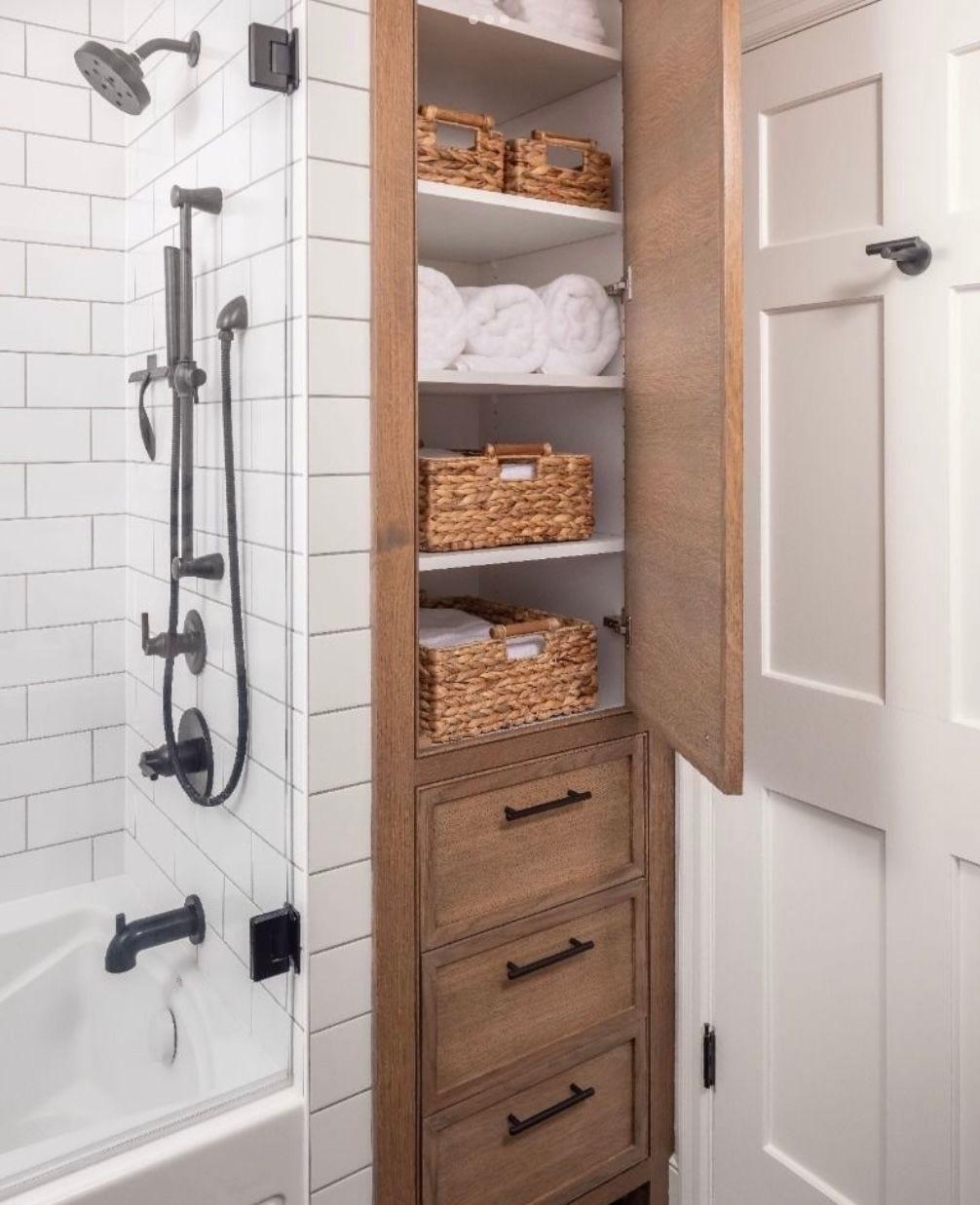
Pet care comes with a lot of “stuff” — towels, brushes, shampoos, wipes — and it adds up quickly. Instead of cluttering countertops, a pet-conscious remodel builds storage right into the design.
Smart options include:
- Vanity kick-drawers for grooming tools or waste bags
- Hidden cabinets for pet towels and shampoos
- Pull-out organizers that keep supplies accessible but out of sight
Solving the "litter box constraint":
Litter box placement is often an afterthought, especially for small bathroom remodels. Here are some ideas to better integrate the cat litter box in your bathroom remodel.
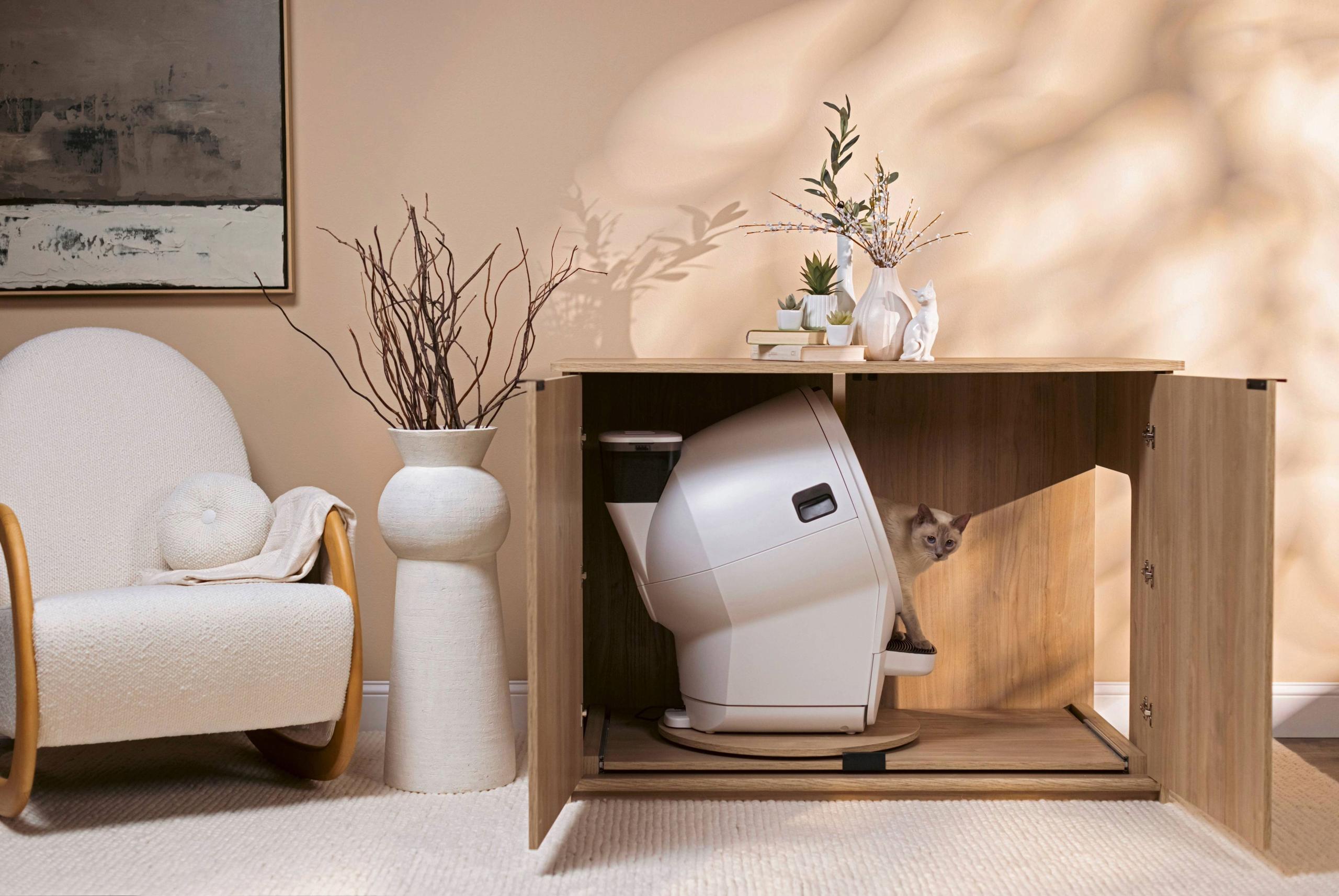
Hidden litter box cabinetry
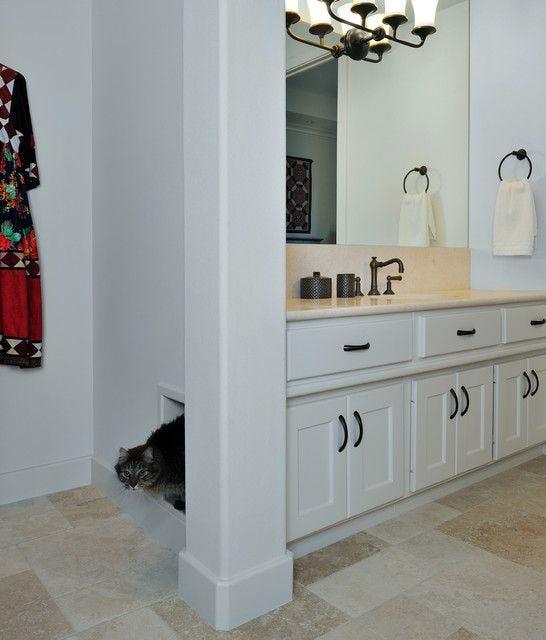
The bathroom is often a high-traffic zone, especially from guests, so making sure the litter box is out of sight (and smell) is crucial.
Hidden litter box furniture can help hide the mess away from view while keeping it accessible to your cat.
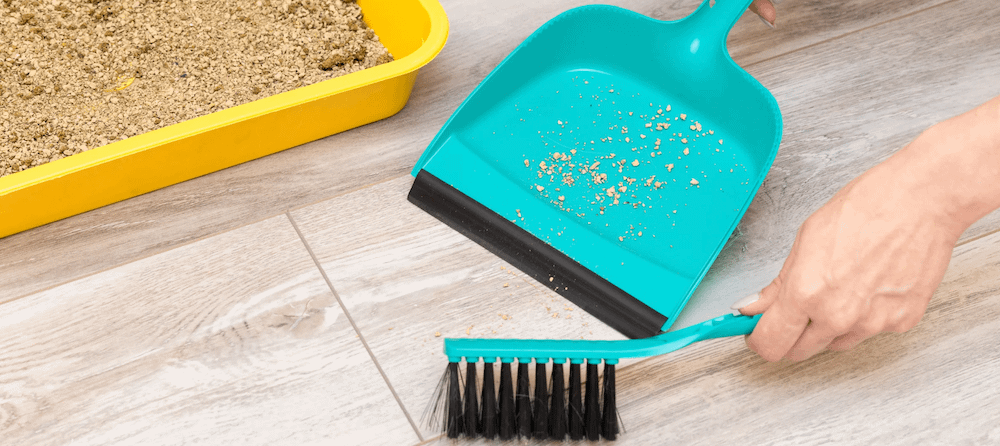
However, without daily cleaning, the furniture can trap odors over time.
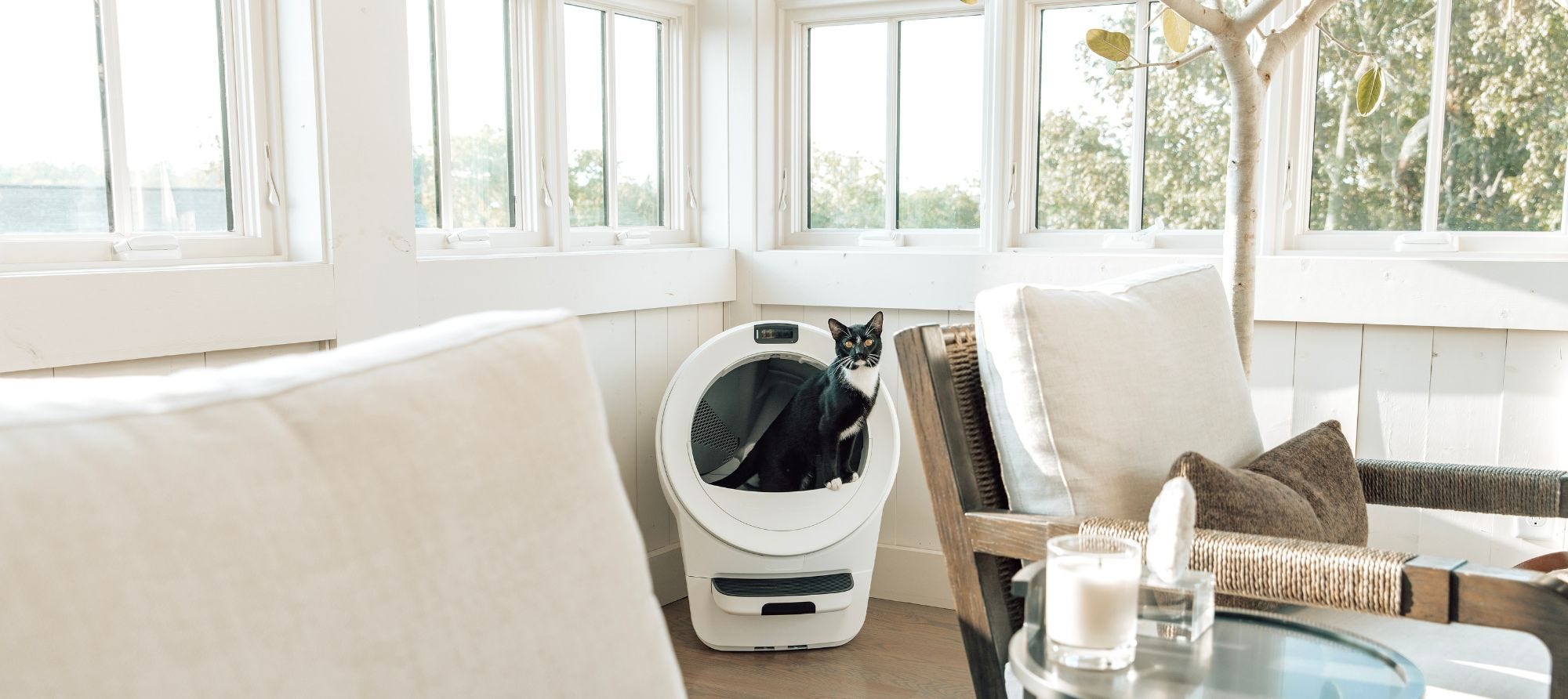
A smarter approach is to design the layout around a self-cleaning litter box instead.
Self-cleaning litter boxes as a design hack
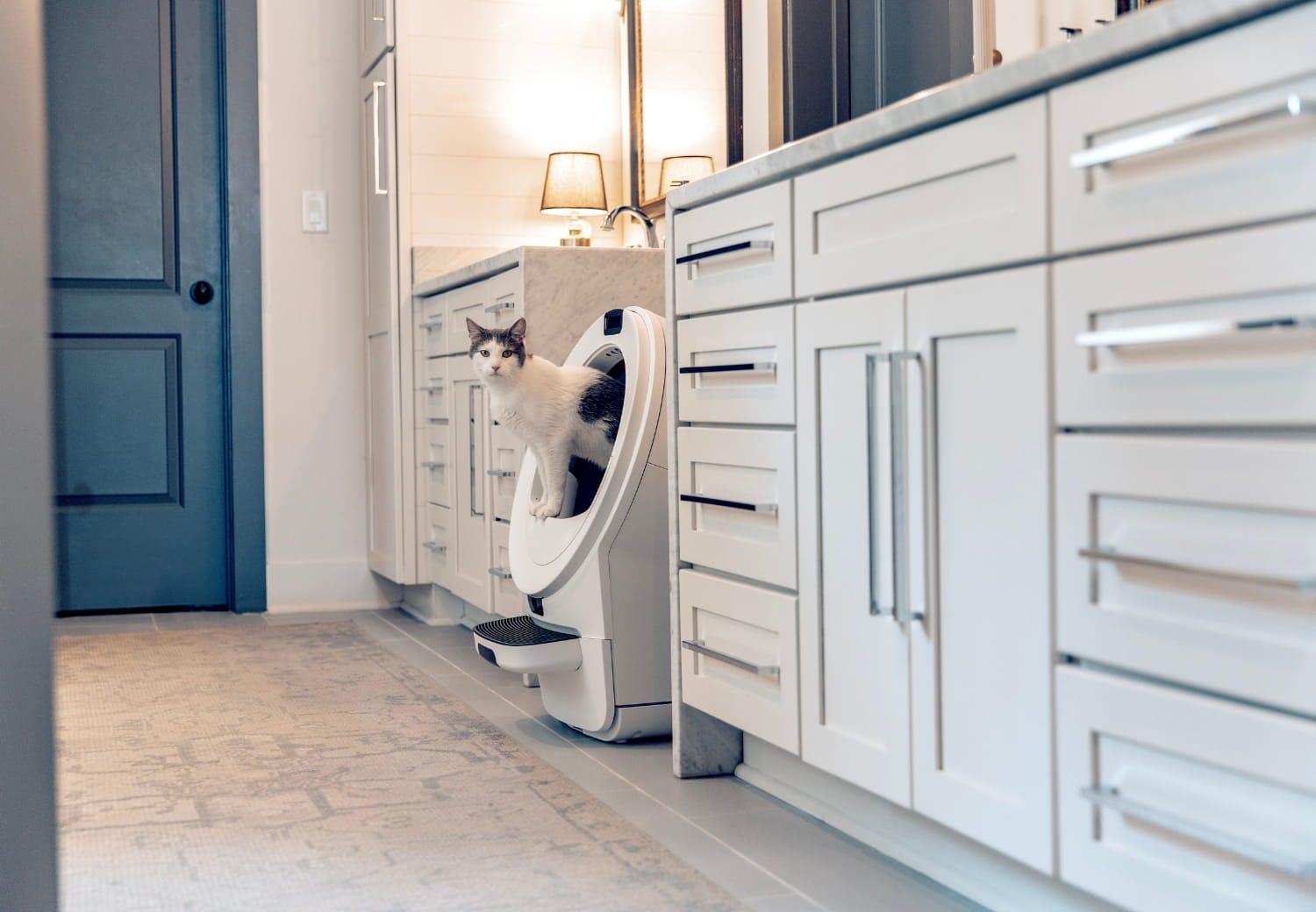
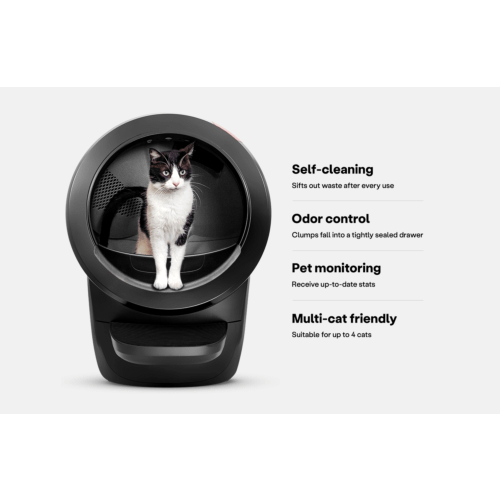
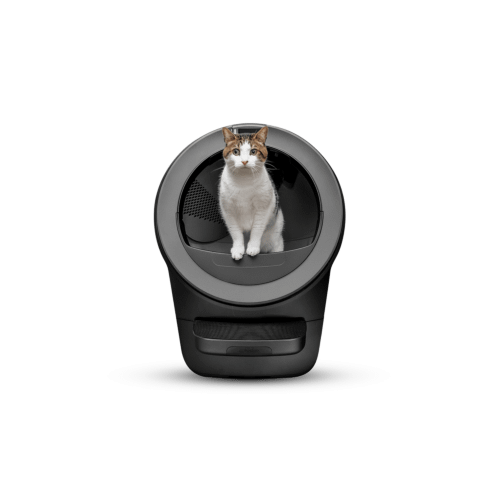
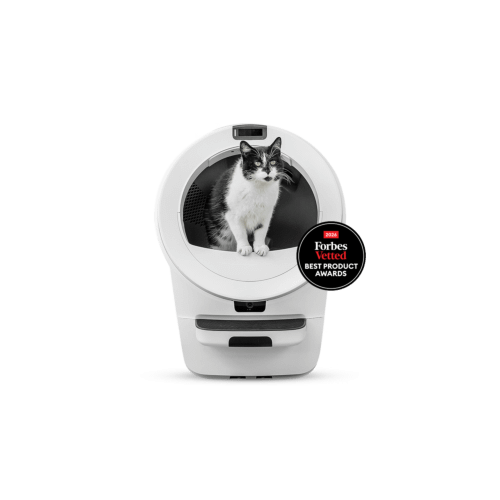
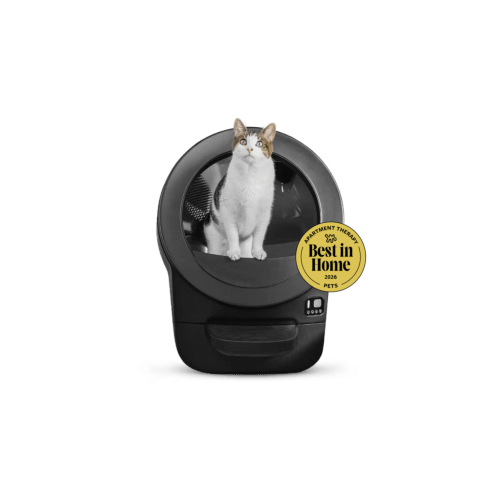
An automatic litter box like Litter-Robot changes the equation entirely:
- No daily kneeling or scooping
- Less odor buildup thanks to automatic waste removal
- A smaller functional footprint because you don’t need extra access space
This makes it easier to integrate a litter area cleanly into a bathroom layout, especially in a small bathroom remodel where every inch matters.
Safety & accessibility: eliminating "trip hazards" for older pets.
Just like people, pets benefit from thoughtful accessibility. Key considerations include:
- Non-slip flooring to prevent falls (porcelain tile, vinyl tile…)
- Clear walkways without clutter or cords
- Eliminating trip hazards for older pets with mobility issues
It’s also worth choosing non-toxic finishes and being cautious with bathroom plants. Many common houseplants are harmful to dogs and cats.
Making the bathroom easier to clean
A pet-friendly bathroom should actively help you stay ahead of fur, dust, and odors.
The ventilation strategy
Standard bathroom fans often aren’t designed to handle pet dander, litter dust, or lingering odors. Upgrading to a higher-capacity exhaust fan can dramatically improve air quality, especially in homes where a litter box lives in the bathroom.
Look for fans designed for 1) continuous humidity-sensing operation and 2) quiet performance.
Choosing pet-friendly flooring
When it comes to durability and cleanup, flooring matters more than almost anything else.
Two strong contenders include:
- Porcelain tile: Extremely durable, waterproof, scratch-resistant, and easy to sanitize
- Luxury Vinyl Tile (LVT): Softer underfoot, slip-resistant, warmer, and more forgiving for older pets
Both options hold up well to claws, spills, and frequent cleaning.
Odor control solutions
In addition to ventilation, odor-resistant materials make a difference. These choices can help prevent smells from settling in over time:
- Moisture-resistant grout
- Sealed baseboards
- Washable wall paint with low VOCs (volatile organic compounds)
Estimated bathroom remodel costs (2026):
Bathroom remodel costs vary widely based on size, location, and materials, but here’s a general breakdown to help set expectations.
Standard bathroom remodel cost:
- $10,000 to $25,000 for labor and materials
Pet-focused additions may include:
- Upgraded ventilation fan: $300 to $800
- Handheld showerhead or low-entry shower: $500 to $3,000
- Pet-friendly flooring upgrades: $1,500 to $5,000
- Self-cleaning litter box integration: $500+
While these features may add to the upfront cost to remodel a bathroom, they often pay off in daily convenience, easier cleaning, and a more comfortable home for everyone.
Conclusion
A bathroom remodel is one of the best changes to future-proof your home — not just for your style, but for the pets who share your space. With smart design choices, you can create a bathroom that’s easier to clean, safer to navigate, and far more functional, without giving up a polished look.