

Moving into a new apartment can be exciting, but also a little overwhelming. And if you’re bringing a cat along for the ride, chances are they’re feeling the stress, too. Cats are creatures of habit, and even a minor change can throw them off. That’s why planning ahead is the best thing you can do for both of you.
This move-in checklist is designed specifically for cat parents to make the transition smooth and make your new home a safe, welcoming space for your feline friend.
Before moving day: Pre-move-in prep for cats & home
Cat-specific preparations
Before the moving trucks arrive, there are a few things you’ll want to check off your cat’s to-do list.
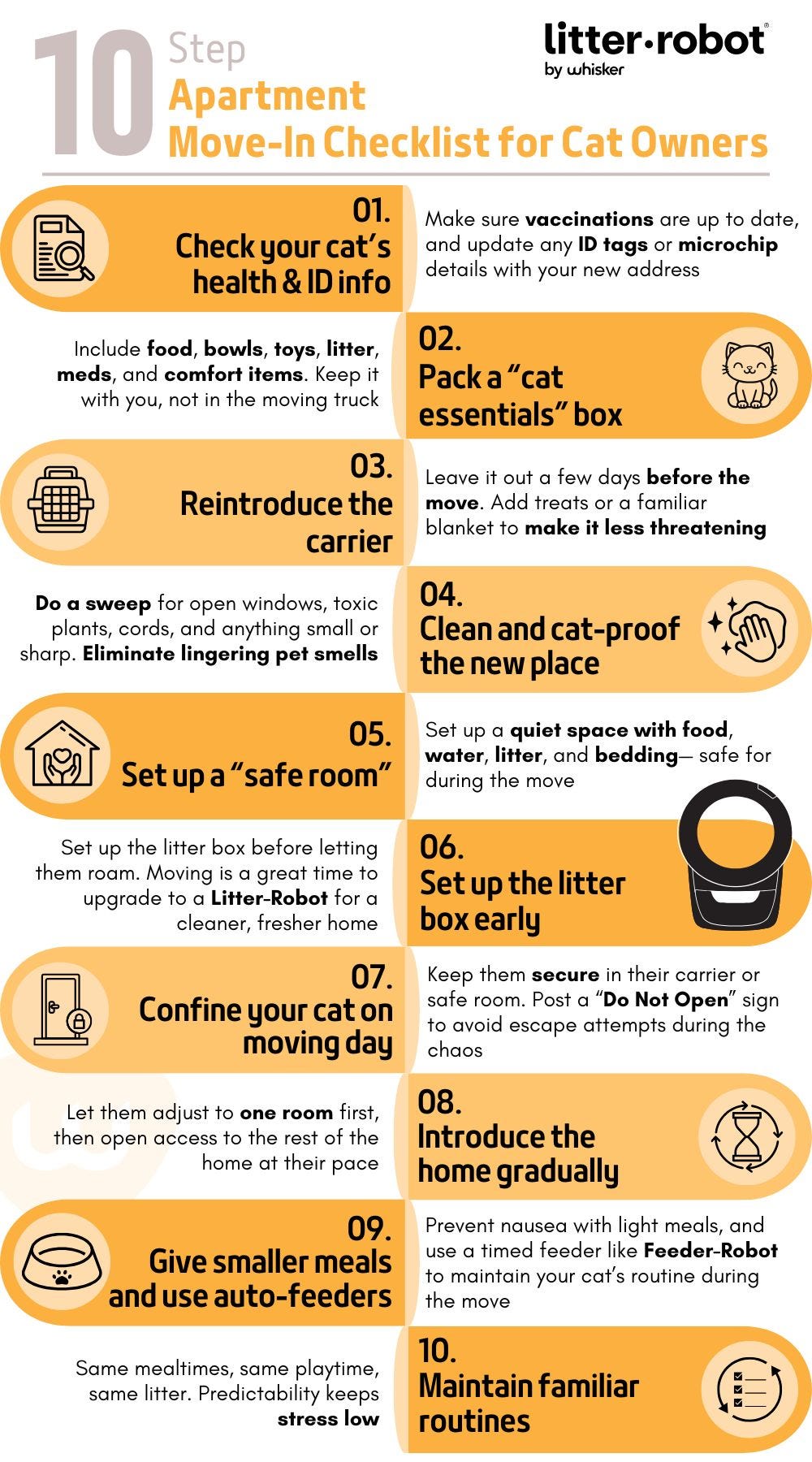
- Schedule a quick visit to the vet. Make sure your cat’s vaccinations are up to date, and if you’re moving out of state, ask about any health certificates you might need. This is also a great time to update your cat’s microchip information and ID tags with your new address.
- Pack a small box with your cat’s essentials. Include food, bowls, favorite toys, litter, any medications, and a comfy blanket. You’ll want to keep this with you, not buried in a moving van.
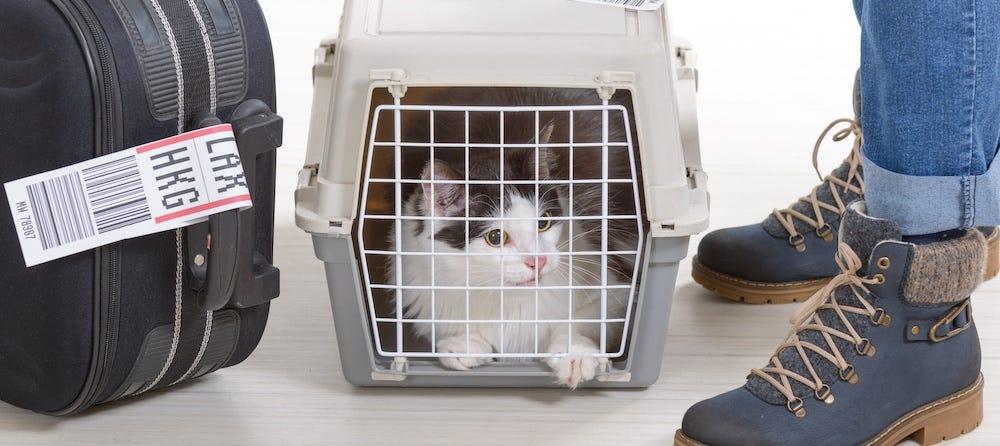
- Start reintroducing your cat to their carrier if they haven’t used it in a while. Leave it out with the door open and toss in some treats or familiar items to create positive associations.
New home preparations (before your cat arrives)
Before your cat ever puts a paw inside the new place, give it a good clean, especially if the previous tenant had pets. Removing lingering smells or dander will help your cat settle in faster. Then take a few minutes to cat-proof the space. Secure any loose wires, double-check that windows are screened or locked, and remove any potentially toxic plants.
Another good idea is setting up a “safe room” in a quiet area of your new home. This space should have everything your cat needs to feel comfortable — litter box, food and water, toys, and a cozy bed. It’ll be their spot to “escape” and decompress while they adjust to the unfamiliar surroundings.
Don’t forget to scout the neighborhood for nearby vet clinics and pet supply stores, too, so you're not scrambling when you need something.
Moving day: Managing your cat during the chaos
Keeping your cat safe
On moving day, try to keep things as calm and predictable as possible — for your cat, at least.
- Confine your cat before movers arrive. Confine them to their designated safe room early in the day and hang a “Do Not Open” sign on the door so movers or helpers don’t accidentally let them out.
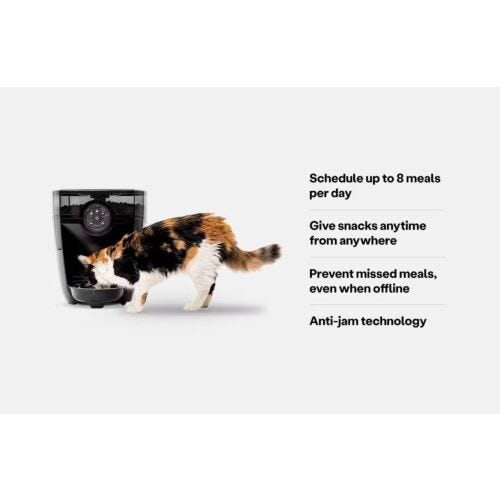
- Keep meals light. A smaller meal that morning can help reduce the chance of motion sickness during the drive. If your cat eats on a schedule, a timed feeder like Feeder-Robot can help maintain routine amidst the chaos.
- Transport your cat in a carrier. It keeps them safe and gives them a sense of familiarity during the ride, even if you're just moving across town.
General move-in tasks
Once you’ve arrived, focus on the essentials: unpack your basics like the kitchen, bathroom, and bedding first. Make sure utilities are set up, and do a quick walk-through to look for anything that might have been missed, like damages or small hazards you hadn’t noticed earlier.
The first days in your new home: Settling in with your feline friend
Cat’s arrival
- Start in the safe room. Don’t give them the run of the place right away. Open their carrier and let them come out when they’re ready.
- Take it as slow as necessary. Every cat is different: some will start exploring immediately, while others may need a few hours (or even days) to feel comfortable.
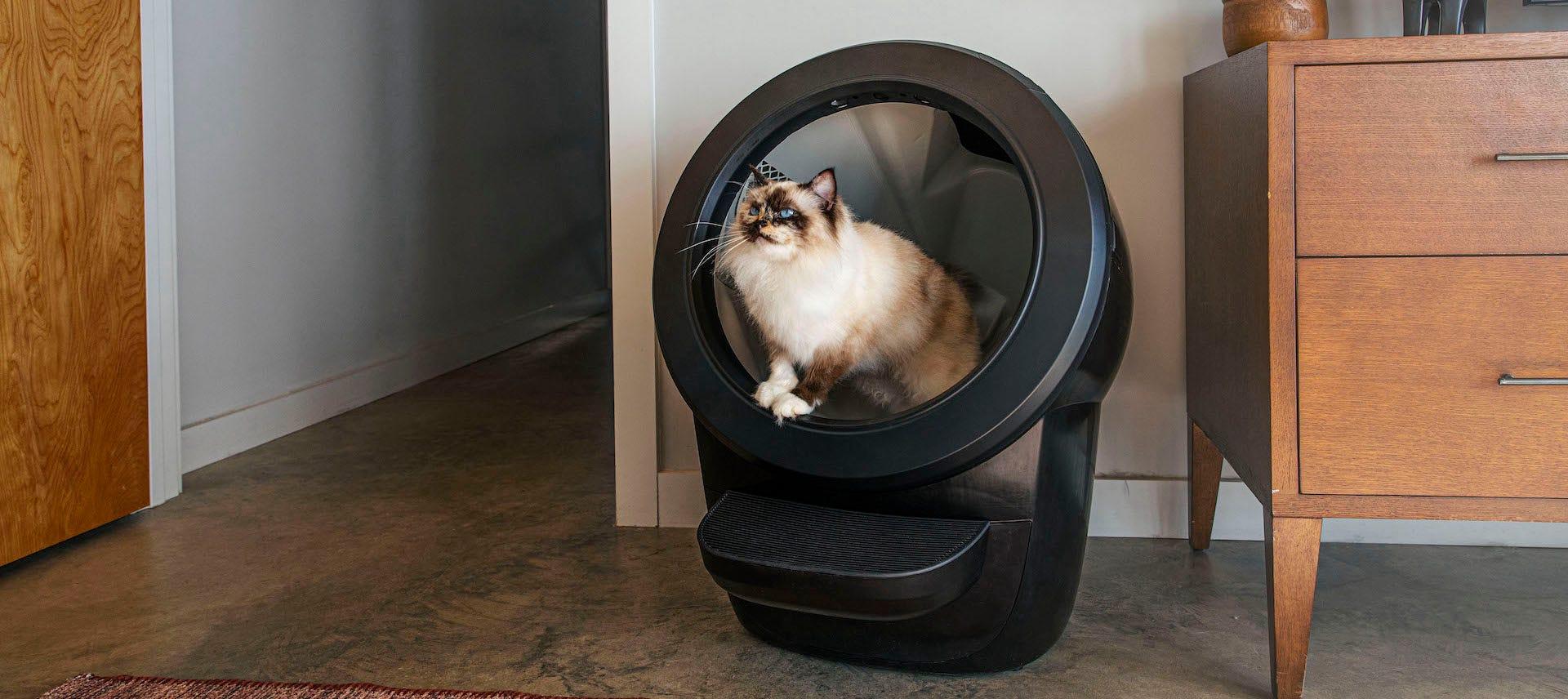
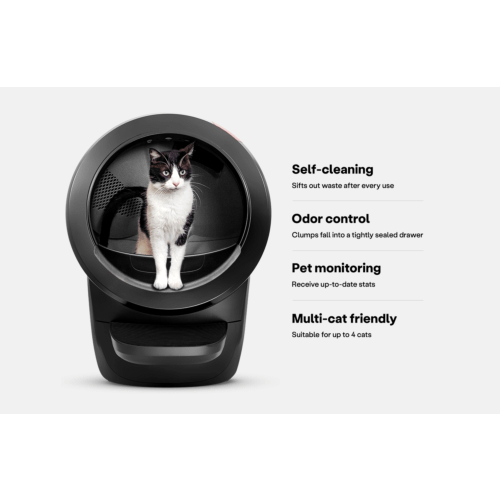
- Stick to familiar routines. Keep feeding and play schedules consistent. Using the same type of litter and box — or a self-cleaning litter box like Litter-Robot, if that’s what they’re used to — can make the transition easier.
General unpacking & setup
While your cat is getting used to their new digs, you can begin unpacking and organizing. Start with the bedroom and other high-use spaces, and gradually tackle larger pieces of furniture or décor. Try to keep the clutter and noise levels down, at least until your cat is feeling more at ease.
Post-move-in checklist: long-term adjustments & home settling
Cat-specific adjustments
Over the next few days or weeks, let your cat explore the rest of the apartment at their own pace. Supervise them at first and look for signs of anxiety like hiding, loss of appetite, or overgrooming. If you’re worried, your vet can suggest ways to ease the stress, whether with pheromone sprays like Feli-way or anxiety medication.
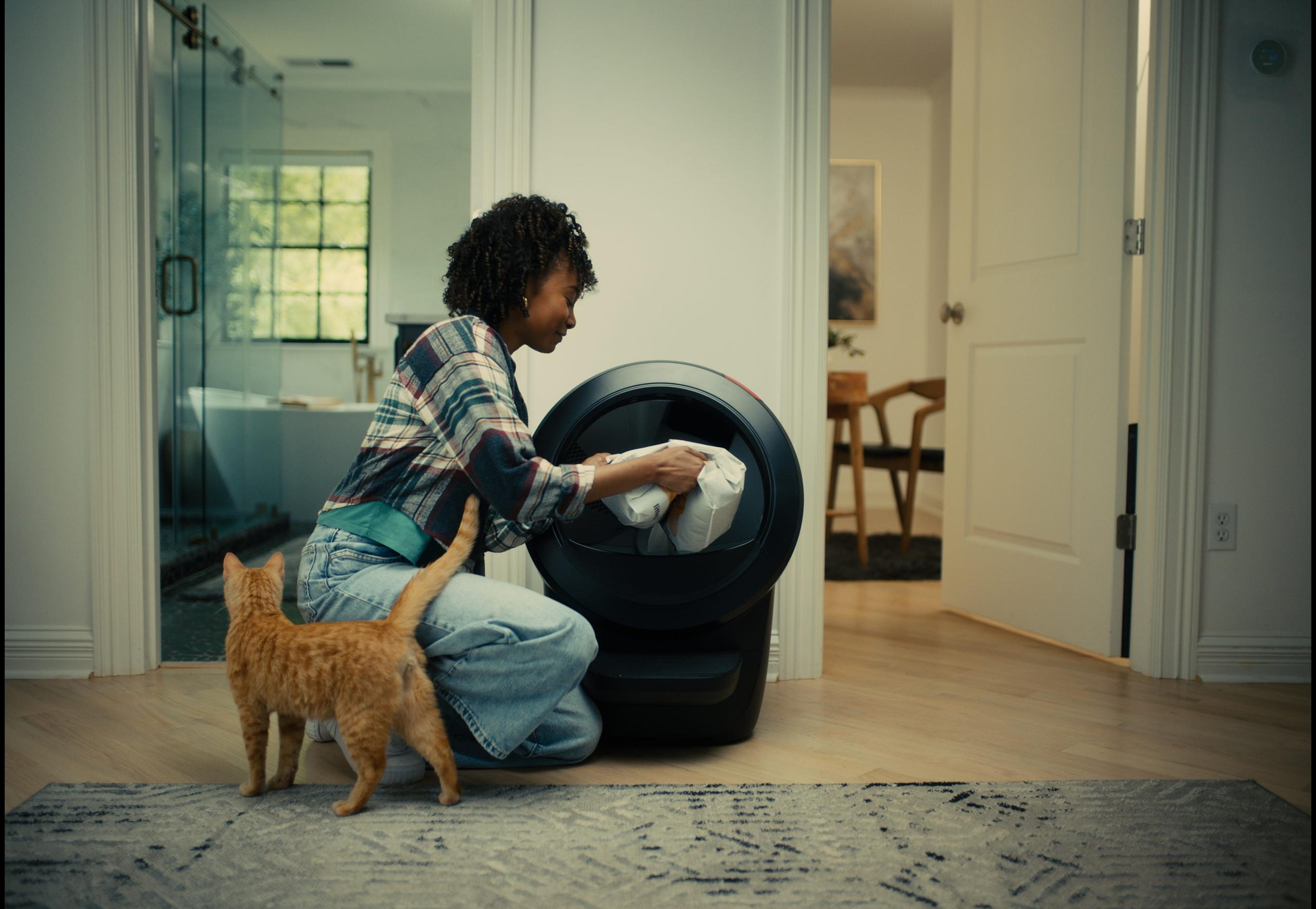
Stick to a consistent litter box routine and pay attention to where the box is placed so your cat can easily find it. If you're tight on space, consider hidden or compact litter box setups that blend into your home.
General home checklist
Beyond cat care, there are a few standard tasks you’ll want to handle once you’re settled in:
- Update your mailing address.
- Replace any old door locks.
- Check that your smoke and carbon monoxide detectors are working.
- Get your internet, cable, and other utilities squared away.
- Find nearby grocery stores, parks, and other local spots.
- Introduce yourself to your neighbors (bonus: they may help keep an eye out for your cat if they ever slip out!).
And don't forget about all the new home essentials like toilet paper, detergent, sponges, etc.
Moving with a cat isn’t always easy, but with a little planning and patience, it can go surprisingly smoothly. By prepping ahead of time, giving your cat space to adjust, and maintaining familiar routines, you’ll both be feeling at home in no time. Just remember, your cat doesn’t need much to be happy, as long as they’ve got a cozy spot, a clean litter box, and you nearby.