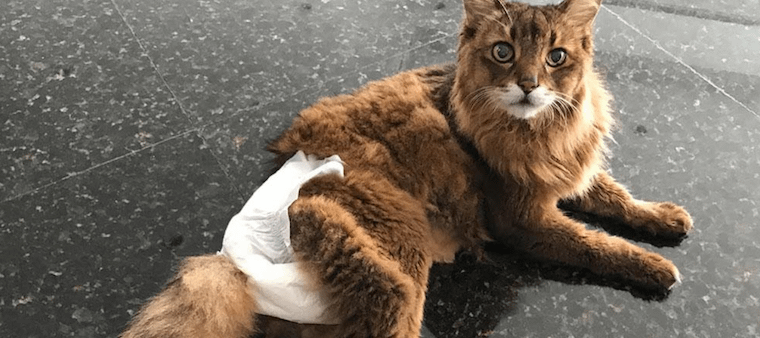

Incontinence is a common issue among sick and elderly cats and can cause frequent clean-ups and discomfort. Cat diapers are one practical solution — they don’t cure the underlying cause, but they can help keep your home clean and make your cat more comfortable while you pursue veterinary care.
- Disposable — quick-change and convenient for short-term use.
- Washable cloth — better for long-term use and the environment.
- Wraps — comfortable for urine-only issues but won’t work for bowel problems.
Want to buy right away? See the “Best cat diapers (quick picks)” below for example choices and sizing tips.
Cat incontinence
Cat incontinence can be caused by many conditions (such as obesity or bladder stones), and not just illness or old age. This makes it important to prioritize your cat’s comfort and to work with your veterinarian to identify the underlying cause. Even when using diapers, some cats still require bladder expression — for example, manual bladder expression every eight hours can be necessary to avoid infection in certain cases; diapers help manage mess but do not replace veterinary care. For information on bladder expression, see this guide from Handicapped Pets: expressing your cat’s bladder.
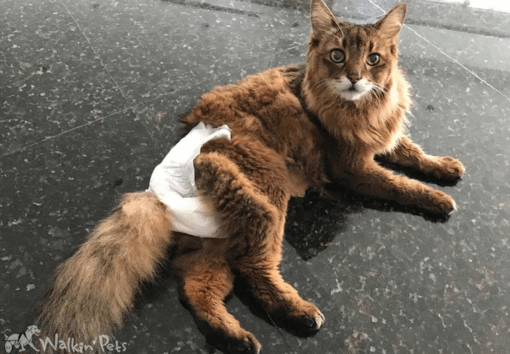
Before looking at pros and cons, let’s review the available diaper types and when each is appropriate.
Types of cat diapers
Disposable
Single-use diapers are convenient: they’re usually adjustable, absorbent, and can be discarded after use so you avoid laundering. The downside is cost over time and waste; disposables are best for short-term or occasional use.
Cloth
Washable diapers are softer and more eco-friendly, often more comfortable for long-term use. They require regular washing and may take longer for some cats to tolerate. Use breathable materials and change them frequently to prevent skin irritation.
Wraps
Wrap-style diapers (waist-wraps) cover the urethral area for urine only and are less restrictive. They’re comfortable for cats with only urinary issues but won’t contain feces — so they’re not suitable for bowel incontinence.
Other considerations
Keeping the diaper in place is often the biggest challenge. Many cats will try to wiggle, scratch, or bite at a new garment. A simple solution for escape artists is to combine a diaper with a light garment that prevents access to the diaper, such as a pet onesie or secure coveralls (see the “Baby onesies” note below).
Baby onesies
Using a baby onesie (or a pet onesie) over the diaper can keep the diaper from slipping and prevent cats from reaching it. Onesies will get dirty, so keep spare garments on hand and launder regularly.
Diapering is a learning process for both of you. If diapers aren’t a fit, alternatives such as protective bedding, absorbent pads, or, depending on your needs, a self-cleaning litter box can reduce cleanup.
Comparison: diaper types at a glance
| Type | Best for | Pros | Cons |
|---|---|---|---|
| Disposable | Short-term use, travel | Convenient, no washing | Ongoing cost, waste |
| Cloth (washable) | Long-term use, environmentally conscious owners | Softer, reusable | Requires laundering, can cause irritation if not changed often |
| Wraps | Urine-only situations | Less restrictive, comfortable | Won’t contain feces |
Pros of cat diapers
Cat diapers keep your home cleaner and can reduce stress for both cat and caregiver. They provide protection from urine and feces, help protect skin from irritation or rug burn in immobile cats, and can reduce the spread of bacteria on floors that could be picked up by the cat’s fur.
For cats with mobility issues (particularly weak rear legs), diapers provide a protective layer that helps prevent rubbing injuries. They can also help manage spraying/marking in some cats while you work on behavioral or medical solutions.
Cons of cat diapers
Diapers are not a perfect solution. Some cats resist wearing them, and improper use (leaving them on too long, poor fit, or poor hygiene) can cause skin irritation or discomfort. You’ll need to monitor the skin, change diapers frequently, and ensure cleanliness to reduce risks.
Applying a diaper can be challenging if the cat is anxious or aggressive. Patience, calm handling, and gradual desensitization help. If a cat shows pain or severe distress when diapered, consult your veterinarian for alternatives.
How to replace your cat’s diaper
- Cradle your cat securely and slide the tail through the tail hole first.
- Bring the larger side of the diaper between the hind legs and under the belly.
- Bring the shorter side over the back and fasten the tabs/hook-and-loop closures. Avoid holding your cat too tightly; use gentle, confident motions.
- If your cat has a long tail or fused legs, try turning the diaper slightly sideways for coverage while maintaining comfort and mobility.
If possible, alternate disposable and cloth styles to find what your cat tolerates best, and test different brands/sizes until you find a secure, comfortable fit.
Best cat diapers
Examples to consider (replace links with your preferred retailer links if desired):
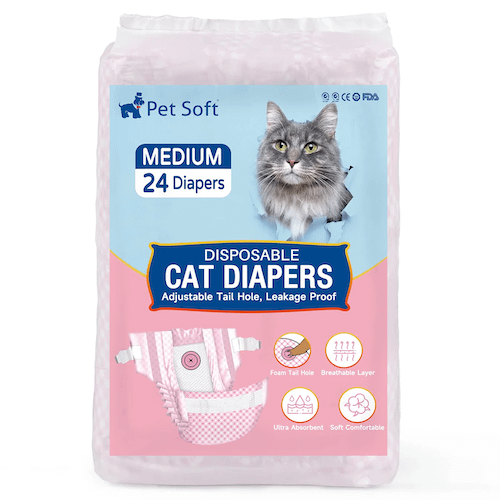
PetSoft Disposable Cat Diapers
Best for: Short-term or travel use.
Price: $22.99 / 24-pack
Pros: Convenient, absorbent.
Cons: Ongoing cost.
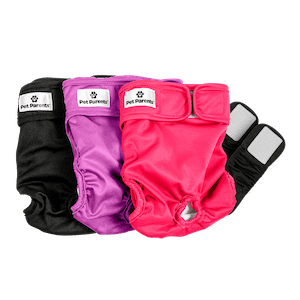
Pet Parents Washable Cat Diapers (3-pack)
Best for: Long-term use.
Price: $25 / 3-pack
Pros: Reusable, softer.
Cons: Requires laundering.
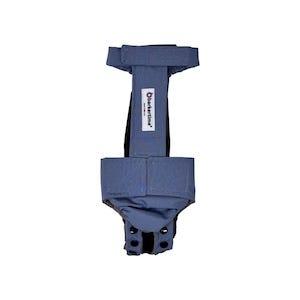
Bakertime Wrap-style Diaper
Best for: Urine-only cases.
Price: $104.99
Pros: Comfortable, less restrictive.
Cons: Not for bowel incontinence.
Sizing tip: measure around the widest part of the hindquarters and consult brand size charts — a snug, not tight, fit reduces leaks and prevents chafing.
Frequently asked questions
Can cats wear diapers?
Yes — many cats can wear diapers with patience and proper fitting. Diapers are commonly used for urinary incontinence, marking, or immobility. Always ensure frequent changes and check the skin for irritation.
How long can I leave a diaper on my cat?
Change diapers as often as needed — generally several times a day for disposables, or immediately if soiled. Leaving a wet or soiled diaper on for extended periods increases risk of skin irritation and infection.
Are diapers safe for cats?
When used correctly and changed frequently, diapers are generally safe. Monitor skin for redness, chafing, or sores; if you notice issues, stop using the diaper and consult your veterinarian.
How do I size a cat diaper?
Measure around the widest part of the hindquarters (not the tail) and follow the manufacturer’s size chart. If between sizes, choose the larger size and adjust closures for comfort.
Cloth vs disposable — which is better?
Cloth is better for long-term cost and environmental impact; disposables are more convenient for short-term or travel. Choose based on your cat’s tolerance, budget, and how often you’re able to launder.
What if my cat refuses diapers?
Try gradual desensitization: introduce the diaper near play/rest areas, reward calm behavior, fit the diaper briefly and increase duration over days. If resistance continues, consider alternatives like absorbent bedding, diapers only when supervised, or consult your vet/behaviorist.
Guest post by Ellie Batchiyska of Handicapped Pets, your most trusted source for pet wheelchairs, harnesses, and back braces.