

If you’re pregnant (or planning to be) and have a cat, you’ve probably heard scary warnings about toxoplasmosis, especially when it comes to cleaning the litter box. The internet often makes it sound like cats are a major danger, but the reality is far more nuanced (and much less alarming).
Let’s break down what toxoplasmosis actually is, how people really get it, and how you can safely protect yourself without giving up your cat.
What is toxoplasmosis?
Toxoplasmosis is an infection caused by a single-celled parasite called Toxoplasma gondii.
For most people, toxoplasmosis causes either mild flu-like symptoms or no symptoms at all. If you are healthy, an infection generally isn't going to cause an issue. However, if you're pregnant or immunosuppressed from chemotherapy or an illness, this parasite can pose a medical danger.
In a pregnant person, it can result in miscarriage, and in immunosuppressed people, it can lead to life-threatening infections because a first-time infection can sometimes be passed to a developing fetus, potentially leading to complications.
In this situation, the consequences can be dire:
- Eye damage
- Blindness
- Brain damage
- Mental impairment.
Infected pregnant people can be treated with medication, and both parent and baby should be closely monitored thereafter. If affected, the baby may not show signs until well after birth.
Is toxoplasmosis common?
Toxoplasmosis is surprisingly common worldwide, and most healthy adults who are exposed never realize they were infected.
Globally, it’s estimated that up to one-third of people have been exposed to Toxoplasma gondii at some point in their lives. In the U.S., exposure rates are lower with about 11% of the US population 6 years and older have had a Toxoplasma infection, according to the CDC.
About 85% of pregnant women in the U.S. are at risk of being infected with toxoplasmosis
According to the FDA, and it's estimated that toxoplasmosis infects between 300 and 4,000 fetuses in the U.S. each year.
What can cause toxoplasmosis?
People can become infected by accidentally ingesting the parasite through:
- Undercooked or raw meat (especially pork, lamb, or venison)
- Unwashed fruits or vegetables
- Contaminated soil (gardening without gloves)
- Unclean hands or kitchen surfaces after handling raw meat
- Cat feces exposure, because cats can shed the parasite in their poop (often through cleaning a litter box)
- Rarely: organ transplant or blood transfusion from an infected donor
In reality, food and soil are much more common sources of toxoplasmosis than cats and you’re more likely to be infected with Toxoplasma from undercooked meat or the environment than you are from your cat.
In fact, about 50% of U.S. infections are acquired from food, according to the CDC.
Most infections happen without symptoms. The risk is real, but it’s also manageable with basic precautions.
What will NOT cause toxoplasmosis?
It’s important to know what doesn’t put you at risk:
- Petting or cuddling your cat
- Being near a litter box that’s cleaned daily
- Living with an indoor-only cat who doesn’t hunt or go outside
- Having a cat in the home during pregnancy
In other words, you do not need to get rid of your cat if you’re pregnant
Cats, pregnancy & why shouldn’t pregnant people scoop the litter box
Toxoplasma gondii parasites typically reproduce in cat intestines, which can happen if they eat raw meat or hunt.
This is why pregnant people are advised to avoid changing cat litter, not because cats themselves are inherently dangerous.
The cat litter box poses a risk of infection with the parasite Toxoplasma gondii, which causes the disease toxoplasmosis.
Cat feces pose a low but serious risk
Despite the high number of infections in the US, it's not cats or the litter box that is most likely to transmit the parasite.
According to the CDC, people are more likely to get toxoplasmosis from eating raw meat or gardening.
Cats typically contract the parasite by eating raw meat (think mice, birds, or even a raw food diet) or digging in soil, and they're not the only animals that can carry it. The difference is that cats are the only species that excrete the parasite when it is in its infectious stage. If they are infected, they do this in the litter box in your home for up to three weeks.
Oftentimes, cats get exposed to the parasite when they are young, so they are immune to it later in life. Even if you let your cat venture outdoors, it's typically only on the first infection that they'll shed the parasite through their feces. Your vet can perform bloodwork to tell if your cat is infected with Toxoplasma and treat any infection.
Conditions for cats to be carriers
Having a cat does not automatically mean you’ll be infected. Cats usually shed for a short period, and litter oocysts generally need ~1–5 days after being passed to become infectious, so daily litter removal greatly lowers risk.
Cats are only likely to shed the parasite if they:
- Eat raw or undercooked meat
- Hunt and eat infected wildlife (like rodents or birds)
- Dig in contaminated outdoor soil
- Are exposed when they are young (kittens are more likely to shed)
When a cat is newly infected, they may shed microscopic eggs (called oocysts) in their feces for a short window of time, usually 1 to 3 weeks.
Indoor-only cats who eat commercial cat food and don’t hunt are much less likely to ever be exposed.
Cats are unlikely to be carriers if they:
- Are indoors-only cats that don’t hunt
- Do not hunt or dig
- Eat only commercial canned/dry food or well-cooked food
- Feces have been disposed of within less than 24 hours and the litter box is cleaned daily
- They were infected in the past but not recently (not within the past month or so)
How to protect yourself from toxoplasmosis when pregnant
Avoid interacting with the litter box
When it comes to pregnant people with cats, the advice is pretty simple: Pregnant people should avoid interacting with the litter box if possible. If they must manage the litter box, a pregnant person should wear disposable gloves and wash their hands with soap afterward. If you are worried your cat has recently contracted toxoplasmosis, it's key that a non-pregnant person clean the litter box frequently to remove the parasite before it becomes infectious 1-5 days after being excreted. That means both scooping to remove feces and sanitizing surfaces to remove debris where the microscopic parasite can live.
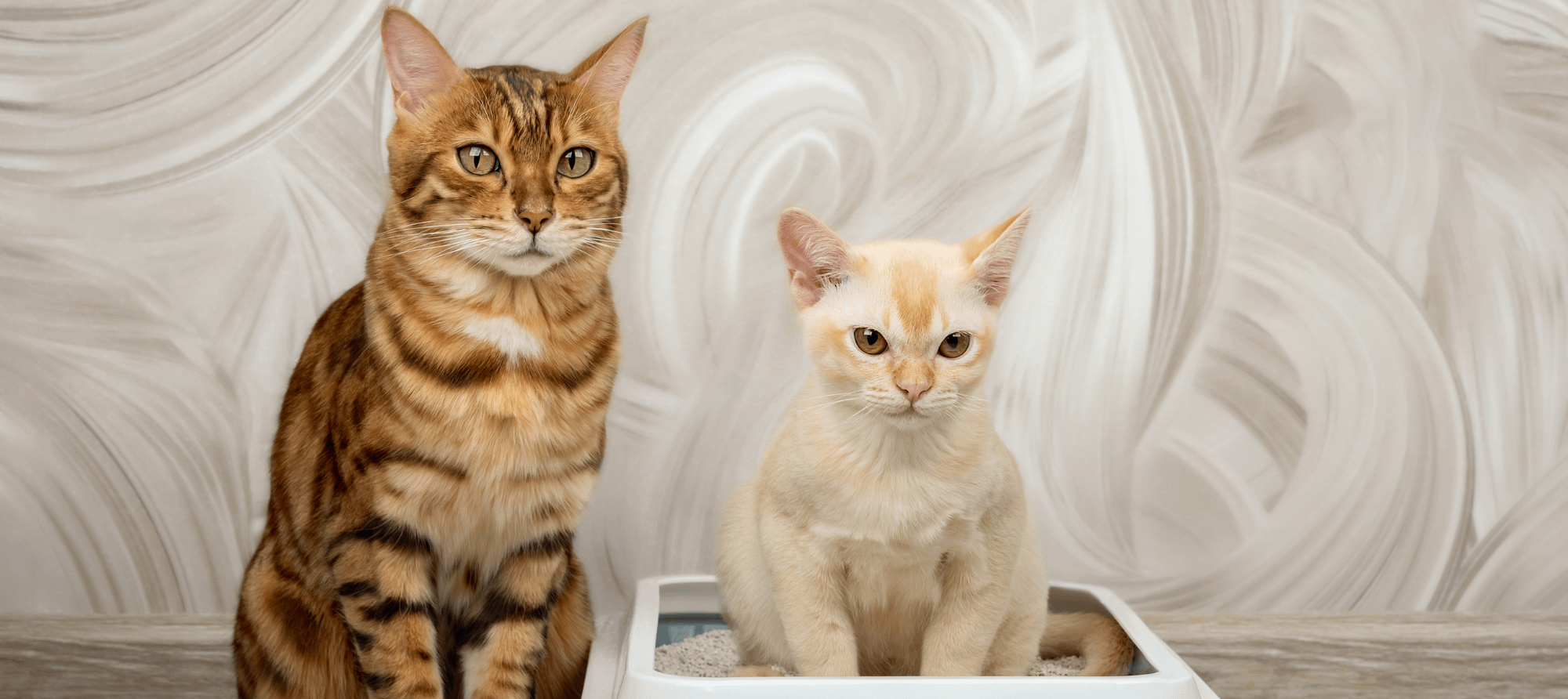
- Have someone else handle litter box cleaning when possible
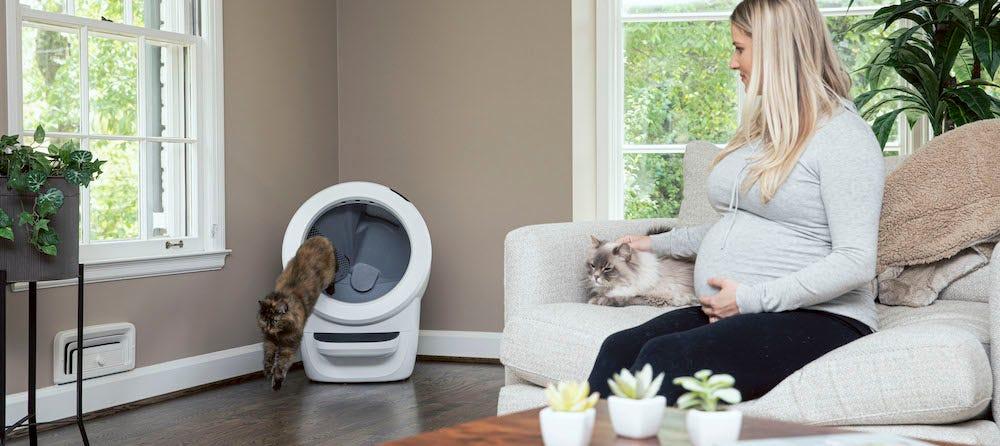
- Clean the litter box daily or use a self-cleaning litter box, which reduces direct contact (and may be HSA/FSA eligible)
If you must clean it yourself:
- Wear disposable gloves
- Clean the box daily
- Wash hands thoroughly afterward
General prevention tips
- Keep cats indoors. By keeping your cats indoors, they are less likely to encounter the parasite through other animals' feces and raw meat.
- Don’t dump the litterbox contents into the backyard. Protect raised garden beds from cats and wildlife by surrounding them with chicken wire or something similar.
- Avoid feeding cats raw meat. If you feed your cat raw meat, make sure to freeze it for at least 24 hours before serving it, which will kill any Toxoplasma that may be present. It's also best to feed your cat in a designated area and keep them off counters to prevent contamination.
- Wash fruits and vegetables well. Washing fruits and vegetables well helps remove Toxoplasma oocysts that can be on produce from contaminated soil or water.
- Avoid raw milk, especially goat’s milk. Avoiding raw milk (especially goat’s milk) reduces the risk of consuming Toxoplasma because unpasteurized milk can carry infectious organisms.
- Wash hands regularly, especially before eating. This is especially important before eating, to help prevent transferring Toxoplasma from contaminated soil, litter, or surfaces into your mouth.
- Wear gloves and wash your hands thoroughly when gardening. Since the parasite can live in soil, pregnant people should be vigilant about wearing gloves and washing their hands after gardening. Thoroughly wash produce fresh from the garden.
- Cook your meat. Pregnant people should ensure any meat that they eat has been cooked until it reaches an internal temperature of 165 degrees Fahrenheit. All kitchen utensils and cutting boards should be washed thoroughly after contact with raw meat.
- A note on kittens and strays. Because cats are most likely to transmit the parasite when they have never been infected, pregnant people should be cautious of adopting a kitten or taking in strays during pregnancy.
Consider a self-cleaning litter box
Along with that long list of pregnancy do's and don'ts can come guilt about asking others to do all the things you're no longer “allowed” to do. You might find yourself starting every other sentence with, “I'm sorry, can you also…” to the point that you just start doing things yourself, even though you shouldn't. Or, that person who is nice enough to take on more chores becomes overworked and winds up unable to meet the demands.
But the fact is, not cleaning the litter box on time can have unfortunate kitty consequences (think protest puddles, misplaced waste, and even urinary disease). Either way, it's not good for you, your family, or your pets.
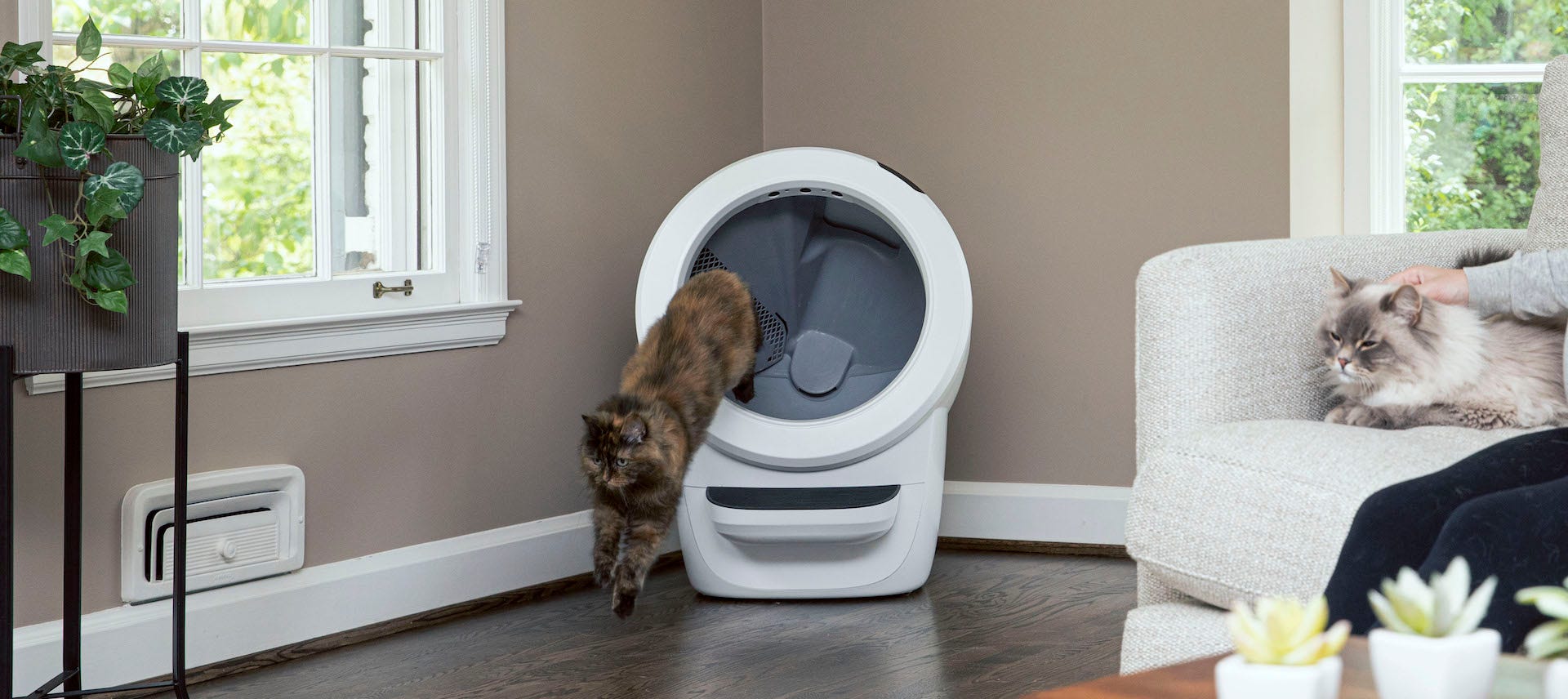
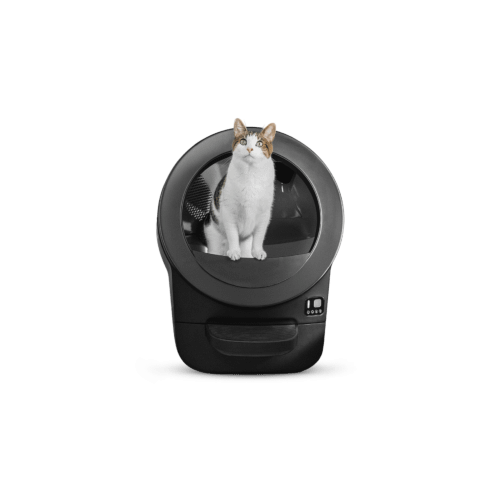
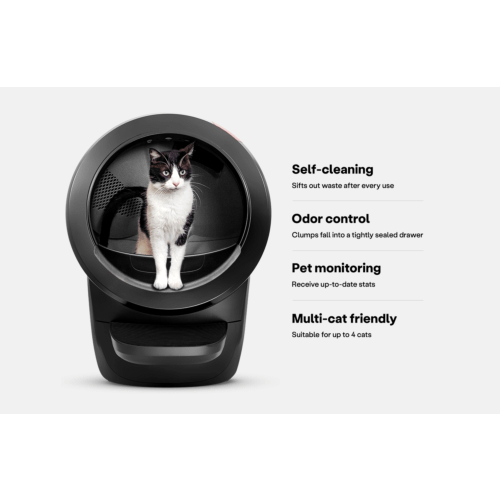
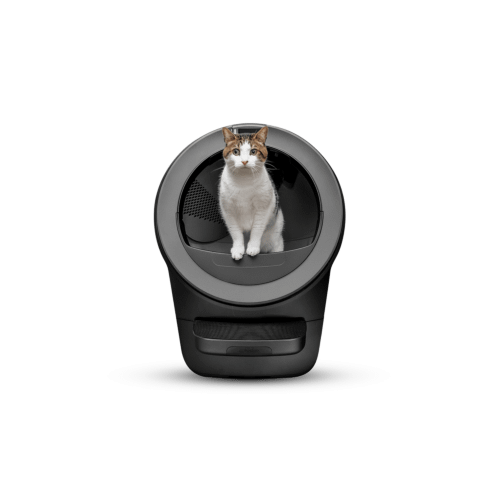
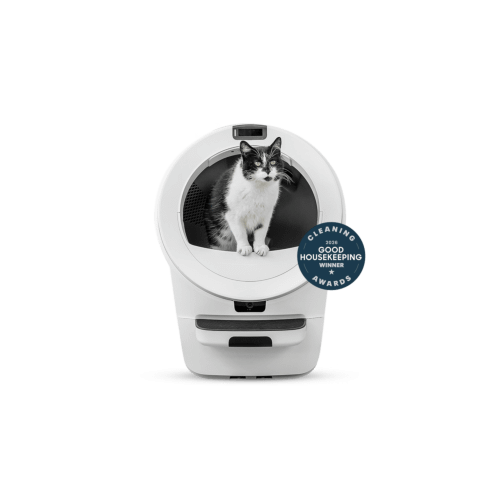
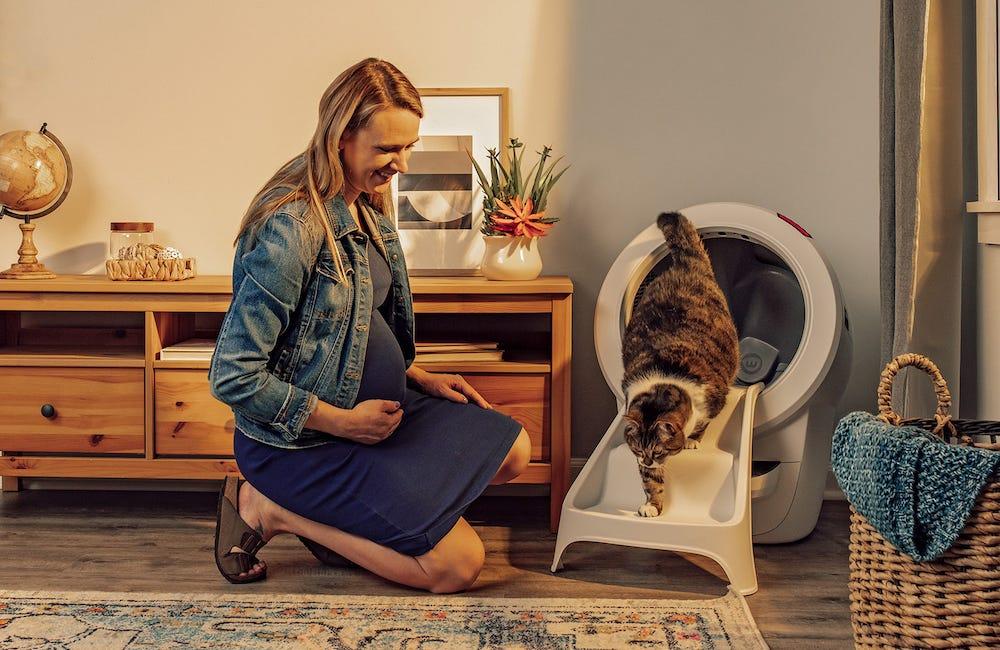
When it comes to loathsome litter box duty, there's a better solution for everyone involved. An automatic, self-cleaning litter box like Litter-Robot does the work for you, so no one has to bend, scoop, lift, or inhale litter dust. Your cat will be happy having a clean place to go every time, and all anyone has to do is gather up the garbage bag and toss it.
It can even be practical to add an automatic litter box like Litter-Robot to your baby registry.
Toxoplasmosis symptoms & consequences
Most adults experience no symptoms at all, or only mild flu-like symptoms (fatigue, muscle aches, swollen lymph nodes).
In pregnancy, the severity of complications depends on the stage or pregnancy and whether this is the mother’s 1st time being infected or not. Previously infected mothers pose little to no risk to their unborn baby. However, a new infection can sometimes lead to:
- Eye issues such as varying degrees of blindness
- Neurological issues in the baby such as hydrocephalus or microcephaly
- Developmental complications (rare, but serious) - often not detected until later in life
Treatment options
In healthy adults, toxoplasmosis often doesn’t require treatment at all. Many people who are exposed never develop symptoms, and their immune system clears the infection on its own.
When vulnerable people are infected such as in pregnant people, infants, or individuals with weakened immune systems, doctors may prescribe antiparasitic and antibiotic medications to help control the infection and reduce the risk of complications. These medications are typically taken for several weeks and are chosen carefully based on the person’s health and stage of pregnancy.
For pregnant people who are diagnosed early, prompt treatment can lower the chance of transmission to the baby and reduce the severity of potential effects. Newborns with congenital toxoplasmosis may also receive medication after birth to help prevent long-term complications.
Conclusion
Toxoplasmosis sounds scary, but it doesn’t need to be. Cats are often blamed, but they’re rarely the true source of infection, especially indoor cats living in clean homes.
The potential effects of toxoplasmosis can sound alarming, but straightforward preventative measures can reduce the threat of Toxoplasma significantly. You don't have to give up your cat or dramatically change your lifestyle. Make these minor adjustments for a healthy pregnancy and happy cat. And, with a self-cleaning litter box like Litter-Robot 4, you don't have to feel guilty about freeing yourself from the chore of litter box scooping.
With smart hygiene, safe food handling, and simple litter box precautions, you can protect yourself and your baby while keeping your cat right where they belong: at home with you.
For more information about toxoplasmosis, visit the Centers for Disease Control and Prevention's FAQs here.
FAQs
Can cats give people toxoplasmosis?
Yes, Toxoplasma gondii is zoonotic, meaning that it can be passed from animal to human. It is spread via contact with cat feces, but minor lifestyle adjustments can reduce or completely eliminate the cat-associated risks.
Do I have to get rid of my cat if I’m pregnant?
No. If you are pregnant and have a cat, start by ensuring that your cat’s lifestyle eliminates contamination risk: Keep your cat indoors and feed them only cooked, commercially processed food. Have someone else scoop the cat litter or invest in a self-cleaning litter box. If needed, schedule an appointment with your OBGYN and your veterinarian to come up with a plan.
Is toxoplasmosis treatable for my cat?
Yes, schedule an appointment with your veterinarian to test and treat your cat if you suspect toxoplasmosis.
Sources: