

Living in an apartment with a cat doesn’t mean your place has to smell like one. The tricky part is that “cat litter smell” isn’t just one odor and figuring out what you’re actually smelling is the key to getting rid of it for good. Once you know the source, the fix is usually much simpler than it feels.
Quick diagnosis: what smell is it, really?
Before you start deep-cleaning everything in sight, take a moment to pinpoint the odor. Different smells need different solutions.
- A stale litter smell usually means the litter is saturated or overdue for a full refresh.
- Poop odor tends to be sharp but short-lived and often points to scooping frequency or airflow issues.
- Cat urine or ammonia smells are stronger, linger longer, and may mean urine is missing the box or soaking into plastic.
- If it feels like your entire apartment smells like “cat”, that’s often a mix of litter dust, hair, humidity, and poor ventilation rather than the litter box alone.
How to get rid of odors fast
When you need results quickly, focus on removing odor at the source versus covering it up.
- Find the source. If the smell is stronger near the baseboards, rugs, or corners, you may be dealing with urine outside the box. Cat urine needs to be fully saturated with an enzyme cleaner so the enzymes can break down odor-causing proteins. Spraying lightly won’t work, and masking it with fragrance usually makes things worse.
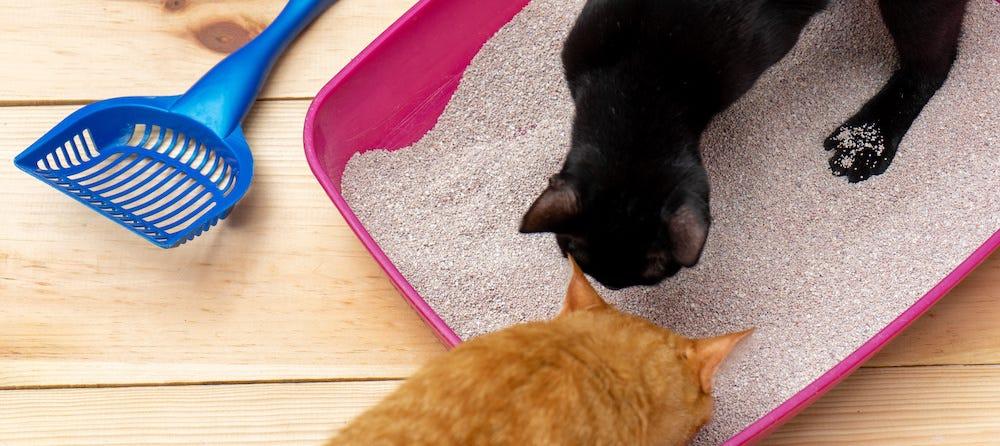
- Clean the litter box thoroughly. If the smell is coming from the box itself, clean it thoroughly even if it “looks fine.” Empty all the litter, wash the box with hot water and an enzyme cleaner, and let it dry completely. Avoid bleach or ammonia-based cleaners as these can actually intensify odors and may attract repeat marking.
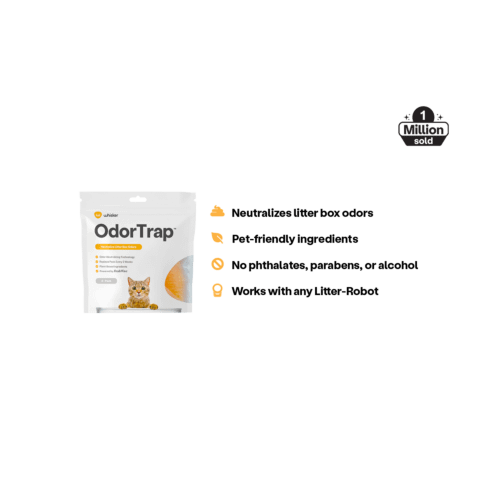
- Tackle the surrounding area. Vacuum pet hair from the floors, rugs, and furniture since hair traps odor. Open windows or run a fan to ventilate the room, even if it’s for a short time. Finally, use odor neutralizers like baking soda or activated charcoal rather than heavily scented sprays, which tend to mix poorly with litter smells.
Small space strategy: Apartment placement & airflow
Where the litter box lives matters more in an apartment than a larger home.
The best spots are well-ventilated, low-traffic areas that still give your cat privacy.
Bathrooms with exhaust fans or laundry areas often work well. Avoid placing boxes in tight closets or sealed cabinets with no airflow — trapped air traps odors, too.
If you do use a cabinet or enclosure, make sure there’s room for air to circulate and that odors aren’t getting sealed inside and released all at once when the door opens.
Best cat litter for odor (what to choose + what to avoid)
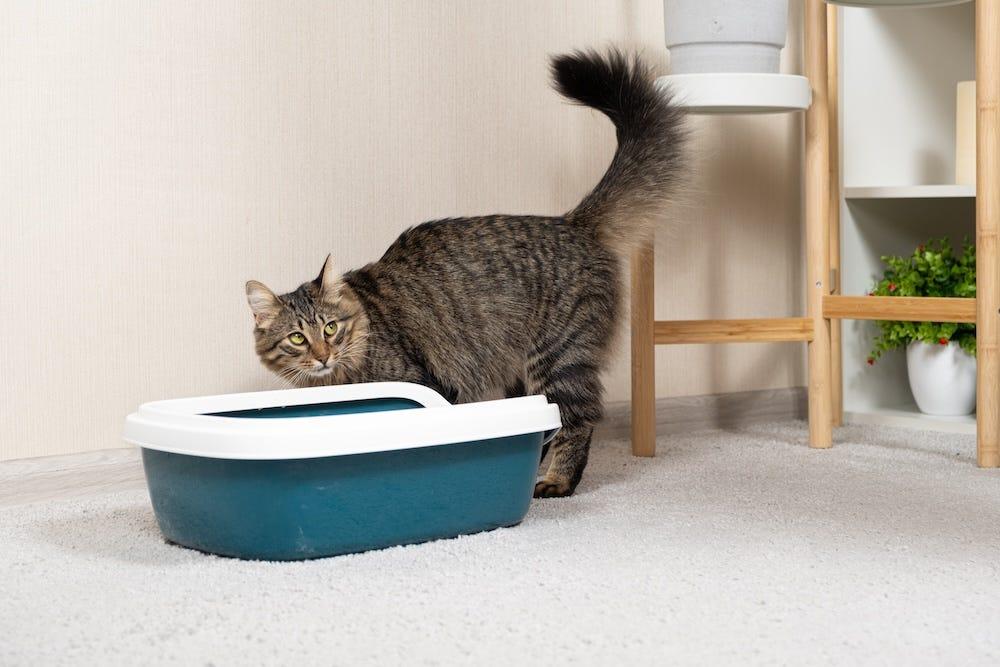
Odor control depends less on marketing claims and more on how litter actually performs.
Best cat litters to reduce smell effectively tend to have:
- Strong clumping
- Good absorption
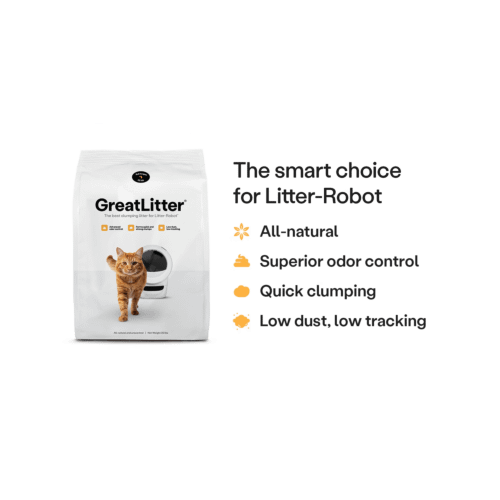
- True odor-neutralizing additives rather than just fragrance
Poor clumping allows waste to break apart and contaminate the box, which leads to that lingering “stale” smell.
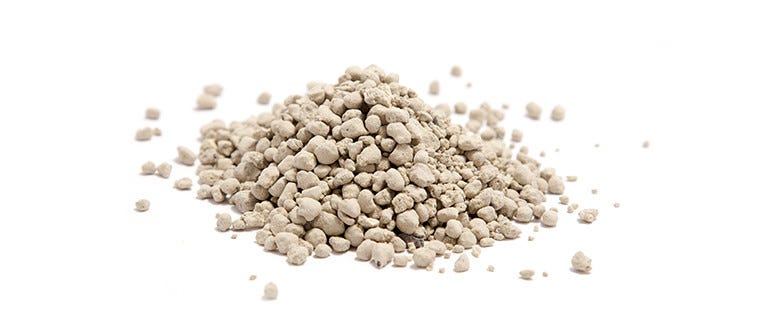
- Clay litter usually offers strong odor control, but it can track dust unless specifically formulated to reduce litter tracking.
- Crystal litters absorb moisture well but may struggle with poop odor if not scooped promptly.
- Plant-based litters can work if they clump well and are scooped frequently, though humidity can reduce their effectiveness.
If your “odor-control” litter isn’t working, common reasons include
- Too little litter in the box
- Inconsistent scooping
- High humidity that keeps waste from drying properly.
Can you put baking soda in cat litter?
Yes, but less is more in this case.
Mix one thin layer evenly into fresh litter rather than dumping it on top.
This helps neutralize odor without creating excess dust. If your cat is sensitive to dust, alternatives like activated charcoal sachets placed near (not in) the box can work well, too.
Best cat litter box for odor control (features that matter in apartments)
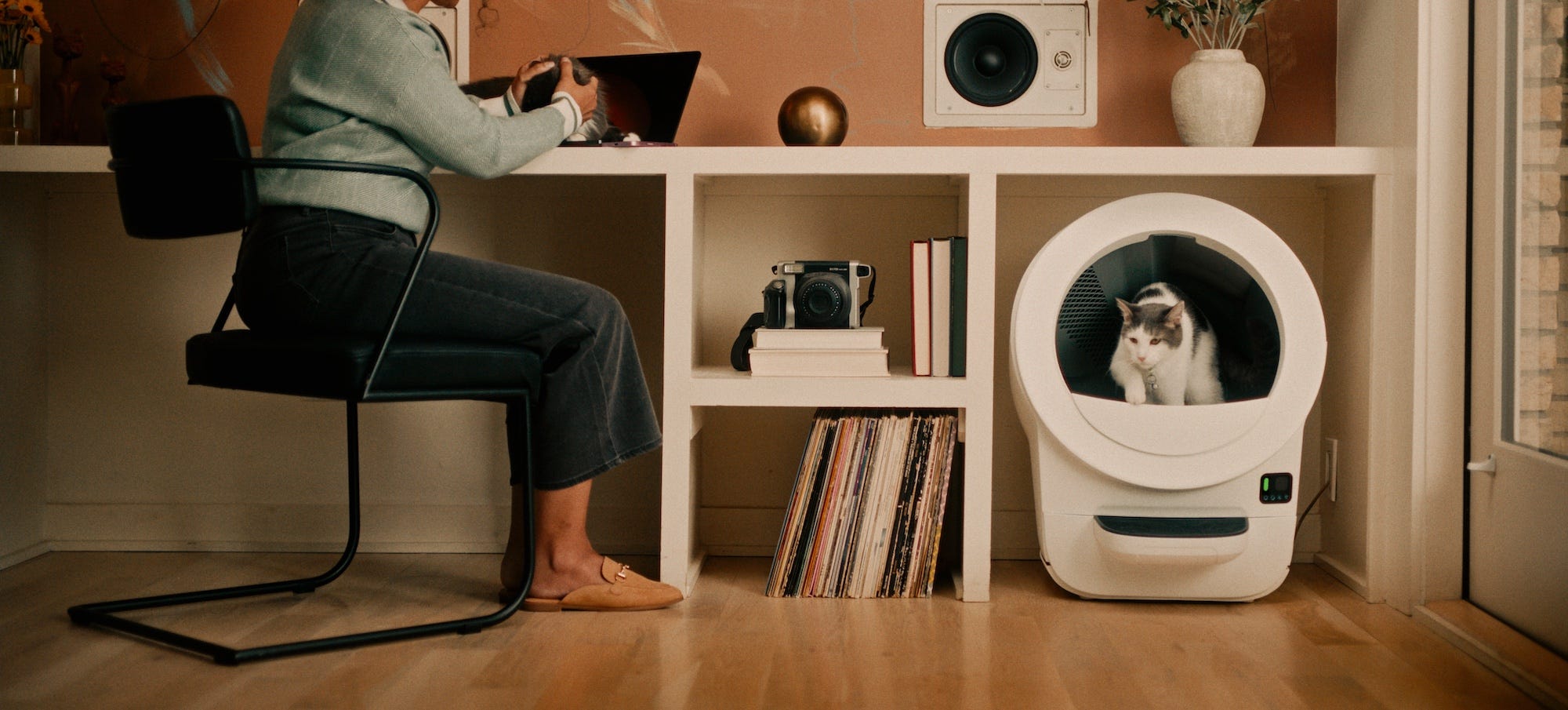
The box itself plays a big role in how smells behave in small spaces.
Open vs covered vs top-entry
Open boxes allow better airflow but don’t contain odor. Covered and top-entry boxes trap smells better, but only if they’re cleaned often and ventilated properly.
Filters + sealed waste drawers/bins
Boxes with sealed waste drawers or filters help keep odors from escaping between cleanings.
Materials: stainless vs plastic
Plastic boxes absorb odors over time, especially if scratched. Stainless steel boxes don’t hold smells as easily and are much simpler to deep clean, which can make a noticeable difference in an apartment.
Self-cleaning litter boxes
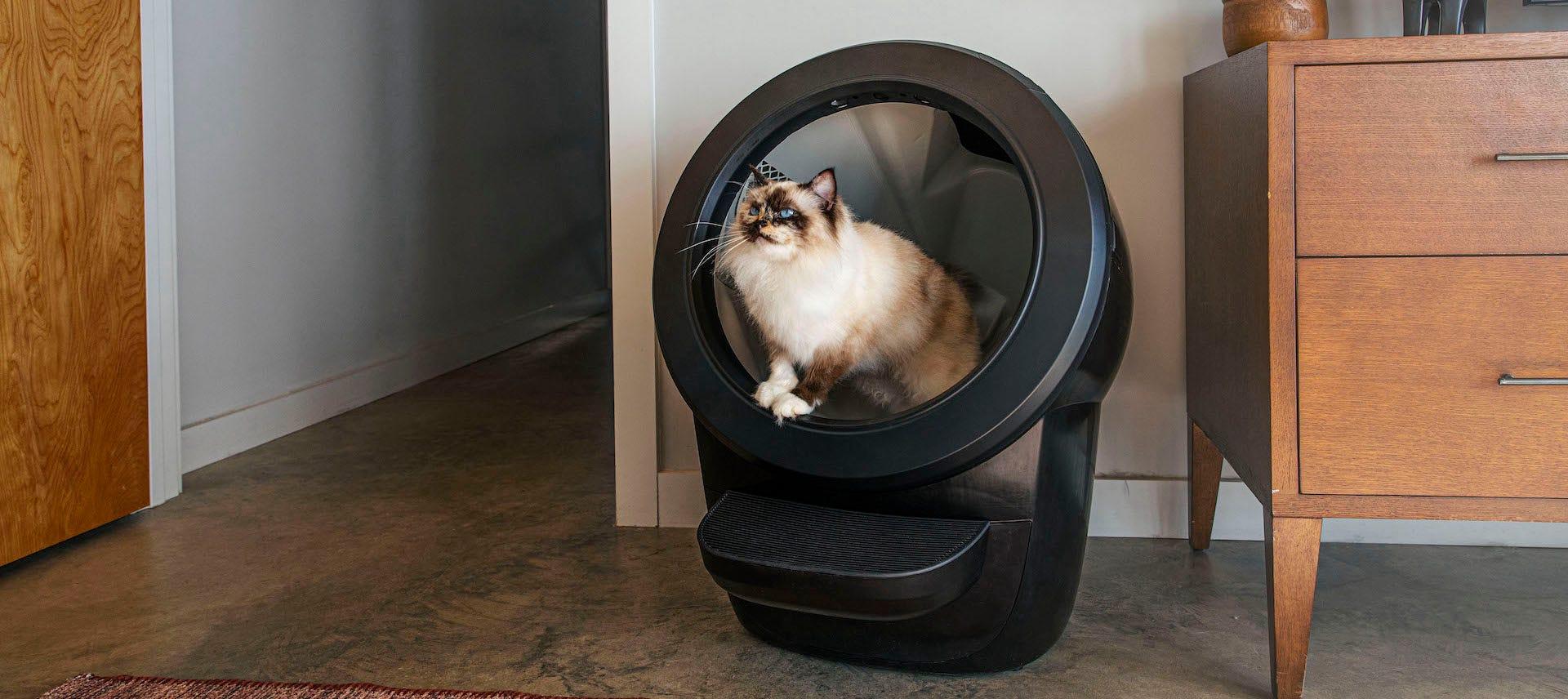
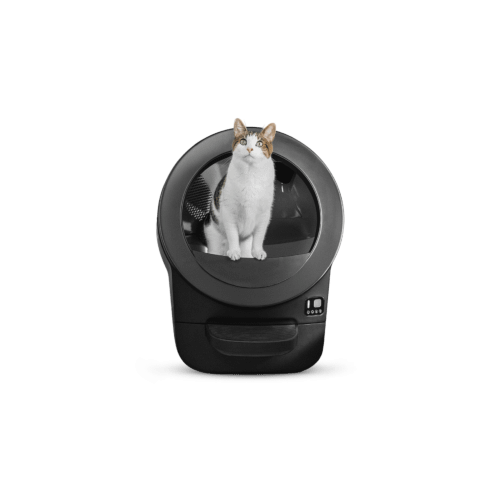
If odor control is really important to you and you're willing to make the investment, self-cleaning litter boxes work wonder in small apartments and studios. Automatic litter boxes like Litter-Robot automatically separate the dirty clumps from the clean litter and store them in a sealed waste drawer, effectively reducing odors.
This is especially convenient if you have multiple cats, but models like Litter-Robot EVO also work well for 1-2 cat households and is compact enough to fit under a side table or in a corner.
How to stop odors from coming back
Daily routine
Scooping once or twice a day is the single most effective habit for odor control, especially in apartments. Seal waste tightly and take the trash out on a set schedule. Keep litter at a consistent depth by topping it off regularly instead of letting it get low and refilling it all at once.
Deep-clean system (weekly + monthly)
- Once a week, empty the box, wash it thoroughly, let it dry fully, and refresh with clean litter.
- Monthly, replace any filters you use and scrub the surrounding floor and wall area where odor particles can collect.
If you’re using a plastic box and odors linger even after deep cleaning, it may be time to replace the box entirely. Plastic can become permanently odor-saturated, and no cleaner can fully fix that.
Getting rid of cat litter smell in an apartment isn’t about one magic product, but rather about understanding the source, choosing the right setup, and sticking to a simple routine. With the right litter, smart placement, consistent cleaning, and good airflow, even small spaces can stay fresh and comfortable for both you and your cat. A little maintenance goes a long way toward keeping your apartment smelling like home, not like a litter box.