Accessibility Statement

Page 13 - Cat Facts

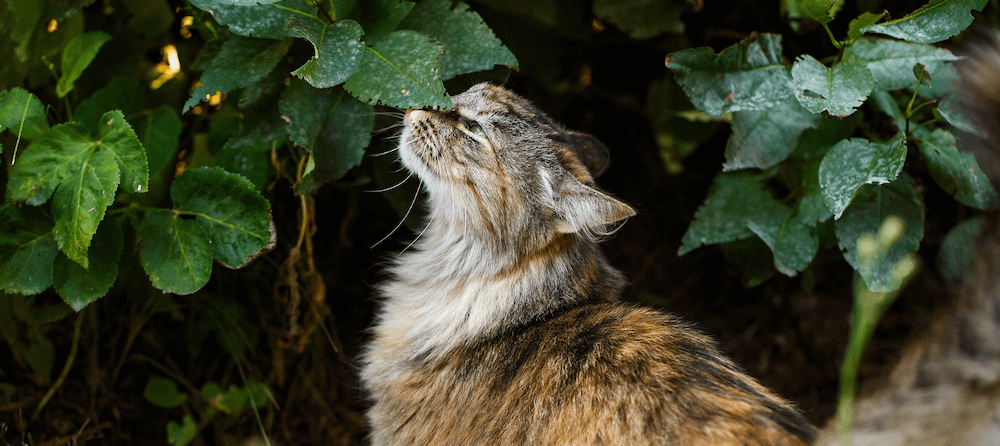
  1. long-haired cat smelling leaves

    What Smells Do Cats Hate? 18 Smells That Cats Hate the Most

    What smells do cats hate, and why should you care? The answers may surprise you.
    Read More
  2. 6 Common Microchip Misconceptions

    6 Common Microchip Misconceptions

    June is National Microchipping Month. Whether your pet is already microchipped or you’re considering getting one...
    Read More
  3. Scented vs. Unscented Cat Litter: What Does the Research Say?

    Scented vs. Unscented Cat Litter: What Does the Research Say?

    You'll be surprised at what research says about the benefits and drawbacks of scented vs. unscented cat litter.
    Read More
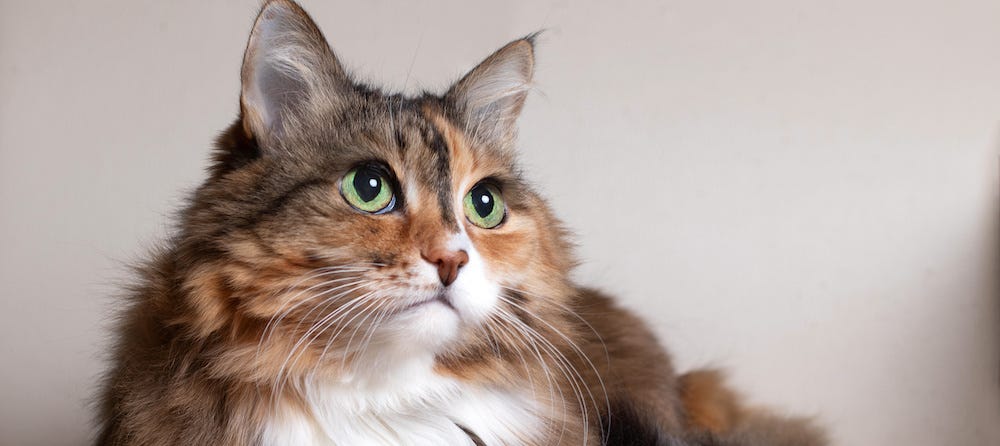
  4. calico cat with green eyes

    Cat Genetics: Fever Coats, Taste Buds & More

    Get answers to some fascinating feline questions, such as: Can cats taste sweetness? And what is a fever coat? ...
    Read More
  5. Why Do Cats Groom Each Other?

    Why Do Cats Groom Each Other?

    Why do cats groom each other? The answers might surprise you: It’s not always about hygiene or even affection. Cats...
    Read More
  6. American Shorthair: America’s First Cat

    American Shorthair: America’s First Cat

    September 16th marks the anniversary of the Mayflower setting sail from Plymouth, England, also known as Mayflower...
    Read More
  7. The Most Bizarre Cat Superstitions

    The Most Bizarre Cat Superstitions

    Over the millennia, unfounded fears and suspicions have cast felines into uncanny—and often villainous—roles. What...
    Read More
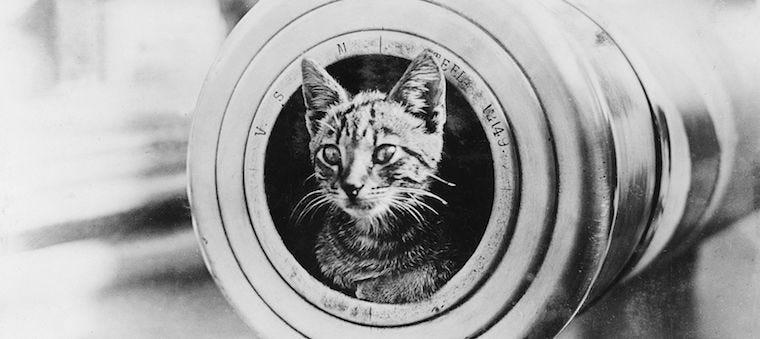
  8. Cats on Ships: A Brief History

    Cats on Ships: A Brief History

    Yo ho ho, it’s International Talk Like a Pirate Day! In honor of this strange holiday, we found ourselves investigating...
    Read More
  9. Weird Cat Behavior Explained

    Weird Cat Behavior Explained

    If you’re a cat parent, you’ve probably noticed that the bottoms of your pant legs end up covered in fur. So why...
    Read More
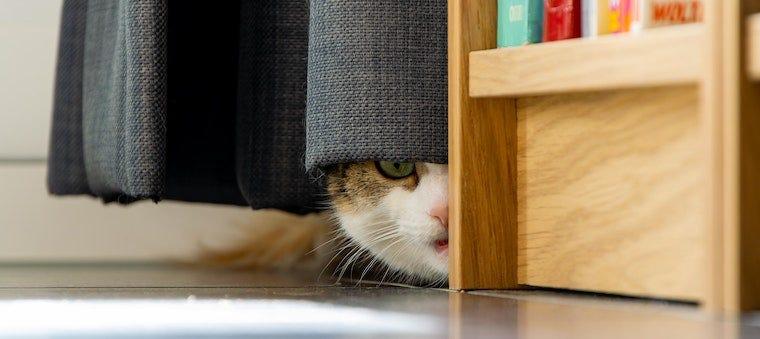
  10. cat hiding and peeking out from under curtain

    Why Are Cats Afraid of Cucumbers?

    Why are cats afraid of cucumbers? Explore the five reasons why and how to prevent your cat from being anxious around...
    Read More
  11. Microchipping vs. a Pet GPS Tracker

    Microchipping vs. a Pet GPS Tracker

    July’s arrival brings long days, pleasant nights, and a reminder to all pet owners that National Lost Pet Prevention...
    Read More
  12. Why Do Cats Get Stuck When They Hide?

    Why Do Cats Get Stuck When They Hide?

    Why do cats get stuck when they hide? Our parents often encourage us to face our problems. Deal with things head-on...
    Read More
  13. A cat's paws kneading a blanket

    Why Do Cats Knead?

    All pet parents know that cats have a lot of strange behaviors. For some, cat kneading takes the cake—or makes the...
    Read More
Posts loader

Fun cat facts and feline tidbits 

Cats are endlessly fascinating, and we have the content to prove it! Read 100+ articles on the Litter-Robot blog that include fun facts about cats. You’ll find cat facts related to coat pattern, breed, unique abilities, and more!

Did you know? Cats instinctively know how to use the litter box. To avoid being eaten or attacked by predators, ancestral wild cats had to cover up their tracks and hide their waste to mask their scent. They gravitated toward soft dirt or sand, since the granular consistency made it easier to bury their waste. 

What other interesting facts about cats didn’t you know? Cats meow for humans, not other cats. A group of cats is called a clowder or a glaring, while a group of kittens is a kindle. 30%-50% of cats lack the gene that makes them react to catnip. Research suggests that a cat’s purr has the power to self-heal. People with cat allergies aren't allergic to fur, but rather a protein found in a cat’s saliva, urine, and dander called Fel d 1. Cats seek out boxes that offer cover for their predatory hunting instincts, as well as to hide to avoid becoming prey—an instinct passed down by their wild ancestors. Contrary to popular belief, cats don’t see in black and white—but research suggests that they are red-green colorblind. A 1-year-old kitten is developmentally equivalent to a 15-year-old human. (Most) cats are lactose intolerant. Cats’ whiskers help with directional orientation and spatial awareness.

Shall we keep going? The “tabby” cat isn’t a breed—it’s a pattern. Your cat has a third eyelid that functions as a shield for their cornea. Cats are imitating snakes when they hiss. Your house cat likely isn’t nocturnal, but instead crepuscular, or most active around dusk and dawn. How long a cat lives largely depends on whether they’re indoor-only or an outdoor cat. Cats almost always land on their feet due to their impressive “righting” reflex. Cat pee smells so bad because it’s so concentrated—felines originated in the desert and evolved to absorb a large amount of water from their urine to maintain their hydration. Cats are more likely to knead if they were separated from their mothers as young kittens. And finally, cats aren’t just jerks: They knock things over to test for hidden prey.