
Seeing a positive pregnancy test can bring up a lot of emotions. You might feel excited, surprised, nervous, overwhelmed, or all of those things at once.
The good news? You don't have to figure out the next nine months today. Start with a few simple steps: schedule your first prenatal appointment, start a prenatal vitamin, review your medications, and make a few small changes at home.
And if you have a cat, there's one extra thing worth knowing. You may have heard that pregnant people shouldn't change the litter box, but you don't need to rehome your cat or avoid cuddles. A few simple precautions can help keep both you and your growing family safe.
In this article

A practical first-week checklist if you're pregnant and have a cat
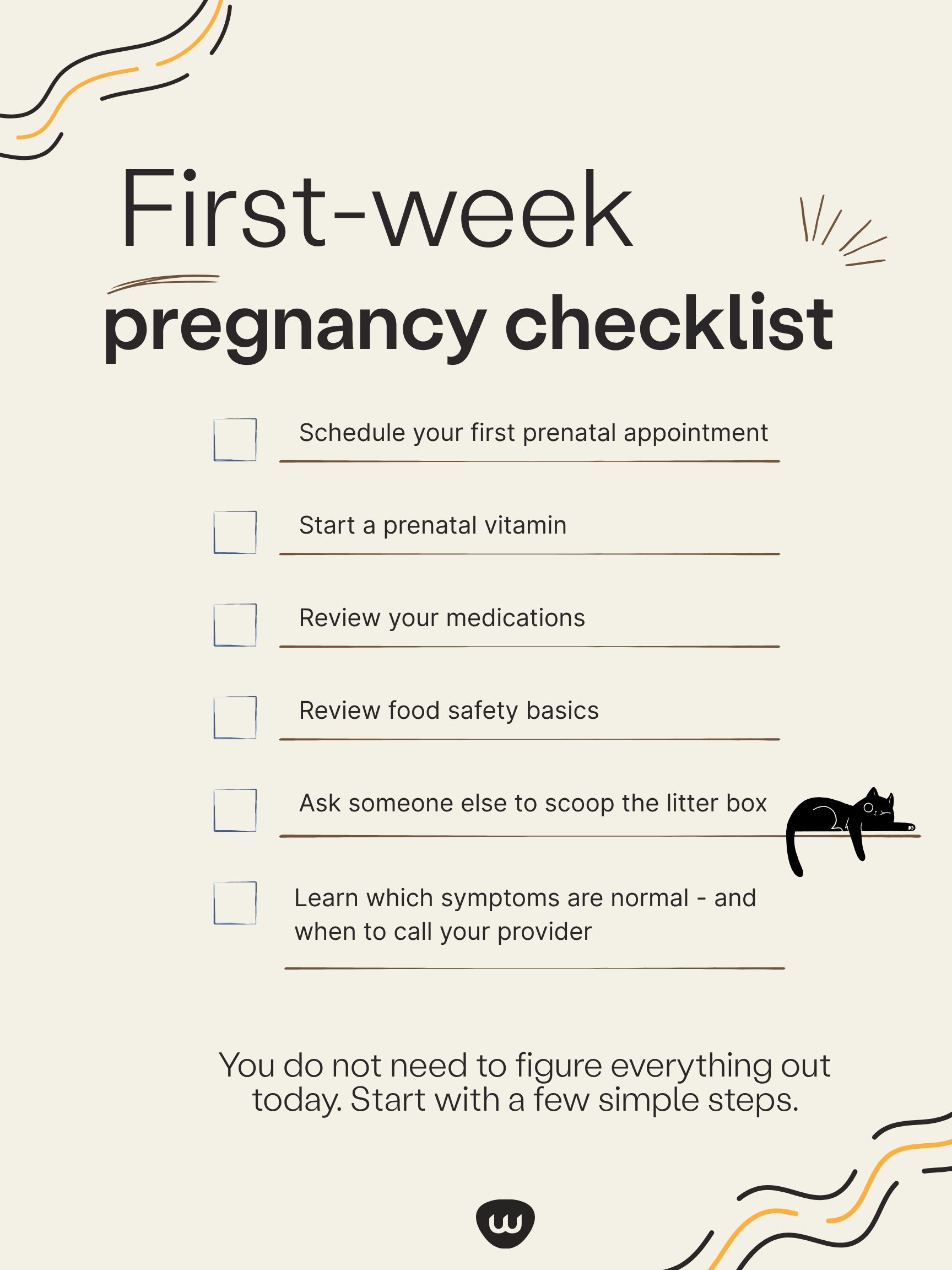
You do not need to figure everything out today. Start with a few simple steps that can help you feel prepared and protect both you and your pregnancy.
- Call your healthcare provider. Schedule your first prenatal appointment and ask when they would like to see you.
- Start a prenatal vitamin. Look for one with folic acid, which is important for early fetal development.
- Ask someone else to scoop the litter box. If possible, hand litter duty over to a partner, family member, or roommate while you're pregnant.
- Keep your cat indoors. Indoor cats are much less likely to be exposed to the parasite that causes toxoplasmosis.
- Review food safety basics. Avoid raw or undercooked meat, unpasteurized dairy products, and wash fruits and vegetables well.
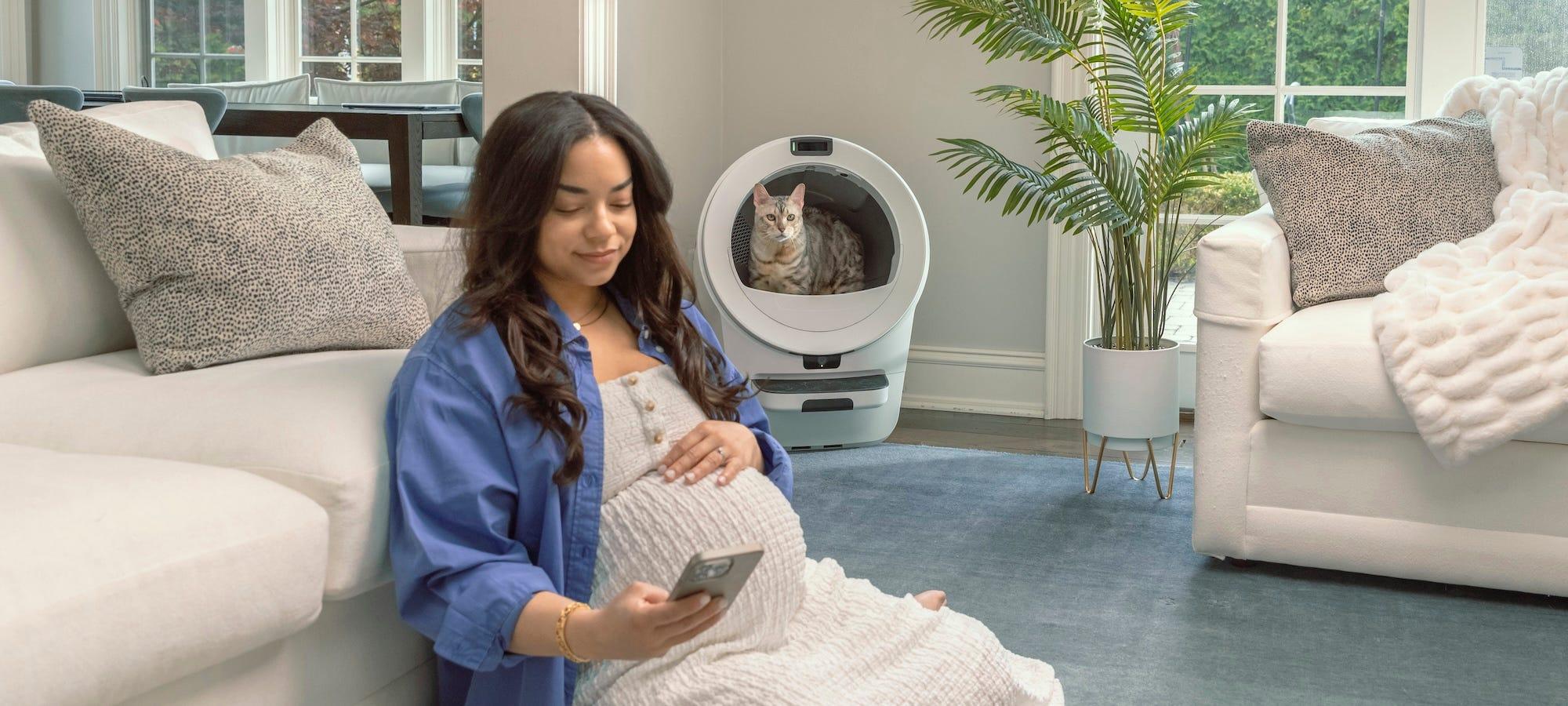
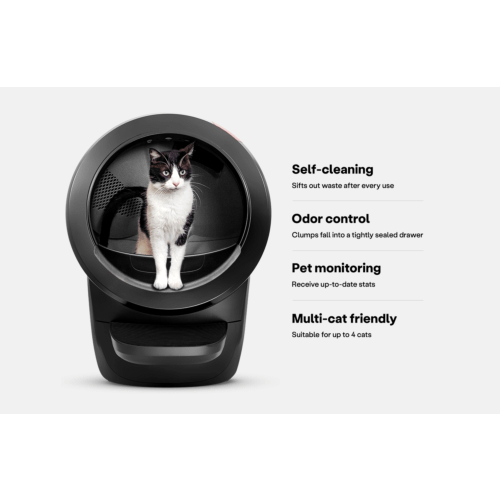
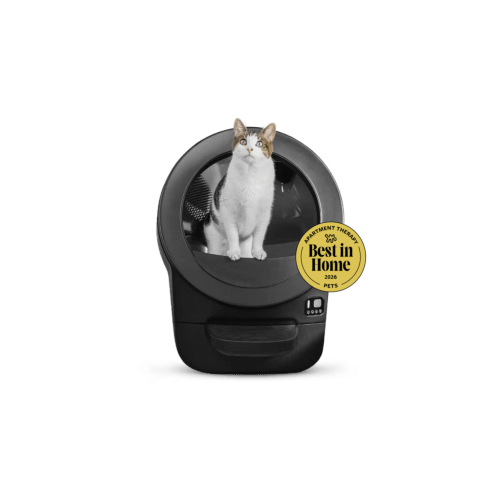
- Reduce your contact with used litter. Ask someone else to scoop if possible, or consider a self-cleaning litter box that minimizes your day-to-day exposure.
- Write down your questions. Keep a running list on your phone or in a notebook so you're ready for your first prenatal visit.
The goal isn't to be perfect. It's to make a few thoughtful changes that help you feel confident while you settle into this new chapter.
1. You got a positive pregnancy test. Now what?
Finding out you're pregnant can bring up a lot of feelings. You might feel excited, nervous, surprised, or overwhelmed. However you're feeling, it's okay.
One of the first things to do is call your healthcare provider and schedule your first prenatal appointment. Most first visits happen around 8 to 10 weeks of pregnancy, so don't worry if you aren't seen immediately.
If you have severe pain, heavy bleeding, feel faint, or something just doesn't feel right, don't wait for that appointment. Contact your provider right away.
And if your cat suddenly seems extra interested in you, you're not imagining it. Cats are great at noticing changes in their humans and may pick up on changes in your scent, routine, or behavior long before anyone else knows you're pregnant.
2. Schedule your first prenatal appointment
Your first prenatal visit is a chance to get to know your care team, ask questions, and make a plan for the months ahead. You can choose an OB-GYN or a certified nurse midwife, and many practices have both working together. The best choice is the one that makes you feel comfortable, heard, and supported.
Before your appointment, start a list of questions. You might want to ask:
- How far along am I?
- What prenatal vitamins should I take?
- Are my current medications safe?
- What foods or activities should I avoid?
- What should I expect over the next few weeks?
You don't need to know everything before you walk in the door. That's exactly what your prenatal care team is there for.
The right prenatal provider isn't just someone with the right credentials. It's someone who listens, answers your questions, and makes you feel comfortable asking the next one. — Nikki Sapiro Vinckier, PA-C
3. Start prenatal vitamins and review your medications
If you haven't already, start taking a prenatal vitamin with folic acid (also called folate). It's recommended during early pregnancy and while trying to conceive because the earliest weeks of pregnancy are an important time for development.
This is also a good time to make a list of everything you take, including prescription medications, over-the-counter medicines, vitamins, and supplements. Your healthcare provider can help you sort through what to keep taking, what might need to change, and what can stay exactly the same.
One thing that's worth remembering: don't stop a medication just because you got a positive pregnancy test. Many medications for depression, anxiety, ADHD, thyroid disease, and high blood pressure are safe to continue during pregnancy, and stopping them suddenly can sometimes create bigger problems than staying on them.
4. Make a few immediate lifestyle changes
Once you find out you're pregnant, there are a few simple changes worth making. Skip alcohol and smoking, pay a little more attention to food safety, stay hydrated, get enough rest, and move your body in ways that feel good.
If you have a cat, you've probably heard that pregnant people shouldn't change the litter box. The recommendation is real, but it's often misunderstood. The concern isn't petting your cat or sharing your home with them—it's a rare infection called toxoplasmosis that can sometimes be spread through infected cat feces.
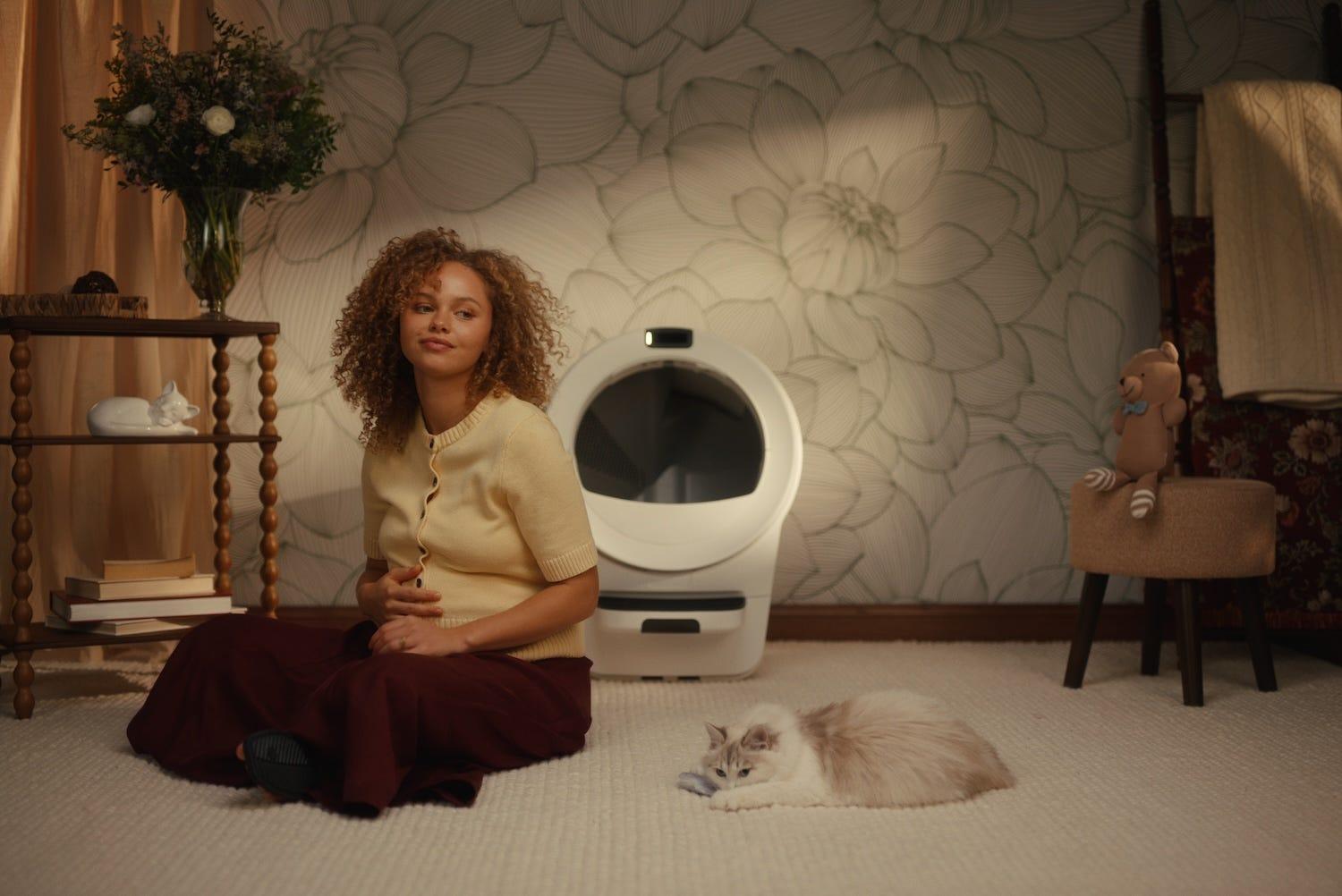
You don't need to avoid your cat or find them a new home. Instead, try to have someone else handle litter duty while you're pregnant. If that's not realistic, a self-cleaning litter box can make the job much more hands-off by reducing how often you need to come into contact with used litter.
A few small changes can go a long way, and there's no reason you and your cat can't enjoy this next chapter together.
One of the biggest myths I hear is that pregnancy and cats don't mix. You don't need to rehome your cat or stop cuddling them. A few simple precautions around the litter box are usually all that's needed. — Nikki Sapiro Vinckier, PA-C
5. Learn what's normal—and when to call your provider
Every pregnancy is different, so try not to compare your symptoms to someone else's. In the first trimester, it's common to feel tired, nauseous, bloated, emotional, or hungrier than usual. You might also notice sore breasts, food aversions, mild cramping, or that you're running to the bathroom more often.
Most of these symptoms are a normal part of early pregnancy. But it's still important to know when to check in with your healthcare provider. Call if you have heavy bleeding, severe abdominal pain, pain on one side, feel faint or dizzy, develop a fever, or can't keep food or fluids down.
When in doubt, trust your instincts. If something feels different or worries you, it's always okay to call your provider and ask.
FAQs
What should I do first after a positive pregnancy test?
Start with a few simple steps: call your healthcare provider, start a prenatal vitamin if you haven't already, and make a list of any medications or supplements you take. You don't have to figure out the rest of your pregnancy today, and your prenatal care team will help guide you through what's next.
When should I schedule my first prenatal appointment?
It's a good idea to call as soon as you find out you're pregnant. Most first prenatal visits happen around 8 to 10 weeks of pregnancy, but your provider may want to see you sooner depending on your health history or any symptoms you're having.
Do I have to get rid of my cat if I'm pregnant?
No. You can absolutely keep your cat during pregnancy. The main recommendation is to avoid handling used litter because of a rare infection called toxoplasmosis, not to avoid your pet.
Are indoor cats safe during pregnancy?
Yes, most indoor cats are considered very low risk, especially if they eat commercial cat food and don't hunt. You can still pet, cuddle, and spend time with your cat like you always have.
Can I still cuddle and sleep with my cat while I'm pregnant?
Yes. Petting, cuddling, and spending time with your cat are safe during pregnancy. The recommendation is to avoid handling used litter, not to avoid your pet.
Why can't pregnant women change cat litter?
The concern is a parasite called Toxoplasma gondii, which can sometimes be found in infected cat feces. That's why healthcare providers recommend having someone else scoop the litter box when possible or finding ways to reduce direct contact with used litter.
Can a self-cleaning litter box lower toxoplasmosis risk?
A self-cleaning litter box can reduce how often you need to handle used litter, making the daily routine much more hands-off. It's a practical way to limit direct contact while keeping the litter box clean for both you and your cat.
What if I already changed the litter box before I knew I was pregnant?
Don't assume you've been exposed to anything harmful. Most indoor cats are low risk, and a single time cleaning the litter box is very unlikely to cause a problem. If you're worried or have questions, bring it up with your healthcare provider at your next visit.
About the author

Nikki Sapiro Vinckier, PA-C, brings more than a decade of clinical experience in OB/GYN to her work as a medical author and health educator. As the author of We Deserve More: Why Reproductive Healthcare Is Broken and What You Can Do About It, she is passionate about helping people better understand their bodies, navigate pregnancy and reproductive healthcare, and make informed decisions with confidence. Nikki is known for translating complex medical information into clear, evidence-based guidance that is approachable, practical, and easy to understand.