
If you’re pregnant and share your home with a cat, you’ve probably heard this advice: don’t change the litter box. Maybe your OB mentioned it. Maybe a well-meaning relative brought it up three times after you announced your pregnancy.
I’m a veterinarian, and I’m currently pregnant. So I’ve lived this from both sides—the clinical training and the first-trimester nausea standing three feet from a litter box. The advice is real. But the reasoning behind it is worth understanding, because the actual risk is more specific than most people realize.
This article covers why litter box handling is a concern during pregnancy, what the real hazard is, whether the smell alone is dangerous, and what to do if you’re the only one home to handle cat duty.
In this article
- Why can't pregnant women change cat litter?
- Cat litter and pregnancy: What is the actual risk?
- Feces, dust, and litter. Which part is actually unsafe?
- Smelling cat litter while pregnant: Is the smell itself dangerous?
- What pregnant people should do instead of changing the litter box
- How to make the litter area lower-maintenance during pregnancy
Why can't pregnant women change cat litter?
The short answer: the concern is about direct contact with contaminated feces, not about living with a cat or being in the same room as the litter box.
The specific worry is a parasite called Toxoplasma gondii, which causes an infection called toxoplasmosis. Cats are the only animals that shed the infectious form of this parasite in their feces. For most healthy adults, a toxoplasmosis infection causes mild symptoms or none at all. During pregnancy, it’s a different situation. The parasite can cross the placenta and affect the developing fetus, with potential consequences ranging from mild to serious depending on timing and exposure.
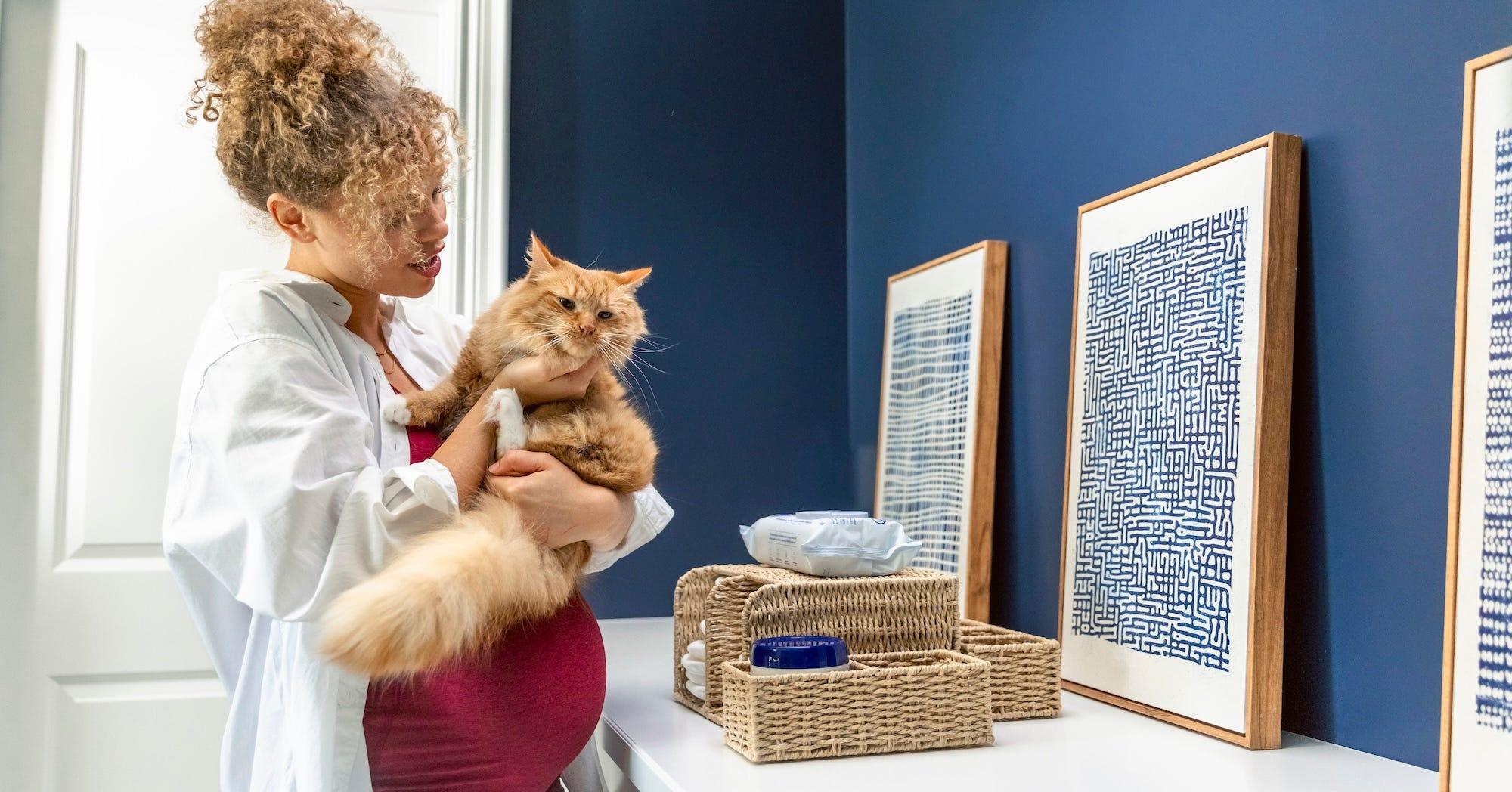
The risk isn’t about owning a cat. Cats and pregnancy can coexist safely with the right precautions. The concern is specifically about the litter box chore: reaching into contaminated waste, inhaling litter dust close to the box, and the hand-to-mouth transmission that can happen when hygiene isn’t perfect. You don’t need to rehome your cat. You do need to hand off litter duty.
Cat litter and pregnancy: What is the actual risk?
Not every cat poses the same level of risk. A strictly indoor cat that eats commercial cat food and has no exposure to raw meat or rodents is generally considered lower risk than an outdoor cat that hunts. Cats typically shed Toxoplasma oocysts for only a short window after their initial infection, and many indoor cats have never been exposed at all.
That said, you usually can’t confirm your cat’s exposure history with certainty, and the consequences of infection during pregnancy are serious enough that the precaution is worth taking regardless. You can read more about toxoplasmosis specifically.
The goal isn’t to scare you. It’s to keep the risk in context.
The litter box is the point of concern. Your cat curled up next to you on the couch is not.
Feces, dust, and litter. Which part is actually unsafe?
Is it the litter itself, the poop, or the dust?
The main concern is the feces, not the litter material itself. Cat litter doesn’t inherently carry infectious risk. The problem is what’s in it.
When you scoop or pour litter, you also stir up fine particles and dust. If contaminated feces are present, that dust can carry infectious material. That’s the combination that makes close, hands-on litter box contact something to avoid during pregnancy.
Worth separating from this: many pregnant people notice that litter smells significantly worse than it did before. That’s usually hyperosmia — a heightened sense of smell that’s common in pregnancy — not a sign that the box is more dangerous than usual. The smell is unpleasant. The direct contact is the actual hazard.
Why daily scooping matters
The frequency of scooping matters here. The CDC notes that Toxoplasma oocysts don’t become infectious immediately. They require one to five days after being shed to reach the infectious stage.
That means a box that’s scooped daily has meaningfully lower risk than one that sits for several days.
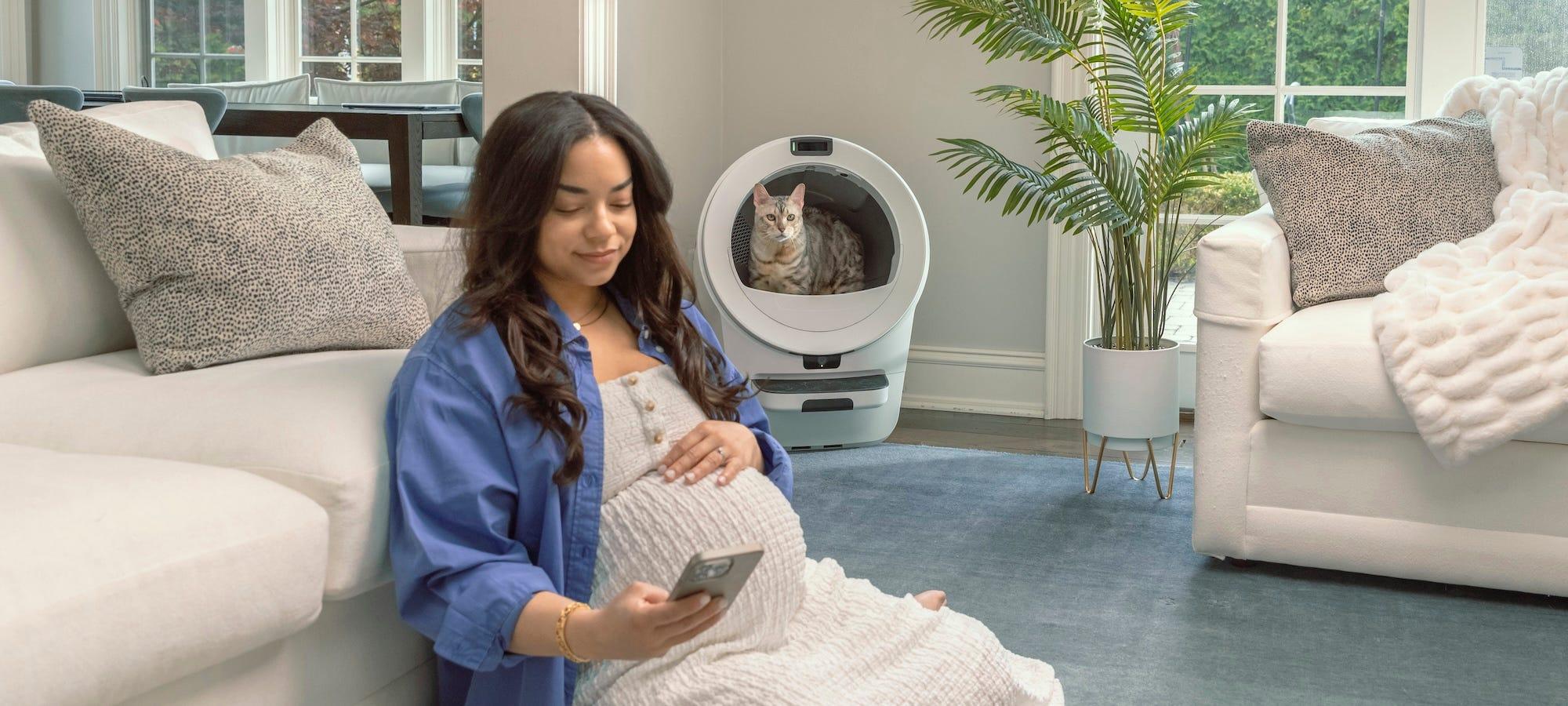
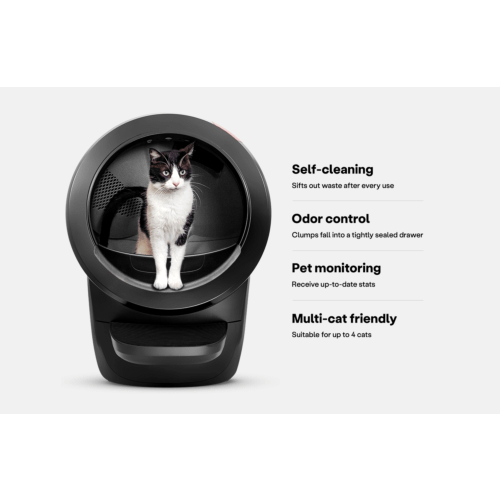
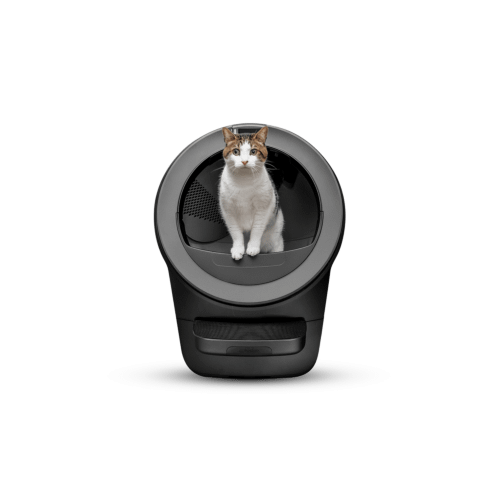
This is one of the practical reasons a self-cleaning litter box can help during pregnancy. Products like Litter-Robot cycle waste automatically after each use, which reduces buildup and limits the window during which oocysts can become infectious. That said, the waste drawer still needs to be emptied regularly. If it’s left unattended for days, the same concern applies to handling that drawer as it would to a traditional box.
Smelling cat litter while pregnant: Is the smell itself dangerous?
The smell of cat litter is not typically a pregnancy health risk on its own. For most people, it’s a nausea trigger, especially during the first trimester, or a cue that the box needs attention.
Pregnancy changes how intensely you perceive smells. Scents that were barely noticeable before can feel overwhelming.
Where odor does matter clinically: a strong ammonia smell or persistent odor usually means the box isn’t being cleaned frequently enough. Overdue cleaning means more accumulated waste, which increases the contamination concern if someone needs to handle it. Staying on top of odor control is worth it for more than one reason.
If litter box smell has become a real problem in your home, these tips for odor control and this guide on house-wide cat urine odor are worth a read. Choosing the right box for odor management also helps if you’re trying to keep a pregnant person as far from litter box duty as possible.
What pregnant people should do instead of changing the litter box
The simplest answer: hand it off.
- Ask a partner, family member, or roommate to take over scooping for the duration of the pregnancy, if possible.
- Make daily scooping part of the household routine so waste doesn’t accumulate.
- Keep supplies like bags, gloves, and litter easily accessible so whoever is doing it doesn’t have to hunt for things.
- Improve ventilation near the litter area so the pregnant person can move through the space comfortably.
Can pregnant people clean litter boxes if they have to?
If there’s truly no one else available, it can be done more safely. The commonly recommended approach:
- Wear disposable gloves.
- Avoid touching your face.
- Wash hands thoroughly afterward.
- Clean the box daily so waste doesn’t sit.
A mask is reasonable if you’re stirring up a lot of dust. The goal is to minimize both direct contact with feces and close inhalation of litter particles. It’s not a reason to panic if it happens once. It’s just worth being thoughtful about if it becomes a regular task.
How to make the litter area lower-maintenance during pregnancy
A well-designed litter situation is easier for someone else to maintain and easier for the pregnant person to avoid.
A few things that help:
Reduce scooping burden. An automatic self-cleaning box eliminates the need for daily manual scooping. The person taking over litter duty only needs to manage the waste drawer periodically rather than scooping every day. That’s a lower-lift routine, which means it’s more likely to stay consistent.
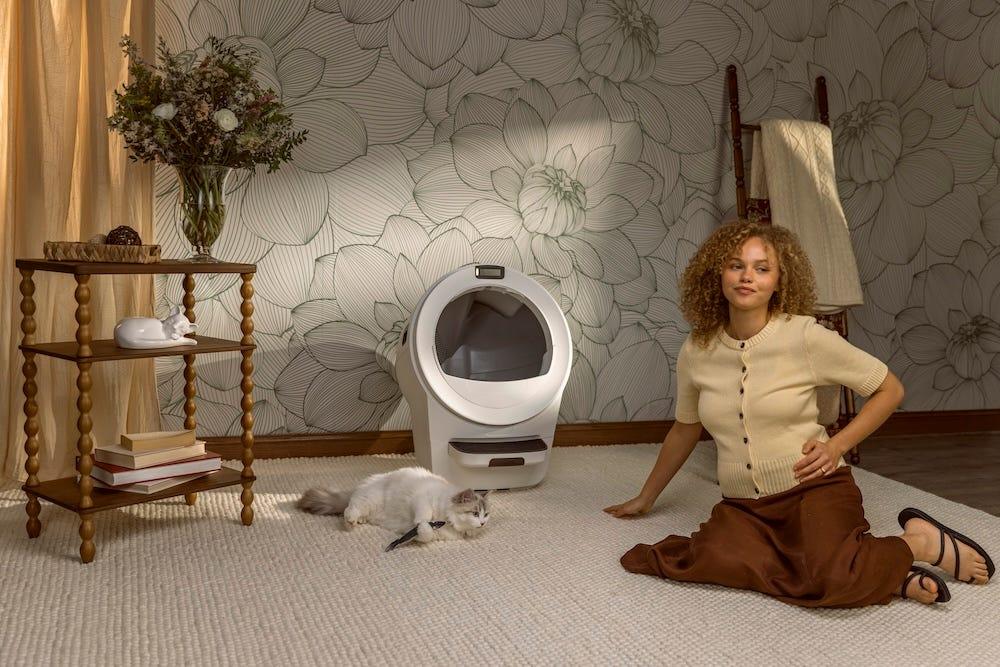
Optimize placement. Put the box somewhere with good airflow and easy access. A box tucked into a cramped corner is harder to clean and harder to avoid. Good ventilation also helps keep odors from concentrating in a space the pregnant person spends time in.
Clean more often in multi-cat households. More cats means more waste, faster accumulation, and a higher overall maintenance burden. If you have multiple cats, daily cleaning becomes even more important, and a self-cleaning box earns its value faster. Consider whether the number of boxes matches the number of cats — the general guideline is one box per cat plus one extra.
Make it easy for the person helping. Gloves, bags, and a scoop within arm’s reach means no friction in the routine. The easier it is, the more consistently it gets done.
The big picture: you don’t need to overhaul your life or say goodbye to your cat. You need one person to own litter box duty for the next several months, a consistent daily routine, and a setup that makes it easy to stay out of the area when you don’t need to be there.
Sources: