
If you’ve ever seen a cat struggle to urinate, you know how scary and urgent it is. Urinary blockage is one of the most common emergencies we see in the ER. It’s also one of the most dangerous and urgent.
As a veterinarian and cat mom, I’ve walked pet owners through the shock of finding their cat in pain and unable to urinate, and helped them understand what’s happening, what to expect, and how to prevent it in the future. This guide will explain what a urinary blockage is, how to spot the signs early, and why acting fast can save your cat’s life.
What is a cat urinary blockage?
A cat urinary blockage, also called a feline urethral obstruction, happens when something physically blocks urine from leaving the bladder through the urethra. These terms are often used interchangeably, though urethral obstruction specifically refers to a blockage in the urethra, the narrow tube that carries urine from the bladder out of the body.
Blockages are most often caused by a combination of mucus, crystals, inflammatory debris, or small stones. These materials can clump together and lodge in the urethra. It’s especially common in male cats because their urethras are much narrower and longer than those of females. Therefore, male cats are far more prone to this life-threatening condition.
Why it mostly affects male cats
Anatomy is the biggest reason. Male cats have a longer, thinner urethra that curves as it exits the pelvis. This makes it much easier for mucus plugs or crystals to get stuck, while female cats have a shorter, wider urethra that allows urine and other debris to pass more freely. Though rare, females can still develop urinary issues, but they less commonly experience a full obstruction.
Symptoms of a cat urinary blockage
Early signs may resemble a simple urinary tract infection, but the progression can be rapid. Symptoms to watch for include:
- Straining to urinate with little or no urine output
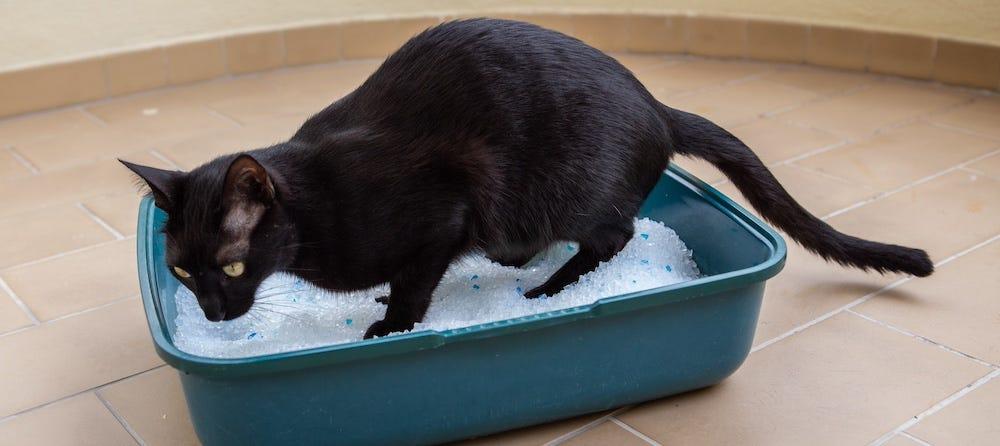
- Frequent trips to the litter box
- Crying or vocalizing while trying to pee
- Licking the genital area excessively
- Restlessness, hiding, or seeming uncomfortable
- Vomiting or loss of appetite
- Lethargy or collapse in advanced stages
If you notice any of these signs, especially in a male cat, assume it could be a blockage and call your vet immediately or go to the emergency vet.
Urinary blockage vs. Cystitis vs. UTI
All three of these conditions involve the lower urinary tract, but they’re different in severity and cause.
- Urinary blockage (urethral obstruction): A true medical emergency where the cat cannot pass urine. This leads to rapid buildup of toxins in the bloodstream and can cause death within 24–48 hours if not treated.
- Cystitis: Inflammation of the bladder. Most cases are sterile (not caused by bacteria) and often related to stress or diet. It can cause straining and blood in the urine but does not involve a physical blockage. It can be an early sign of a risk for blockage.
- Urinary tract infection (UTI): Caused by bacteria invading the bladder. More common in older female cats or cats with underlying disease (like diabetes) and typically treated with antibiotics.
The symptoms can look similar at first, but a blocked cat will not produce urine even though they’re trying. That’s the biggest and most dangerous difference.
Causes of a urinary blockage in cats
Some of the most common causes include:
- Urethral plugs made of protein, mucus, and crystals
- Bladder stones or small mineral deposits
- Severe inflammation from feline idiopathic cystitis (FIC)
- Spasms or swelling in the urethra
- Dehydration or poor water intake
- Stress-related inflammation
- Obesity and lack of physical activity
- Diet high in certain minerals, especially magnesium and phosphorus
While genetics and anatomy play a role, stress and diet are two of the biggest modifiable factors.
Why it’s an emergency
When a cat can’t urinate, their bladder fills rapidly and becomes distended. Pressure backs up into the kidneys, and toxins build up in the bloodstream. This leads to electrolyte imbalances, especially dangerous levels of potassium, which can cause life-threatening heart arrhythmias and death.
Without prompt treatment, a blocked cat can deteriorate within hours. If you ever suspect a blockage, go to your nearest emergency vet.
Diagnosis
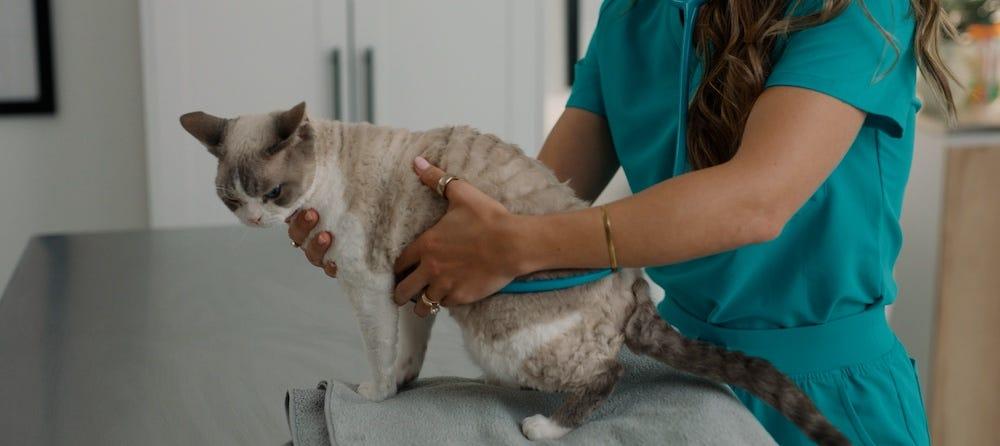
Your vet will perform a physical exam and palpate your cat’s abdomen. A firm, painful, enlarged bladder is often felt in blocked cats. Additional diagnostics may include:
- Urinalysis to check for crystals, blood, or infection
- Bloodwork to assess kidney function and electrolyte levels
- X-rays and ultrasound to look for stones or structural problems to the bladder wall
Treatment and prognosis
Treating a urinary blockage involves:
- Emergency stabilization: Pain relief, IV catheter, and correcting dangerous electrolyte imbalances
- Sedated unblocking and urethral catheterization: A catheter is passed into the urethra to flush out the blockage and allow urine to drain
- Hospitalization: Most cats stay for 2–3 days for monitoring, fluid therapy, and continued bladder flushing
- Medications: Muscle relaxants, pain medications, anti-inflammatories, or antibiotics are each used for different reasons
In some cases where the blockage is recurrent or cannot be managed medically, a surgery called a perineal urethrostomy (PU) may be recommended. This procedure shortens and widens the urethra to reduce the risk of future obstructions.
The prognosis is good if caught early. However, cats who’ve been blocked once are at higher risk of it happening again, especially within the first 6–12 months.
Preventing a urinary blockage in cats
Once a cat has experienced a blockage, prevention becomes a lifelong goal. Here are the top ways to reduce the risk of recurrence:
- Feed a veterinary prescription urinary diet formulated to reduce crystal formation
- Encourage water intake with fountains, wet food, or added water to meals
- Maintain a healthy weight and promote daily activity
- Minimize stress with routines, playtime, and enrichment
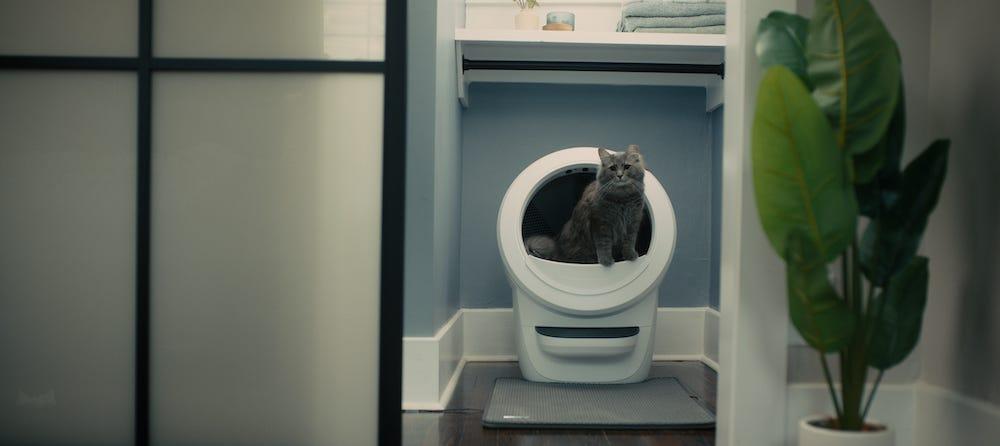
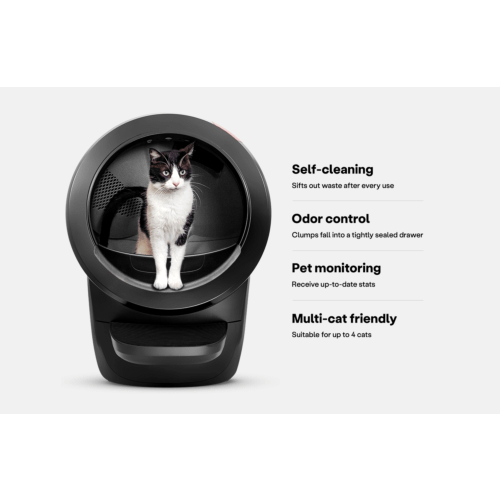
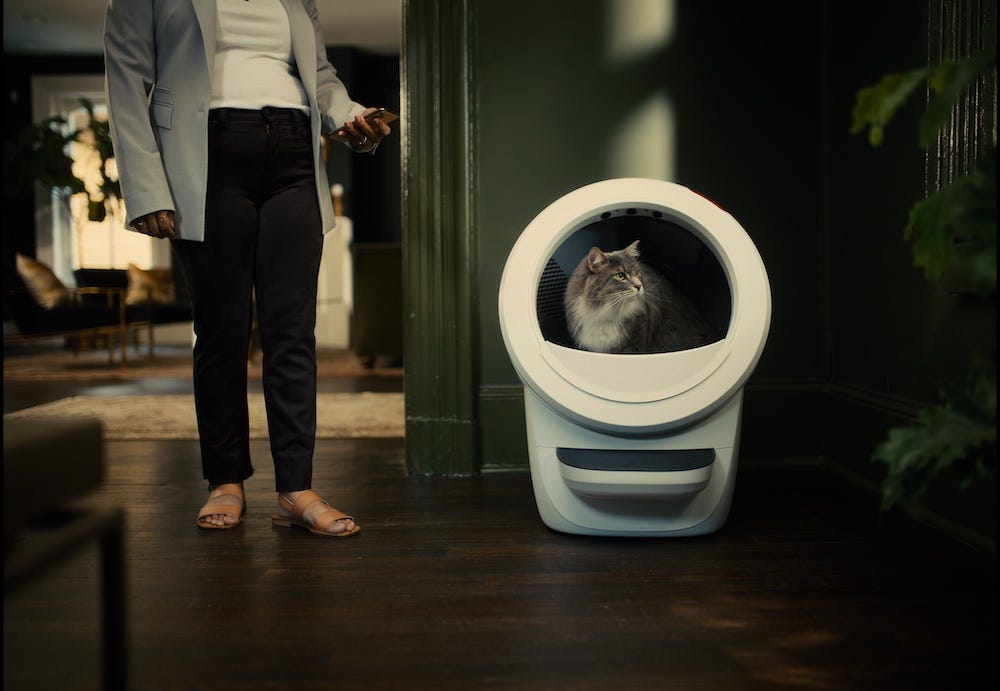
- Keep litter boxes clean and accessible with one box per cat, plus one extra or an automatic litter box like Litter-Robot
- Consider pheromone diffusers like Feliway to help reduce stress
Final thoughts
Urinary blockage in cats is a true emergency that requires immediate care. The good news is that with early intervention, most cats recover well. With the right prevention plan, you can reduce the chances of it happening again. If you notice your cat straining in the litter box, vocalizing, or acting strangely, don’t wait. A visit to your vet could save their life.
Sources: