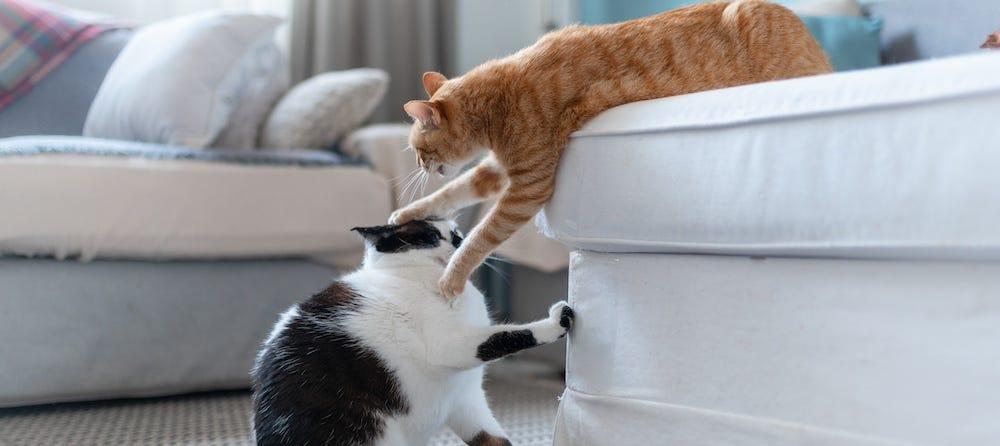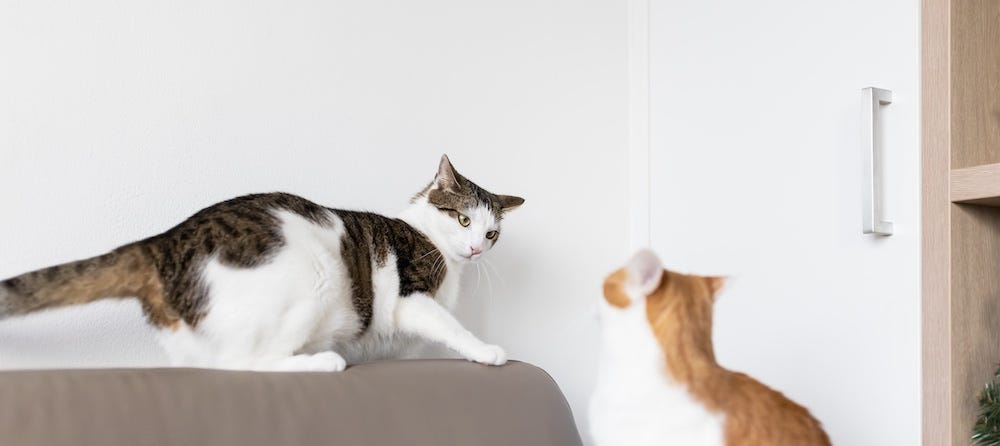


When two cats who normally coexist suddenly start fighting, it can feel shocking and upsetting. One day, they’re lounging near each other, and the next, there’s hissing, chasing, or full-on brawling. The good news is, most of the time, there is an explanation — and there’s usually a path forward. Here’s what pet parents should know about why cats fight, how to stop one cat from bullying the other, and when you may need to rethink the relationship.
Why cats fight
Cats are emotional creatures with their own boundaries, routines, and comfort zones. When something shifts, even slightly, it can spark tension.
Redirected aggression
This is one of the most common reasons for sudden fighting. Something outside your cat’s control — like another cat wandering past the window, a loud noise, or a stressful event — triggers their frustration. With no way to reach the actual source of the stress, they lash out at the nearest cat. It looks like a feud, but really, one cat is just overwhelmed.
Territorial issues
Cats are naturally territorial. They like predictable home turf, safe hiding spots, and control over their environment. If your home doesn’t have enough space, litter boxes, or resting areas, guarding or “claiming” behavior can easily pop up.
Hormonal changes
Unneutered or unspayed cats are more likely to fight as hormones kick in, especially between males. But even fixed cats can experience hormonal shifts or territorial instinct if a new animal is around.
Aging
Senior cats can become grumpier as they experience pain, reduced mobility, or sensory loss. Younger cats may not realize they need to tone down the energy — and that mismatch can spark conflict.
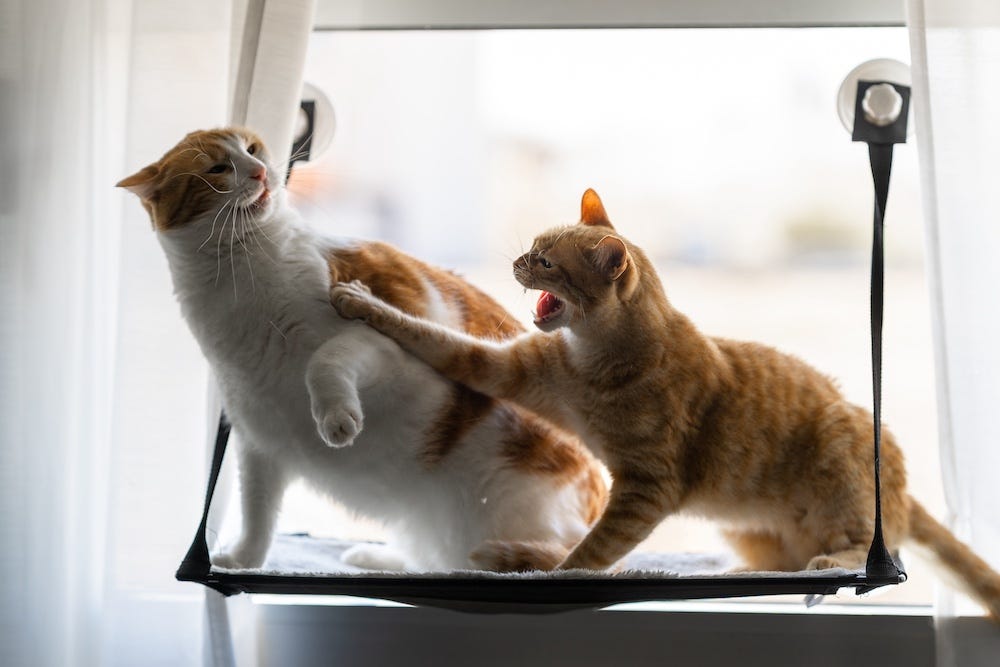
What causes sudden behavior changes?
If the aggression feels like it came out of nowhere, there are two big possible causes.
Medical issues
Pain and illness are huge drivers of sudden aggression. A cat who’s hurting may react defensively when approached. Common triggers include:
- Arthritis
- Dental disease
- Hyperthyroidism
- Injury
- Cognitive changes in older cats
If the shift in behavior is sudden, a vet check is always a smart first step.
Changes in the environment
Cats like predictability. Even small disruptions can throw them off and make them lash out at each other. Things like:
- A new pet or person
- Moving to a new home
- Home renovations
- A visit to the vet
- New smells, sights, or sounds
- A change in routine or your schedule
One cat may become insecure or overwhelmed, and the housemate becomes the target.
How to stop one cat from bullying the other
Once tension starts, you want to intervene early to prevent the situation from snowballing.
Separate them when aggression happens (and never punish them)
If a fight breaks out, don’t use your hands to break it up — a loud clap or a barrier works better. Then give each cat their own space to cool down. You’ll reintroduce them slowly later.
Make sure each cat has their own resources
This is a big one. Sharing too many essentials creates competition. Aim for:
- Separate feeding areas
- Individual water stations
- Their own scratching posts, beds, and perches
- One litter box per cat plus one extra
A self-cleaning litter box can also help cut down on litter box guarding.
Improve the overall environment
A few small upgrades can reduce tension fast:
- Add vertical space like shelves, trees, or window perches
- Use pheromone diffusers
- Keep feeding times consistent
- Offer daily play sessions to burn off energy
- Create safe “escape routes” so no cat feels cornered
Little changes can go a long way toward lowering household stress.
Use tools that reduce competition
If food guarding is part of the problem, an automatic feeder gives both cats predictable access to meals and prevents ambushing.
A step-by-step reintroduction after a fight
If the aggression was serious or ongoing, you’ll want to reintroduce the cats as if they’re meeting for the first time.
- Start with full separation so both cats can relax.
- Swap scents by trading blankets or bedding.
- Feed them on opposite sides of a closed door to rebuild positive associations.
- Allow quick, supervised visual contact through a gate or cracked door.
- Gradually increase shared time, watching for body language cues.
- Always end sessions on a positive note — treats, play, or quiet time.
If anyone starts tensing up, take a step back and move more slowly.
When to give up on cats getting along
Most cats eventually reach a peaceful truce or even go back to being buddies. But sometimes, the match just isn’t right.
Signs the relationship may not recover
- One cat is constantly hiding
- Persistent chasing, blocking, or guarding
- Ongoing fights, even with management
- Litter box issues caused by intimidation
- One cat is losing weight or becoming withdrawn
Chronic stress isn’t something to ignore
Stress isn’t just emotional for cats — it can lead to urinary issues, overgrooming, digestive upset, and long-term anxiety. If you’ve tried environmental changes, reintroduction, and resource separation and the tension still isn’t improving, it may be safest to permanently separate spaces or consider rehoming one cat to a calmer environment.
Sudden aggression between cats is stressful, but it’s usually fixable once you identify the trigger and make a few changes at home. With patience, structured reintroduction, and plenty of individual resources, most cats can return to a peaceful coexistence. And if they can’t, recognizing the signs early helps protect the well-being of both pets.
Sources:
- Are Your Cats Always Fighting?
- Feline Behavior Problems: Aggression
- Conflict between cats
- Aggression Between Cats in Your Household